Lake Superior Railroad Museum
On June 28, 1862, a small 4-4-0 locomotive named the William Crooks pulled a passenger train from Saint Paul to Saint Anthony, carrying Minnesota Governor Alexander Ramsey and railroad magnate James J. Hill among its riders. It was the first locomotive to haul passengers in the state of Minnesota. Today, 160 years later, that same engine sits in a restored Chateauesque train station on the Duluth waterfront, its boiler cold, its driving wheels still. The Lake Superior Railroad Museum preserves not just the William Crooks but an entire era when iron rails and iron ore together built the cities of northern Minnesota.
A Depot Saved From the Wrecking Ball
The museum's home is itself an artifact. The St. Louis County Depot was designed by the Boston firm Peabody & Stearns and completed in 1892 at a cost of about $600,000. Built from local granite, sandstone, and yellow brick, the depot's steep roofs, ornate dormers, and round towers reflect the French Chateauesque style. For decades it served as Duluth's primary rail station. But as passenger rail declined across America, ridership dwindled, and the last train departed in 1969. Demolition seemed inevitable until Duluth citizens intervened. The depot was placed on the National Register of Historic Places in 1971. A restoration campaign raised $4.5 million -- including $250,000 from the Duluth Junior League -- and by 1973 the station had reopened as the St. Louis County Heritage and Arts Center. The Lake Superior Railroad Museum was among the first tenants, and today the building also houses the Duluth Arts Institute, the Duluth Playhouse, and the Duluth-Superior Symphony Orchestra.
The Iron Horse That Started It All
The William Crooks was built in 1861 in Paterson, New Jersey, for the Minnesota and Pacific Railroad. It arrived in Saint Paul on September 9, 1861, but passenger equipment and sufficient track were not ready until the following June. When it finally made its inaugural run on June 28, 1862, pulling carriages along 10 miles of freshly laid track, it inaugurated an age of rail that would transform the upper Midwest. The locomotive served the St. Paul and Pacific Railroad -- a predecessor of James J. Hill's Great Northern Railway -- hauling passengers and freight across a frontier that was still, in 1862, on the edge of the Dakota War. The museum's stewardship of the William Crooks places one of the most significant artifacts in Minnesota transportation history within reach of anyone who walks through the depot's arched entrance.
Yellowstones and Snow Plows
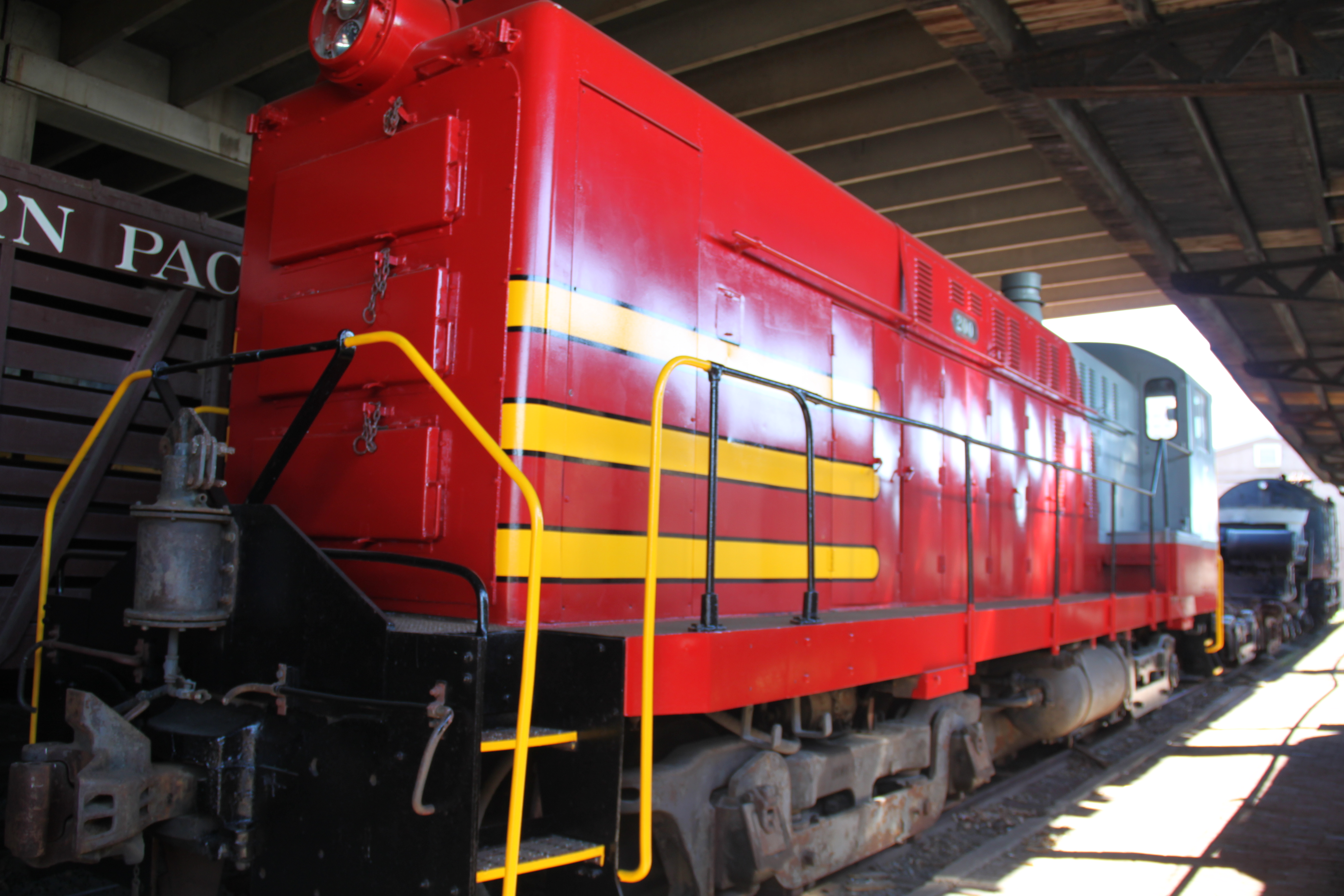
The collection extends far beyond one famous locomotive. Duluth, Missabe and Iron Range Railway Number 227 is a 2-8-8-4 "Yellowstone" type -- among the largest steam engines ever to operate. These massive articulated locomotives were designed to haul heavy loads of iron ore from the Mesabi Range to the docks at Duluth, where it was loaded onto Great Lakes freighters bound for the steel mills of the East. The museum also holds Northern Pacific Rotary Snow Plow Number 2, built in 1887 by the Cooke Locomotive and Machine Works. It is the oldest surviving rotary snow plow in the world, designated a Historic Mechanical Engineering Landmark in 2015. From diesel railcars to cabooses, from a 1920 McGiffert log loader to a 1957 Pontiac Hy-rail inspection car, the collection spans the full sweep of railroading in the Lake Superior region.
Living Rails Along the North Shore
The museum is not only a static collection. It operates the North Shore Scenic Railroad, which runs excursion trains from Memorial Day through mid-October using historic equipment from the museum's holdings. The trains depart from the depot and travel along Lake Superior's shore, passing through North Woods scenery and continuing to Two Harbors -- the port where iron ore from the Range once met the lake. Riding these excursion trains, passengers experience something no exhibit can fully replicate: the rhythm and rattle of rail over ties, the whistle echoing off Superior's shoreline, the slow unfolding of a landscape that was shaped by the very industry these locomotives served. The museum makes the case that railroads did not merely pass through this region -- they created it.
From the Air
Located at 46.781N, 92.104W in downtown Duluth, Minnesota, at the historic St. Louis County Depot near the waterfront. The Chateauesque depot building with its distinctive steep roofs and round towers is identifiable from low altitude. Duluth International Airport (KDLH) is approximately 6 miles northwest. The museum sits near the western tip of Lake Superior, with the harbor, Aerial Lift Bridge, and Minnesota Point sandbar serving as visual landmarks. The North Shore Scenic Railroad tracks run northeast along the lakeshore toward Two Harbors. Best viewed from 2,000-4,000 feet AGL on approaches from over Lake Superior. The depot complex is in the same waterfront district as the Great Lakes Aquarium and Canal Park.