Lalu Wetlands National Nature Preserve
Lhasa's residents once called these wetlands the "kidneys of Lhasa," and the metaphor was more than poetic. The 625 hectares of marsh and reeds sitting immediately north of the Potala Palace filter wastewater, trap an estimated 5,500 tons of airborne dust annually, and add moisture to air that would otherwise be desert-dry at 3,646 meters above sea level. They are the largest urban wetlands in the world, surrounded entirely by the city they sustain. That they still exist is not a given. By the 1990s, garbage, polluted water, and a cement factory at the wetlands' northern edge were threatening to finish what decades of urban encroachment had started.
Why Lhasa Grew Here
The wetlands are likely the reason Lhasa exists where it does. In the narrow valley between the Gangdese Mountains and the Lhasa River, known locally as the Kyi Chu, these marshlands once covered roughly 10 square kilometers, providing humidity that made the surrounding Tibetan Plateau's arid climate more bearable. A slightly raised northern riverbank created a natural dam, preventing the water from draining directly into the river. Along this elevated bank, Tibetans built some of their most important structures, including the Norbulingka, the Dalai Lama's summer palace, which enjoyed unusually lush vegetation and tall trees fed by underground seepage from the wetlands. As the city expanded from the 7th century onward, development pushed south from the Potala Palace. Mechanical equipment eventually made it easy to fill in the marshes and dig drainage trenches. What had once been 10 square kilometers shrank to just over 6.
Kidneys Under Threat
By the 1980s, Lhasa's growth had turned explosive, and the wetlands looked like accessible building land. Encroachment accelerated. Mao Rubai, a climatologist who served as Vice Governor of Tibet, began publicly articulating what the wetlands meant to Lhasa's microclimate: they moistened the air, they filtered water, they trapped dust. Without them, the city would be drier, dirtier, and more vulnerable to the dust storms that sweep across the plateau. The turning point came through an unlikely collaboration. Chun-Wuei Su Chien, an American environmental worker running China programs for the nonprofit Future Generations, approached the Mayor of Lhasa with a conservation plan. Future Generations had already helped establish the Qomolangma National Nature Preserve, Tibet's first. Chien organized study visits to high-altitude wetlands protection projects in the United States, including sites near Aspen, Colorado. Daniel C. Taylor, the organization's president, led the planning effort alongside the city government.
From Urban Park to National Treasure
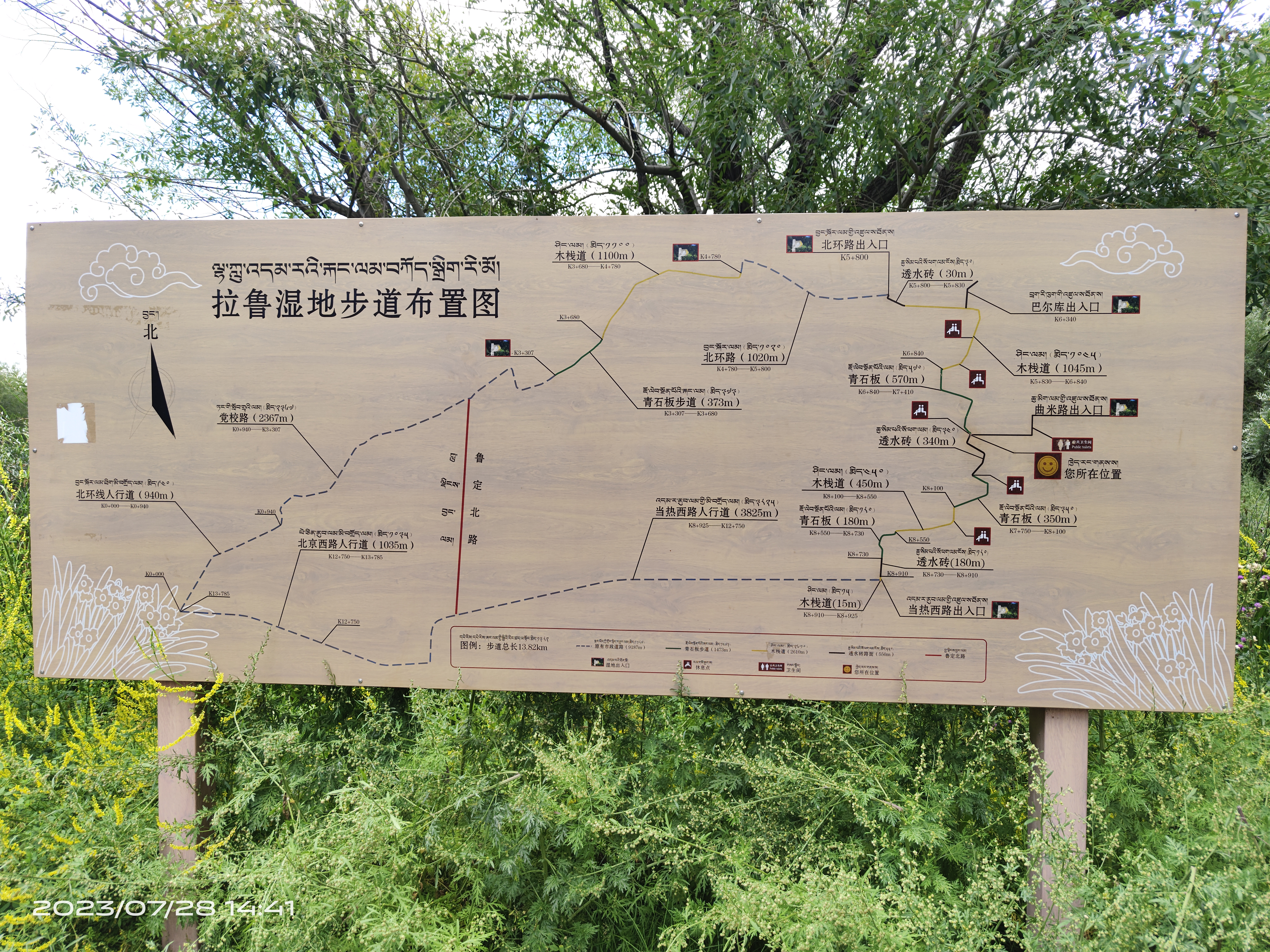
Protection came in stages. The Mayor of Lhasa, with his council's support, initially designated the area as an urban park in 1994. Preliminary municipal protection followed on May 25, 1995. The People's Congress of the Tibet Autonomous Region elevated it to regional preserve status in 1999, and national protection arrived on July 25, 2005. The Ramsar Convention, the international agreement governing wetlands of global importance, also recognized the site. A detailed management ordinance was approved on July 30, 2010 by the Ninth People's Congress of the Tibet Autonomous Region. Today the preserve is divided into three zones: a strictly protected core of 115 hectares, a 221-hectare buffer zone permitting limited educational and experimental use, and 339 hectares open to the public. The original vision centered on education, particularly for Lhasa's children, alongside the development of linkas - picnic grounds that honor a cherished Tibetan social tradition.
Wings Over the Plateau
At 3,646 meters, these wetlands host species adapted to extremes. Bar-headed geese, famous for migrating over the Himalayas at altitudes exceeding 7,000 meters, rest and feed here. Black-necked cranes, revered in Tibetan culture, share the marshes with ruddy shelducks, brown-headed gulls, white storks, and redshanks. Tibetan snow finches and hoopoes occupy the drier margins. The vegetation is characteristic of the Tibetan Plateau: reeds grow first in the impounded water, followed by sedges and duckweed as biomass accumulates, eventually forming peat. Grasses, wildflowers, and gentians fill higher ground. A visitors' center and walkway system now allow the public into the wetlands without disturbing the habitat, and educational programs bring school children face to face with the ecosystem that keeps their city livable. The Tibet Science and Technology Department oversees management, ensuring that the kidneys of Lhasa continue to function.
From the Air
The Lalu Wetlands are located at 29.672N, 91.091E, immediately north of the Potala Palace in central Lhasa at 3,646m elevation. From the air, the wetlands appear as a large green expanse contrasting sharply with the surrounding urban development. Lhasa Gonggar Airport (ZULS) is approximately 60km to the southwest. The Lhasa River (Kyi Chu) runs along the western edge. Bar-headed geese and other large birds may be visible at lower altitudes. High-altitude conditions and potential bird strike risk should be noted.