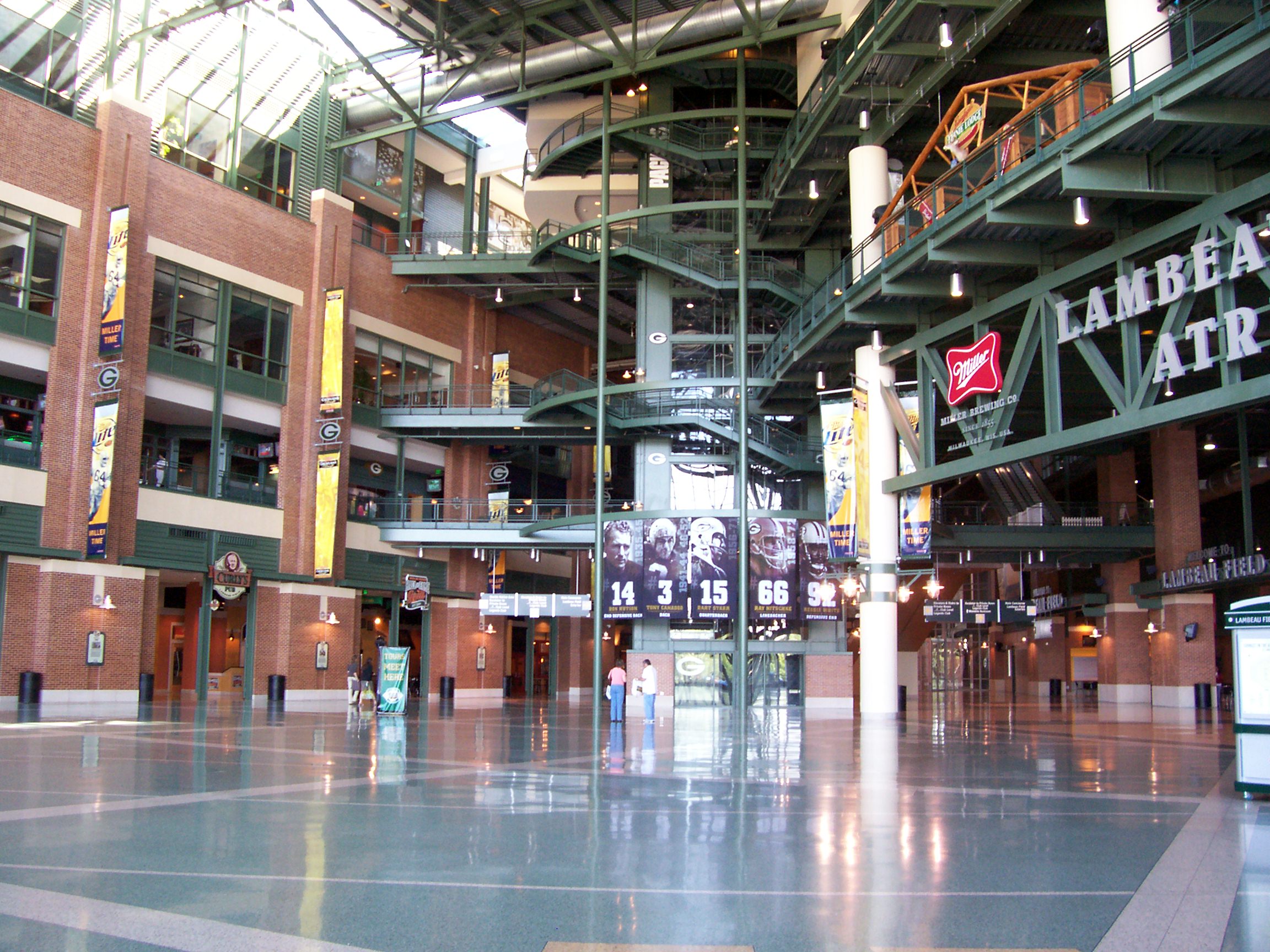
Lambeau Field
The waiting list is 150,000 names long. Some families have passed down their spot across generations, children inheriting a place in line the way others inherit heirlooms. The Packers have sold out every home game since 1960, and the object of all that devotion sits at 1265 Lombardi Avenue in Green Bay, Wisconsin: Lambeau Field, the oldest continually operating stadium in the National Football League, a place where the thermometer plunges below zero, the grass flash-freezes, and nobody leaves early.
Born from an Ultimatum
By the 1950s, the Packers were playing in a 25,000-seat wooden stadium behind Green Bay East High School, a facility so inadequate that visiting teams dressed for games at the Hotel Northland downtown. Milwaukee officials built County Stadium in 1953 hoping to lure the team south permanently, and the other NFL owners threatened to force the move unless Green Bay built something new. In April 1956, voters approved a bond issue with 70.3 percent support. The stadium cost $960,000, held 32,500, and became the first modern facility built specifically for an NFL franchise. Vice President Richard Nixon dedicated it at halftime of the September 29, 1957, opener, a 21-17 upset of the rival Chicago Bears before a capacity crowd of 32,132. Reigning Miss America Marilyn Van Derbur, NFL commissioner Bert Bell, and Bears owner George Halas all watched from the platform.
The Frozen Tundra
The nickname was born on December 31, 1967, when the Packers hosted the Dallas Cowboys in what became known as the Ice Bowl. Temperatures plunged to brutal lows with sharp winds. An underground electric heating system had been installed before the season, and the field was covered overnight with the heater running, but when the tarp was pulled in sub-zero cold, the moisture atop the grass flash-froze into a sheet of ice. Journalist Tex Maule first linked Lambeau to the word 'tundra' in Sports Illustrated, and narrator Bill Woodson cemented the phrase in the Cowboys' highlight film. The current field uses a system of antifreeze-filled pipes beneath the turf, along with an artificial lighting system borrowed from Dutch rose-growing greenhouses that operates 24 hours a day from October to early December, extending the growing season for the Kentucky bluegrass.
The People's Team
The Packers are the only publicly owned franchise in major American professional sports, a distinction that shapes everything about the stadium. When a $295 million renovation was needed in 2000, it was funded partly through a stock sale that netted over $20 million and partly through a 0.5 percent sales tax approved by Brown County voters at a 53-47 margin. A second referendum that same year asked whether corporate naming rights should be sold to pay off the tax faster. It passed by the identical margin, but no buyer was ever found at the $100 million asking price. At the 2015 shareholders meeting, team president Mark Murphy settled the matter: 'We will not sell the naming rights to the stadium. We will never do that. It will always be Lambeau Field.' Today, over 112,000 shareholders attend annual meetings at the stadium, gatherings that draw between 8,000 and 10,000 people.
The Leap and the Legend
After scoring a touchdown, Packers players sprint to the end zone wall and launch themselves into the outstretched arms of the fans in the front rows. The Lambeau Leap became iconic enough that when the NFL banned excessive celebrations in 2000, it was grandfathered into the rules. Visiting players who attempt the Leap do so at their peril: Minnesota Vikings cornerback Fred Smoot tried after an interception return and was showered with beverages. In 2009, Cincinnati Bengals receiver Chad Ochocinco announced in advance that he would attempt one if he scored, then followed through by leaping into the arms of pre-arranged fans wearing Bengals jerseys. A bronze statue outside the stadium commemorates the celebration, featuring a shortened replica of the end zone wall and four Packers fans, inviting visitors to pose for their own Leap.
A Stadium That Keeps Growing
From its original 32,500 seats, Lambeau has more than doubled to 81,441, making it the second-largest stadium in the NFL and the largest venue in Wisconsin. The south end zone expansion in 2013 added 7,500 seats with heated areas that melt snow as it falls. A $140.5 million atrium renovation completed in 2015 houses the Packers Hall of Fame, the 1919 Kitchen & Tap, and the Pro Shop, while a 50-foot replica of the Lombardi Trophy stands on the east side. The Titletown District, a mixed-use development just west of the stadium featuring a hotel, brewery, and sports medicine clinic, opened in 2017 and hosted the 2025 NFL draft. Through it all, the Packers have compiled a 264-133-6 regular-season record at home through the 2024 season, and the Denver Broncos remain the only NFL team never to have won a regular-season game on the Frozen Tundra.
From the Air
Lambeau Field (44.50N, -88.06W) is unmistakable from the air: a massive oval bowl with the Titletown District complex immediately to its west. Best viewed from 2,000-3,000 feet on approach. Green Bay Austin Straubel International Airport (KGRB) lies just 5 miles to the southwest. The Fox River and the bay of Green Bay are visible landmarks to the east and northeast. On game days, the surrounding parking lots fill with thousands of tailgaters, making the stadium footprint even more prominent from altitude.