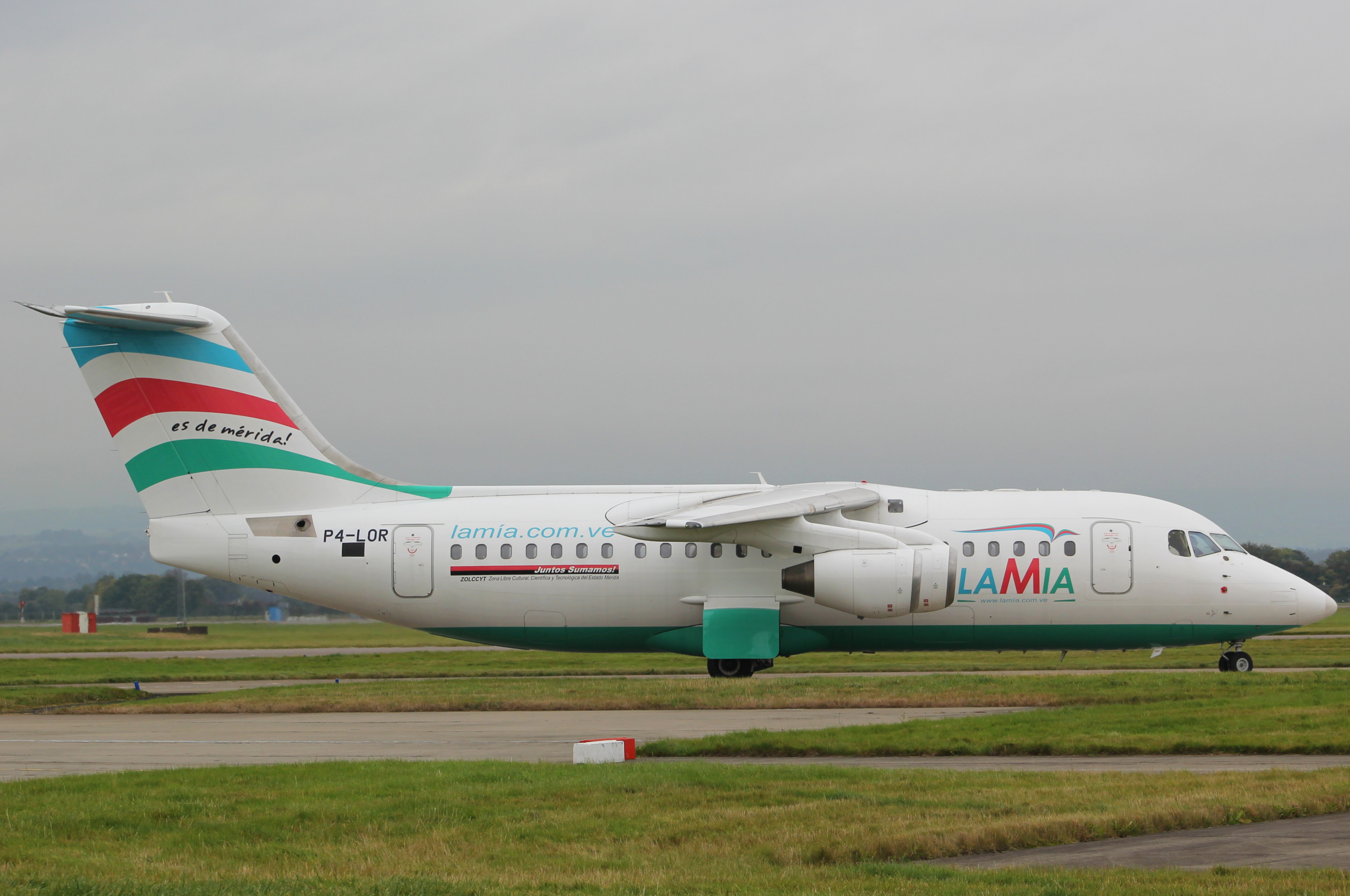
LaMia Flight 2933
The fuel warning light had been flashing for thirty-six minutes before anyone in the cockpit said the word 'emergency.' By then, on the night of November 28, 2016, LaMia Flight 2933 was circling in a holding pattern near Medellin's Jose Maria Cordova International Airport, its four engines burning through the last traces of jet fuel. The Avro RJ85 was carrying 77 people, most of them members and staff of Chapecoense, a small Brazilian football club from the city of Chapeco in southern Brazil. They were on their way to the biggest match in the club's history -- the Copa Sudamericana final against Atletico Nacional. They never arrived.
The Fairytale That Wasn't
Chapecoense's story was the kind that football lives for. Founded in 1973 in Chapeco, a city of about 280,000 in Santa Catarina state, the club had spent most of its existence in Brazil's lower divisions. Their rise through the ranks had been steady and improbable, and by November 2016 they were one match away from winning the Copa Sudamericana, South America's second-most prestigious club competition. The first leg of the final was scheduled in Medellin, at Atletico Nacional's Estadio Atanasio Girardot. To get there, the team chartered a flight with LaMia, a small Venezuelan-owned airline operating out of Bolivia. LaMia had flown Chapecoense before, and had carried Argentina's national team on the same aircraft just two weeks earlier. The plane was a British-built Avro RJ85, registration CP-2933.
A Flight Plan Written in Margins
The original plan called for a refueling stop at Cobija, a small airport near Bolivia's border with Brazil, which would have broken the journey into two safe segments. But the flight departed late from Santa Cruz de la Sierra -- delayed in part when a team member asked to retrieve a video game from the cargo hold -- and the crew decided to skip Cobija rather than arrive after the airport's closing time. They flew direct. The problem was mathematics: the aircraft carried 9,037 kilograms of fuel, and the crew's own calculations showed they would need 8,858 kilograms for the direct route to Medellin. That left a margin of 179 kilograms -- virtually nothing for holding patterns, diversions, or the unexpected. International aviation regulations require fuel reserves for exactly these contingencies. LaMia's flight plan ignored them, and the captain, who was also a co-owner of the airline, filed it anyway.
Thirty-Six Minutes of Silence
As Flight 2933 neared Medellin, another aircraft with a suspected fuel leak had diverted to the same airport, forcing LaMia into a holding pattern. The onboard low-fuel warning activated at 21:16 local time. For thirty-six excruciating minutes, the crew did not declare an emergency. At 21:49, they finally requested priority landing for unspecified 'problems with fuel.' Three minutes later, they declared a full fuel emergency and pleaded for immediate vectors. It was too late. At 21:53, engines three and four on the right wing flamed out from fuel exhaustion. Two minutes later, engines one and two followed. The aircraft, now a glider with no power, struck the crest of Cerro Gordo at an altitude of 2,600 meters. Because there was no fuel left in the tanks, there was no fire -- a grim mercy that saved six lives. Seventy-one people died.
Champions Without a Match
The response from the football world was unprecedented. Atletico Nacional, the very team Chapecoense was meant to play, asked CONMEBOL to award the Copa Sudamericana title to the Brazilian club, declaring that 'for our part, and forever, Chapecoense are champions.' CONMEBOL agreed, and on December 5, 2016, Chapecoense was officially named champion without ever playing the final. They received the winner's prize money of two million dollars. UEFA called for a minute of silence at every Champions League and Europa League match. FC Barcelona hosted a fundraiser friendly in August 2017, and Alan Ruschel -- one of three surviving players -- walked onto the pitch as captain. Backup goalkeeper Jakson Follmann survived the crash but lost a leg. In Chapeco, thousands gathered at Arena Conda, the club's home stadium, for a memorial where FIFA president Gianni Infantino declared: 'Today we are all Brazilians, we are all Chapecoenses.'
A Mountainside Above Medellin
The crash site on Cerro Gordo sits in the rugged terrain east of the Aburra Valley, in the municipality of La Union, Antioquia. Investigations led by Colombia's Aerocivil, with support from the British AAIB and investigators from Bolivia, Brazil, and the United States, confirmed what the lack of post-crash fire had already suggested: fuel exhaustion was the cause. The airline's general director, Gustavo Vargas Gamboa, was detained. The structural designer of LaMia's flight operations and a Bolivian aviation official were charged. The captain's own dual role as pilot and airline co-owner had created a fatal conflict of interest -- he had every financial incentive to skip the fuel stop and no one in a position to overrule him. The mountain where seventy-one people died now stands as a reminder that in aviation, margins exist for a reason.
From the Air
Crash site located at 5.979N, 75.419W on Cerro Gordo at approximately 2,600 meters (8,500 ft) elevation, in the municipality of La Union east of the Aburra Valley. The aircraft was inbound to SKRG (Jose Maria Cordova International Airport, Rionegro, at 2,137m elevation). The mountainous terrain east of Medellin rises sharply; the crash ridge is visible from aircraft on approach to runway 01/19 at SKRG. SKMD (Olaya Herrera) is the secondary airport in the Medellin city center.