Land of Frankincense
Frankincense was once worth its weight in gold. Egyptian pharaohs burned it to honor the gods. Roman senators perfumed their togas with it. Mesopotamian temples consumed it by the ton. And nearly all of it came from one narrow strip of southern Arabia, where a stubborn, drought-tolerant tree called Boswellia sacra grows in limestone wadis between the mountains and the sea. The Land of Frankincense, a UNESCO World Heritage Site inscribed in 2000, preserves four locations in Oman's Dhofar Governorate that tell the complete story of this trade: where the trees grew, where caravans gathered, and where ships carried the precious resin across the Indian Ocean.
Four Sites, One Story
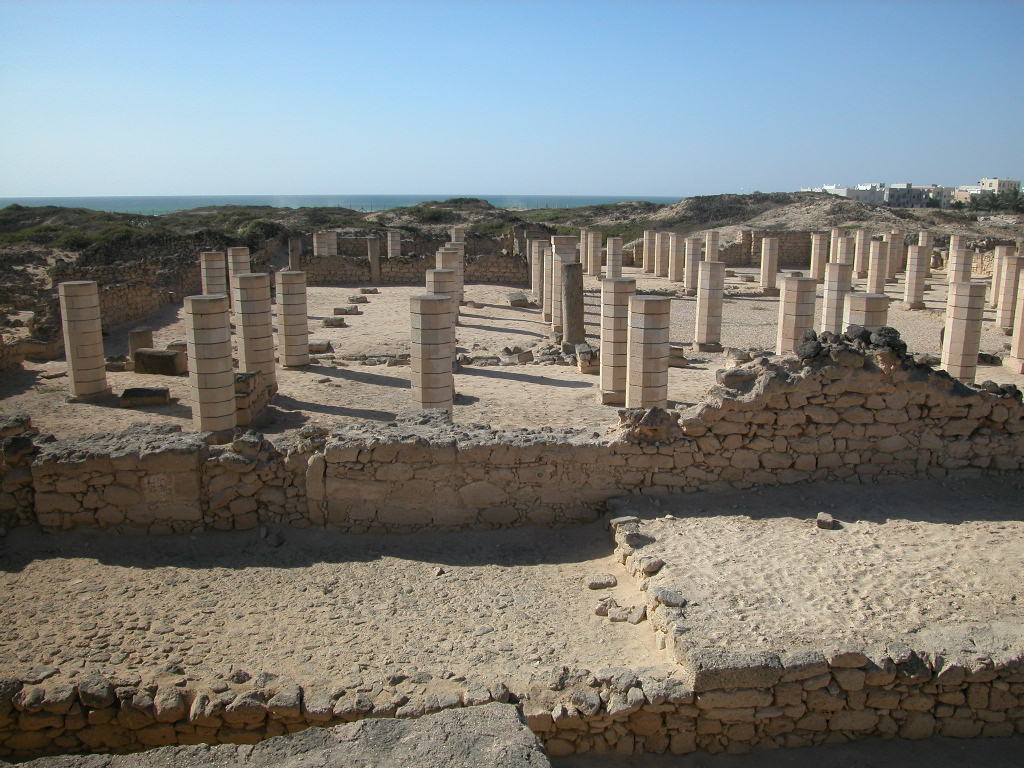
The World Heritage designation connects four distinct places scattered across Dhofar. Wadi Dawkah, about 40 kilometers north of Salalah, protects the world's largest stand of Boswellia sacra -- roughly 5,000 trees spread across 3,500 acres of stony semi-desert. This is the source, the grove where harvesters still score bark with small blades and return weeks later to collect hardened tears of resin. Shisr, further inland, marks the remains of a caravan oasis sometimes identified with the legendary lost city of Ubar. On the coast, two ancient ports completed the supply chain: Khor Rori, the fortified harbor known in antiquity as Sumhuram, and Al-Baleed, the medieval port that gave the Dhofar province its original name, Zafar.
Where Caravans Met the Sea
Khor Rori sits on a hilltop overlooking a freshwater inlet, 40 kilometers east of Salalah. Founded by Hadrami colonists as early as the 4th century BC, the settlement controlled frankincense production at its source. Scholars identify it with Moscha Limen, the port described in the 1st-century maritime guide Periplus of the Erythraean Sea. Excavations by American archaeologists in the 1950s and Italian teams since 1994 have uncovered inscriptions, pottery, and metalwork attesting to trade connections with India, the Hadrami homeland, and the Mediterranean. Al-Baleed, closer to modern Salalah, rose to prominence after Khor Rori's harbor silted shut. Between the 8th and 16th centuries, it served as the principal port for shipping frankincense to Africa, India, and China. Marco Polo and Ibn Battuta both visited and recorded a thriving commercial city on the Arabian Sea.
The World's First Luxury Commodity
What made frankincense so valuable was not just scent but scarcity. Boswellia sacra requires a precise combination of limestone soil, coastal fog, and seasonal moisture that exists in only a handful of places -- primarily Dhofar, parts of Somalia, and the island of Socotra. Trees must mature for eight to ten years before their first harvest, and the resin varies in quality depending on soil, climate, and the skill of the harvester. The finest grades, translucent and pale green, commanded premium prices in ancient markets. Frankincense was arguably the first commodity to generate true international trade routes, connecting southern Arabia to Egypt, Rome, Persia, and India centuries before the Silk Road became famous. The incense routes that crossed the Arabian desert were as consequential as any in history, and this stretch of Omani coastline was their starting point.
Ancient Groves, Living Trade
UNESCO originally inscribed the site in 2000 as the Frankincense Trail, renaming it the Land of Frankincense in 2005. The designation recognized not just archaeological ruins but a living landscape. Frankincense harvesting continues in Dhofar today, following methods that have changed remarkably little over millennia. Harvesters make shallow incisions in the bark, allow the milky sap to harden over two weeks, then peel the solidified resin from the trunk. The trees at Wadi Dawkah include ancient specimens whose scarred trunks record generations of this practice. Although Somalia is home to the largest frankincense forests globally, Oman has positioned itself as the primary source of high-quality Boswellia sacra resin, and the frankincense souks of Salalah remain fragrant, busy places where the ancient commodity still changes hands.
From the Air
The four components of this World Heritage Site are spread across Dhofar Governorate. Wadi Dawkah lies at approximately 18.25N, 53.65E, about 40 km north of Salalah in semi-desert terrain. Khor Rori is on the coast 40 km east of Salalah. Al-Baleed is on the Salalah waterfront. Shisr is further inland. Salalah International Airport (OOSA) serves as the gateway. The coastal sites are best viewed from low altitude approaching from the sea. The khareef monsoon (June-September) brings fog and reduced visibility to the coastal plain.