Lange Max Museum
There is a circle of concrete in a farmyard in Koekelare, a few kilometers inland from the Belgian coast, that once held one of the largest guns on Earth. Its barrel measured 38 centimeters across. It fired shells weighing 750 kilograms over a range of more than 45 kilometers - enough to drop them on Dunkirk, on Ypres, on coastal targets that the gun crew themselves could never see. The German artillerymen called it Lange Max, Long Max. The locals called it Leugenboom - the lying tree - because German propaganda first tried to disguise the firing flash as lightning striking a tree. The gun is gone now, scrapped or salvaged after the war. The platform remains. So does the museum built around it, which is, somewhat unusually for Belgium, told entirely from the German side.
One Gun, Two Cities Bombarded
The 38 cm SK L/45 "Max" was a German naval gun, originally designed by Krupp for battleships of the Bayern class. By 1917 the Germans had pulled four of them off ship-mountings, set them on enormous concrete-and-steel emplacements, and sent them to the Western Front. The Koekelare gun was part of Batterie Pommern. From its concrete saucer in the polders, it began firing in June 1917, mainly at the French port of Dunkirk roughly 45 kilometers to the southwest, and also at Ypres about 22 kilometers south. The shells took roughly two minutes to arrive. The civilians on the receiving end had no warning at all. Until the appearance of the Paris Gun later in 1918, Lange Max held a credible claim to being the largest practical artillery piece in the world.
The Lying Tree
The German army went to considerable lengths to hide what they were doing. The emplacement was disguised, the firing flash was at first explained away to local Belgians as ordinary lightning hitting a tall tree, and the surrounding battery infrastructure was scattered through farmyards and small woods to avoid drawing aerial reconnaissance. The local Flemish, who could feel the gun every time it fired and hear the deep thump roll across the polders, nicknamed it Leugenboom - the lying tree - in mocking acknowledgment of the cover story. The name stuck. To this day, more locals call the platform the Leugenboom than the formal Pommern designation.
The German Side of the Story
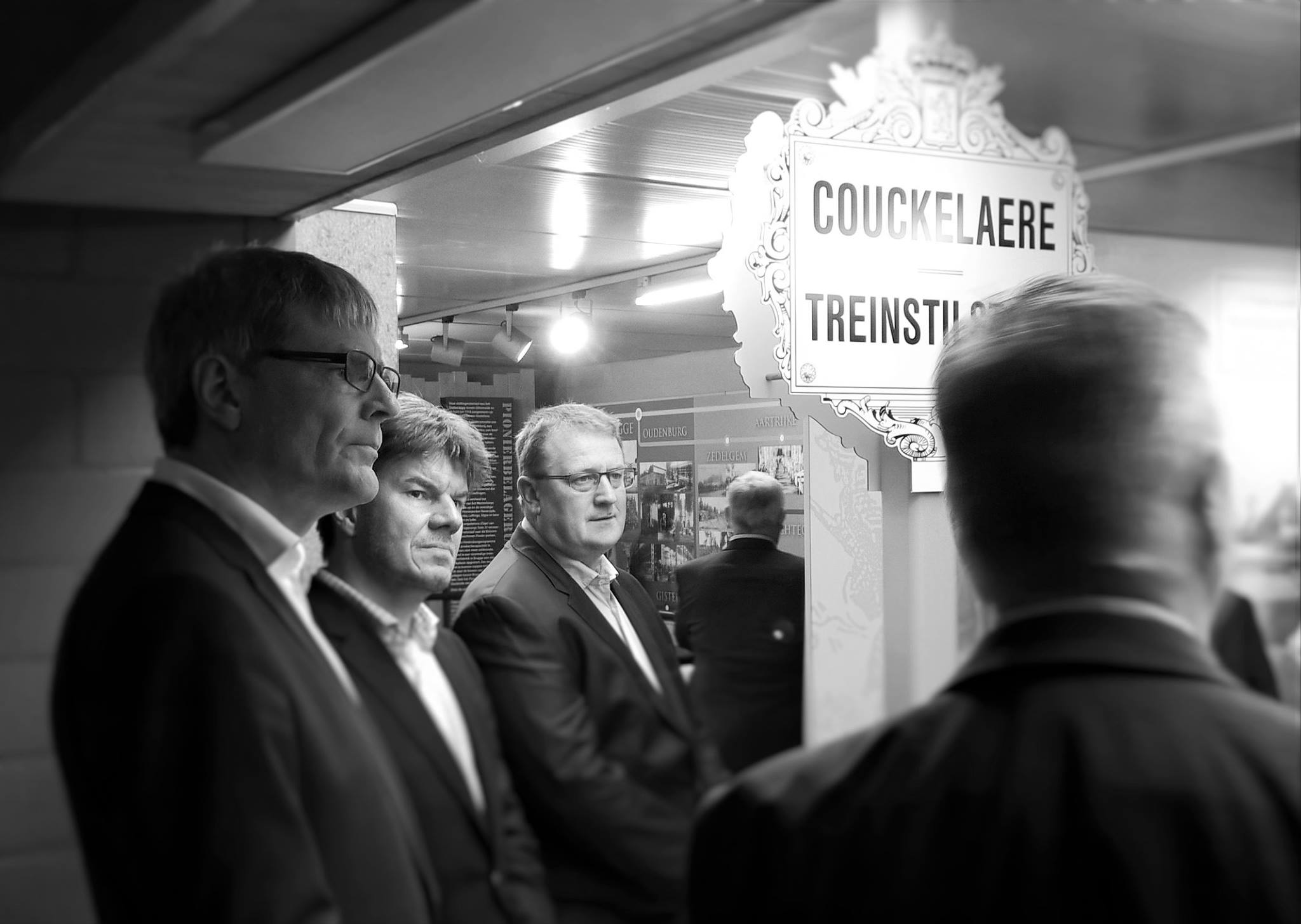
What makes the Lange Max Museum unusual among Flemish WWI museums is its focus. Belgium has dozens of war museums, mostly told from the Allied perspective: trench experiences, Commonwealth cemeteries, the suffering of the Belgian army. The Lange Max Museum is built around the German occupation of Koekelare and the surrounding countryside, and the everyday life of the German soldiers and officers who lived here for four years. The site includes a farmyard that the Germans used, a bakehouse where they baked bread for the front-line troops, a former officers' mess, and of course the artillery platform itself. Exhibits cover both the technical specifics of the gun and the texture of occupation - what the soldiers ate, where they slept, how they treated the Belgian families whose farms they had taken over. Audio guides run in Dutch, German, English and French.
Battlefield Tourism, Vintage 1925
After the war, in an era when the trenches of the Western Front had become one of Europe's first dark-tourism destinations, the Pommern emplacement was already on the standard itinerary. The 1920s Michelin Guide L'Yser et la cote belge listed it as a must-see. Winston Churchill came during the interwar years. So did Hirohito, who would later be the wartime emperor of Japan; so did Woodrow Wilson, the American president whose entry into the war had effectively ended German hopes of holding sites like this. The future kings of Britain - Edward VIII and George VI, then still princes - visited together on December 10, 1918, only a month after the armistice. So did Marshal Ferdinand Foch, French president Raymond Poincare, and the future King Leopold III of Belgium. The concrete circle that had thrown shells at Dunkirk became a kind of public stage where the victorious leaders of 1918 came to look at what had been stopped.
Visiting Today
The museum opened in October 2014, inaugurated by then-Minister-President of Flanders Geert Bourgeois. By 2016 a TripAdvisor ranking listed it as the third-best museum in Belgium. The site is small and rural - just a farmyard, a few outbuildings, the concrete platform - but the surrounding region is dense with adjacent World War I sites. Vladslo German war cemetery, where Kathe Kollwitz placed her Mourning Parents sculpture over more than 25,000 German graves, is a short drive south. The Kathe Kollwitz Museum and the Fransmansmuseum are both in Koekelare itself. The Yser Tower is twenty minutes away by car, and Diksmuide's Trench of Death is just beyond it. A visit to Lange Max fits neatly into a day spent on this less-traveled, more-German-facing corner of the Western Front - a useful counter-point to the more familiar Commonwealth circuit around Ypres.
From the Air
Lange Max Museum sits at 51.117°N, 2.982°E in Koekelare, West Flanders - about 12 km inland from the Belgian coast. The nearest airfield is EBFN (Koksijde) 16 km west; EBOS (Ostend-Bruges) is 18 km north. From low altitude the area is open polder farmland, with the museum a small cluster of buildings around the recognizable circular concrete artillery platform; the coast of the North Sea is visible to the west, Dunkirk's range from this point stretching far down the French shoreline.