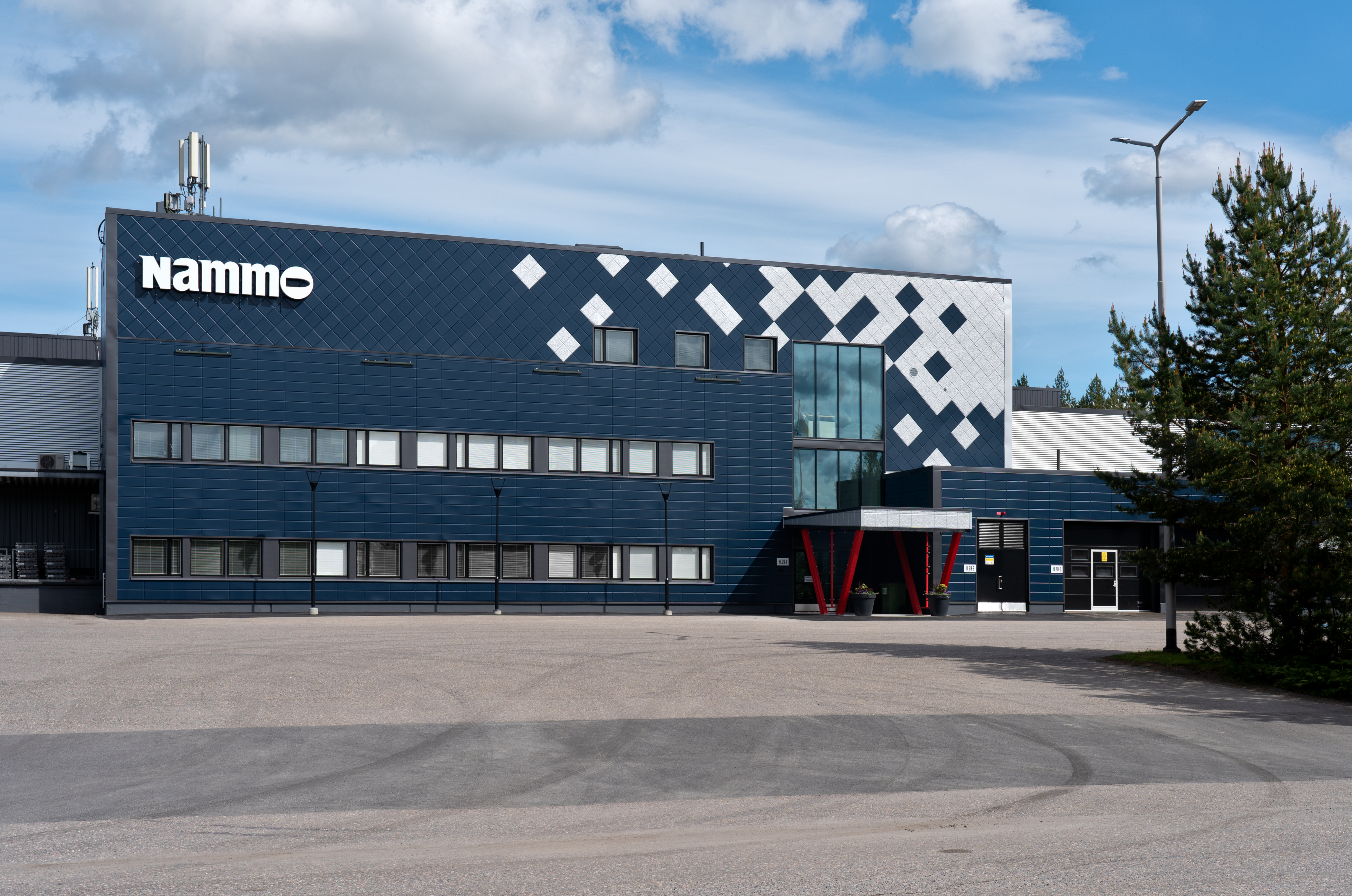
Lapua Cartridge Factory
A Soviet spy poisoned the CEO and stole the blueprints. That single sentence, bizarre as it sounds, belongs to the real history of a small ammunition factory in the flatlands of Ostrobothnia, Finland. The Lapua Cartridge Factory -- known locally as "Paukku," meaning "bang" -- has been producing bullets since 1925, and its century-long story reads less like industrial history than a Cold War thriller set against the quiet fields of western Finland.
From Sawmill to Security
The factory exists because of a river that was too slow. In the early twentieth century, builders erected a sawmill complex in Lapua, only to discover the local current lacked the force to power it. The buildings stood idle until the parliament of the newly independent Finland intervened in May 1923, purchasing the estate for the Defence Forces. The logic was straightforward: a young nation needed its own ammunition supply, and Lapua was far enough from the Russian border to offer strategic depth. The region's population was also considered politically reliable -- a concern that still echoed from the Finnish Civil War of 1918. By January 1925, the first cartridges rolled off the line, and two years later the operation received its official name: Valtion Patruunatehdas, the State Cartridge Factory.
Spies, Champions, and a Secret Bullet
Within a decade, the factory had earned an international reputation -- and drawn international attention. Lapua-branded ammunition won its first major competition at the 1930 ISSF World Shooting Championships, launching the brand's enduring association with precision marksmanship. But in 1932, while engineers developed a new 7.62 mm "D bullet" for the Finnish Defence Forces, a Soviet agent infiltrated the compound, murdered the factory's director by poisoning, and escaped with the technical drawings. The espionage did not stop the project. By 1936, the D-166 bullet had entered production as the standard round for the Finnish military's 7.62x53mmR cartridge -- a design that would prove its worth in the wars to come.
Decoy Fires and Underground Workshops
When the Soviet Union invaded Finland in November 1939, the Lapua factory became a prime target. To protect it, workers dispersed operations to multiple sites. An underground facility was established in Kanavuori, near Jyvaskyla, producing ammunition beneath rock and earth. At the main Lapua site, the town itself became an instrument of deception. Residents blacked out every window and doorway while crews lit decoy fires in the surrounding countryside to mislead Soviet bombers. The ruse worked -- no bombs struck the factory. Through the Winter War and the broader conflict of World War II, Lapua kept producing the ammunition that Finland's survival depended on.
Thirteen Minutes in April
On 13 April 1976, the loading building detonated. The explosion killed forty factory workers and obliterated the structure entirely. It remains Finland's worst explosion disaster. The shock wave flattened buildings nearby, and the loss -- forty lives in a close-knit community -- scarred Lapua permanently. In the aftermath, the factory's loading operations were relocated several kilometers southeast to Joutkallio, well beyond the outermost town dwellings. New cartridge case and bullet manufacturing facilities followed, and by 1984 the rebuilt compound was complete. The old factory site in central Lapua, known today as Vanha Paukku, has been converted into a cultural center -- the name a quiet echo of the factory's local nickname.
Nordic Armorer
The decades after the explosion brought a succession of corporate restructurings that gradually shifted the factory from direct state ownership into the international defense industry. In 1991 it was separated from Valmet and became Patruunatehdas Lapua Oy. A year later it acquired the German precision ammunition maker SK Jagd- und Sportmunitions GmbH. Further consolidation in 1996 brought it under Patria Industries, and in 1998, Finnish, Swedish, and Norwegian ammunition manufacturers merged to form Nammo AS. The factory has operated as Nammo Lapua Oy ever since. Today, competitive shooters around the world still reach for Lapua-branded cartridges -- a legacy that stretches back to those first championship victories in 1930, built in a place that was never supposed to make anything but lumber.
From the Air
Located at 62.97N, 23.02E in the flat Ostrobothnian plain of western Finland. The factory compound at Joutkallio is visible southeast of the town. Nearest significant airport is Seinajoki (EFSI), approximately 55 km to the south-southeast. Vaasa Airport (EFVA) lies about 90 km to the west-northwest. Expect flat terrain with scattered agricultural fields; the town of Lapua is identifiable by its church and river.