Larco Museum
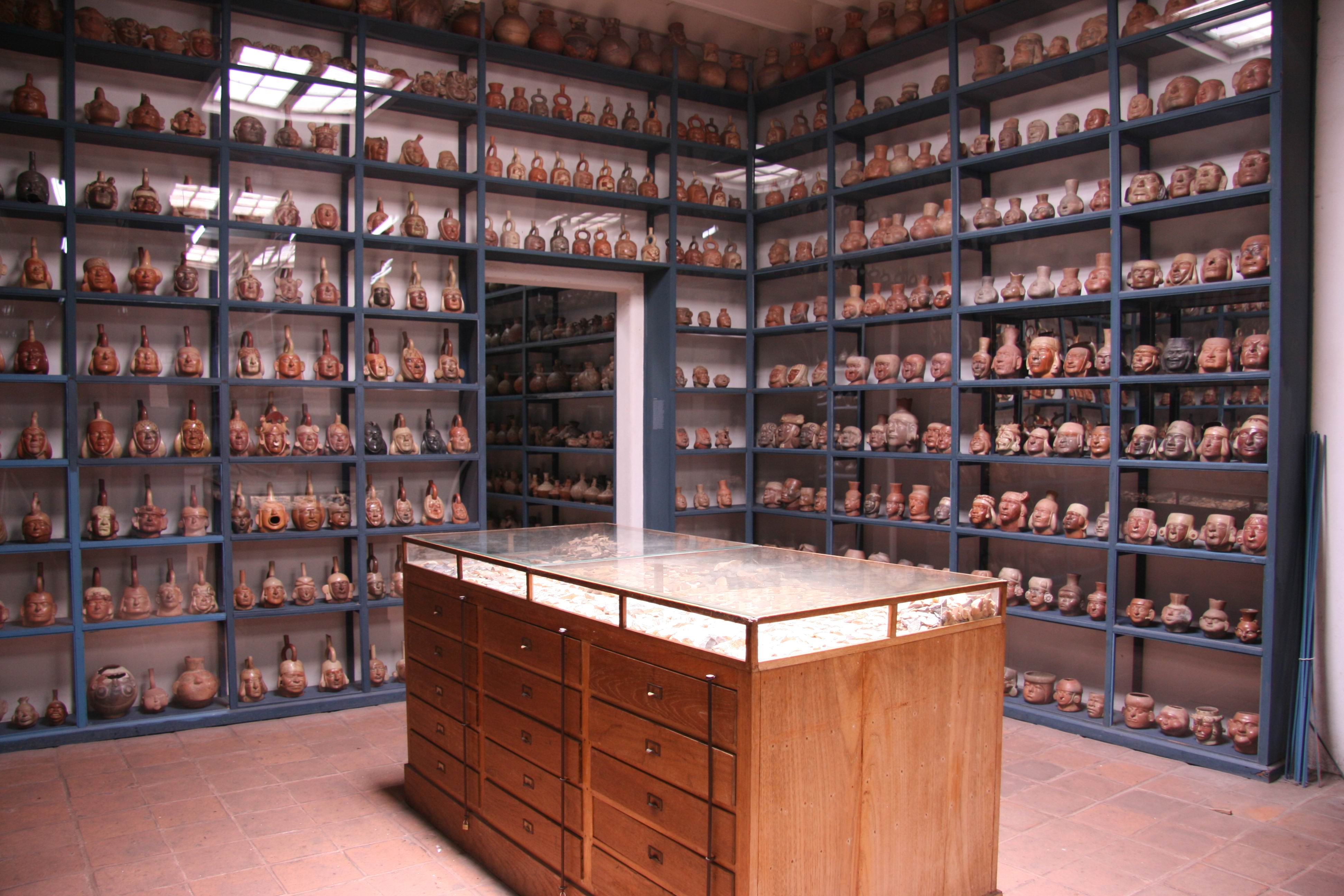
Most museums begin with a building and then fill it with objects. The Larco Museum began with 600 ceramic vases and a family's obsession. In 1925, Rafael Larco Herrera acquired a collection of pre-Columbian pieces from his brother-in-law, and something in those clay forms -- shaped by hands that had been dust for centuries -- ignited a collector's fire in his son, Rafael Larco Hoyle. Within a year, the younger Larco had purchased over 14,000 additional pieces and opened a museum on Peru's Independence Day, July 28, 1926. A century later, the collection he built fills an 18th-century vice-royal mansion in Lima's Pueblo Libre district and spans 5,000 years of Peruvian civilization.
A Race Against Looters
Larco Hoyle's urgency had a specific cause. His uncle, Victor Larco Herrera -- founder of Lima's first museum -- urged him to act because pre-Columbian artifacts were being systematically extracted by clandestine excavators and scattered across private collections and foreign markets. The younger Larco responded with the methodical determination of a man building an ark. He purchased 8,000 pieces from one collection and 6,000 from another, then swept through the Chicama Valley, Trujillo, Viru, and Chimbote acquiring smaller holdings. Display cases were installed in a small house on the Chiclin estate, and the Museo Arqueologico Rafael Larco Herrera opened its doors. What began as a family project became one of Latin America's most important archaeological repositories.
Five Millennia in Sequence
The Cultures Gallery takes visitors through 10,000 years of pre-Columbian history arranged in chronological sequence and organized by region. From the North Coast come the works of the Cupisnique, Vicus, Mochica, and Chimu cultures. The Central Coast contributes the Lima and Chancay traditions. From the South Coast, Paracas textiles and Nazca ceramics. From the Highlands, Chavin stone carvings, Tiahuanaco monoliths, Huari tapestries, and Inca metalwork. The effect of walking through this sequence is cumulative: you begin to see not isolated artifacts but the continuity of artistic traditions that spanned thousands of years and hundreds of miles, each culture inheriting forms from its predecessors and transforming them.
Gold, Silver, and the Rulers Who Wore Them
The Gold and Silver Gallery holds the museum's most visually striking collection -- jewelry and regalia worn by the rulers of pre-Columbian Peru. Crowns, earrings, nose ornaments, ceremonial masks, and garments wrought in gold and decorated with semi-precious stones fill the cases. These are not decorative objects in the modern sense. They were instruments of power, markers of divine authority, worn by leaders whose right to rule was expressed through the materials on their bodies. The craftsmanship is extraordinary: gold worked so thin it bends like cloth, earrings the size of saucers with inlay work requiring tools and techniques that modern jewelers study with respect.
The Room Everyone Talks About
The museum is perhaps best known internationally for its Gallery of Pre-Columbian Erotic Pottery -- a collection assembled by Rafael Larco Hoyle in the 1960s as part of his scholarly research on sexual representation in ancient Peruvian art, published in his 1966 book Checan. The ceramics are explicit, varied, and crafted with the same artistic sophistication found in the museum's other galleries. Ancient Peruvian cultures depicted sexuality as they depicted warfare, agriculture, and ritual -- as a fundamental aspect of human experience worth recording in clay. The gallery holds the world's largest collection of erotic ceramics, and its directness still surprises visitors accustomed to cultures that separated art from anatomy.
A Living Collection
The museum's reach now extends well beyond its vice-royal walls. A daughter institution, the Museo de Arte Precolombino in Cusco, displays pieces on loan from the Larco collection. International exhibitions regularly send objects to museums and cultural centers around the world. A gallery shop offers ceramic, metal, and textile reproductions created by craftsmen from across Peru, with the museum formalizing quality standards for these replicas. The Larco remains privately owned, a rarity among institutions of its scale, and its gardens -- bougainvillea cascading over colonial walls -- are nearly as famous as what lies inside. In a country where pre-Columbian heritage was once routinely plundered, the museum stands as evidence that one family's collecting mania could become an act of preservation.
From the Air
Located at 12.07S, 77.07W in the Pueblo Libre district of Lima, Peru. The museum is housed in an 18th-century mansion surrounded by gardens, visible from low altitude as a green compound amid Lima's dense urban grid. Nearest major airport: Jorge Chavez International (SPJC), approximately 8 km northwest. The museum lies roughly 4 km southwest of Lima's historic center.