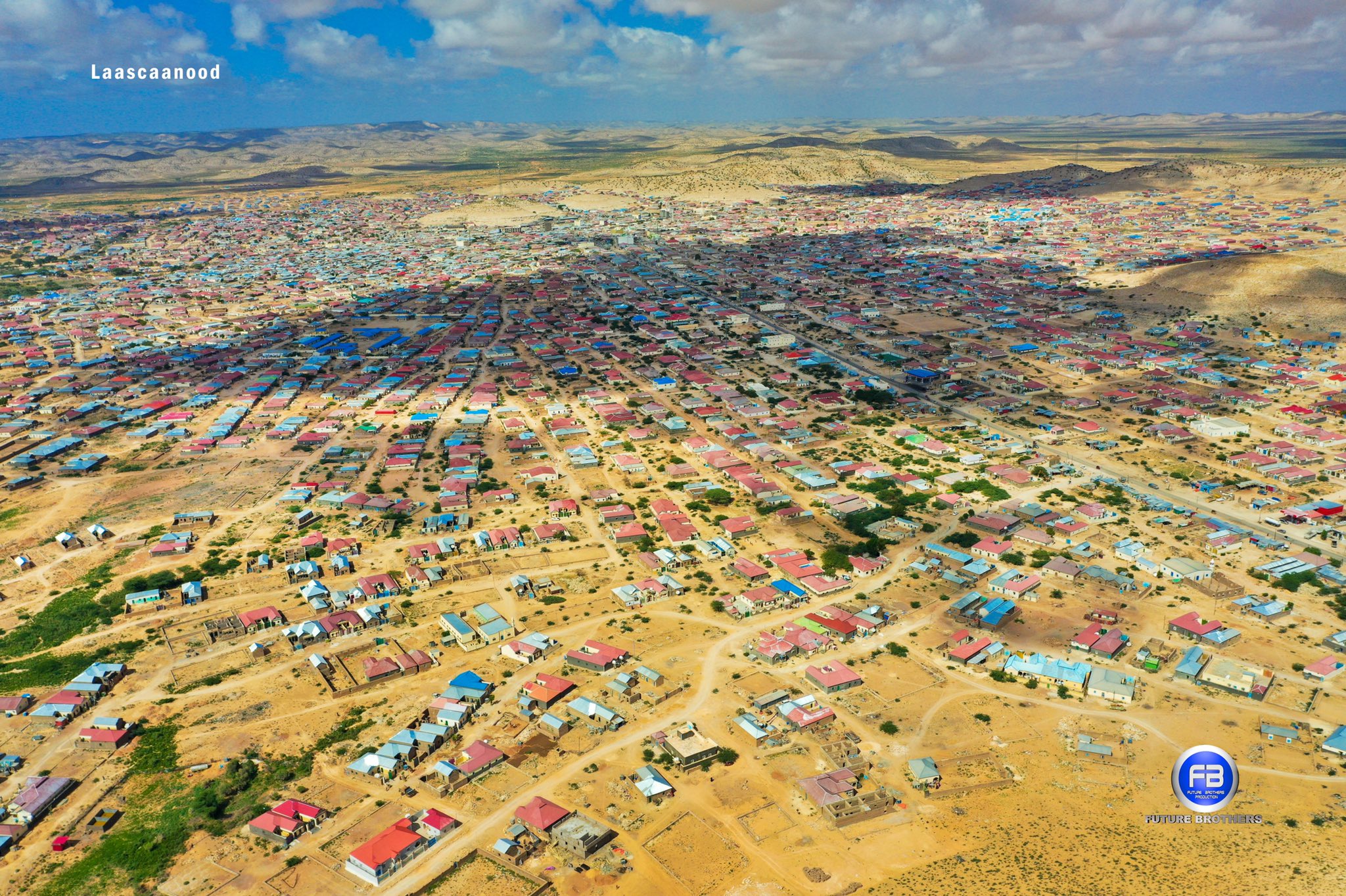
Las Anod
On October 15, 1969, Somali President Abdirashid Ali Shermarke was visiting Las Anod when one of his own bodyguards shot him dead. Six days later, a military coup overthrew the government. It was not the first time this remote city in the Sool region became the fulcrum of national events, and it would not be the last. Las Anod has spent the better part of a century at the intersection of clan politics, colonial boundaries, and competing visions of Somali statehood — a city where the question of who governs has never had a stable answer.
Lines on a Map
The roots of Las Anod's contested status stretch back to 1894, when Britain and Italy drew a boundary through the Somali-inhabited Horn of Africa. That line placed Las Anod inside British Somaliland, but the Dhulbahante clan who predominantly inhabit the Sool region maintained kinship ties with the Majeerteen clan to the east, in what became Italian Somalia. When Britain granted its protectorate independence in 1960, the new State of Somaliland merged almost immediately with the former Italian territory to form the Somali Republic. Colonial borders became internal administrative boundaries — until 1991, when Somaliland declared independence and those same lines became contested frontiers. Puntland, formed in 1998 as an autonomous state within Somalia, claimed the Sool region based on clan affiliation. Somaliland claimed it based on colonial borders. Las Anod found itself caught between two logics of belonging.
The Seat of Garad Ali
Before the border disputes, Las Anod was a center of political organization. During the British protectorate era, it served as capital of the Nogal District, described by the colonial officer John Hunt as an "entirely Dolbahanta" province. In the late 1950s, the city became the headquarters of the United Somali Party, founded by Garad Ali with the support of Warsangeli, Gadabuursi, and Dhulbahante clans as a counterweight to Isaaq political dominance. Garad Ali's father, Garad Farah, had spent years in voluntary exile in Mogadishu after clashing with the British administration. When the younger Garad returned, he brought a university education and a determination to build cross-clan coalitions. From 1959 to 1961, Las Anod served as the USP's seat, a brief period when the city's political ambitions matched its geographic centrality.
A City Between Armies
In October 2007, Somaliland forces advanced from their base at Adhicadeeye, west of Las Anod, and captured the city from Puntland. Between 10 and 20 people died in the fighting. For the next fifteen years, Somaliland governed Las Anod with what observers described as little local legitimacy, while a pattern of unsolved assassinations eroded what trust remained. The city's Dhulbahante residents found themselves politically underrepresented: of 12 parliamentary seats allocated to the Sool region in Somaliland's legislature, only 5 were held by Dhulbahante representatives. Throughout the 21st century, Las Anod became known as the only city in the Horn of Africa where community leaders were regularly killed without any suspect ever being identified or charged.
February 2023
In December 2022, the assassination of a popular local politician ignited protests that left 20 people dead. By early February 2023, traditional Dhulbahante elders who had been absent from Las Anod since Somaliland's 2007 takeover gathered in the city to chart a new course. On February 6, they attempted to announce the formation of SSC-Khaatumo, aligned with the Federal Republic of Somalia. Somaliland troops shelled the town. The mayor of Las Anod, Abdirahim Ali Ismail, stated plainly: "This is not a war between Somaliland and Puntland, nor between Somaliland and terrorists, but between the Somaliland army and the people of Las Anod." By late February, the United Nations reported that more than 185,000 people — 89 percent of them women and children — had been displaced. On August 25, 2023, Khatumo State forces drove Somaliland troops from Las Anod entirely. The city had changed hands once more, but for its residents, the deeper questions of governance, safety, and belonging remained unresolved.
From the Air
Las Anod sits at 8.48°N, 47.36°E in the arid Sool region of the Horn of Africa. From altitude, the city appears as a compact urban center in flat semi-arid terrain. The nearest airport is Las Anod Airport (HCMA). Burao (HCMV) lies roughly 200 km to the west, while Garowe is to the east in Puntland territory. Visibility is generally good in the dry, low-humidity conditions typical of the Somali interior.