Las Vegas: The City That Exists Because Everything Else Is Illegal
Las Vegas shouldn't exist - a city of 2.3 million in a desert that receives 4 inches of rain annually, surviving on water borrowed from an overallocated river. The city exists because Nevada legalized gambling in 1931 when everywhere else kept it illegal. The mob built the casinos; Howard Hughes bought them out; corporations sanitized the operation. The Strip that resulted is a monument to excess: themed resorts replicating Venice, Paris, New York, and ancient Egypt, each trying to outspectacle the others. Las Vegas is America's id made manifest - the things other places prohibit, concentrated in one improbable desert location, generating $15 billion in gaming revenue annually.
The Mob
Benjamin 'Bugsy' Siegel built the Flamingo in 1946, bringing mob money and Vegas ambition together. The casinos that followed were largely mob-financed - Teamsters pension funds laundered through front men, profits skimmed before counting. The names are legendary: Meyer Lansky, Frank Rosenthal, Tony Spilotro. The FBI and Nevada Gaming Control eventually cleaned up the ownership; the last mob-connected casinos were bought out by corporations in the 1980s. The corporate Strip that exists today is sanitized, publicly traded, legally compliant - but it was built on mob foundations, the legitimate inheriting what the illegitimate created.
The Strip
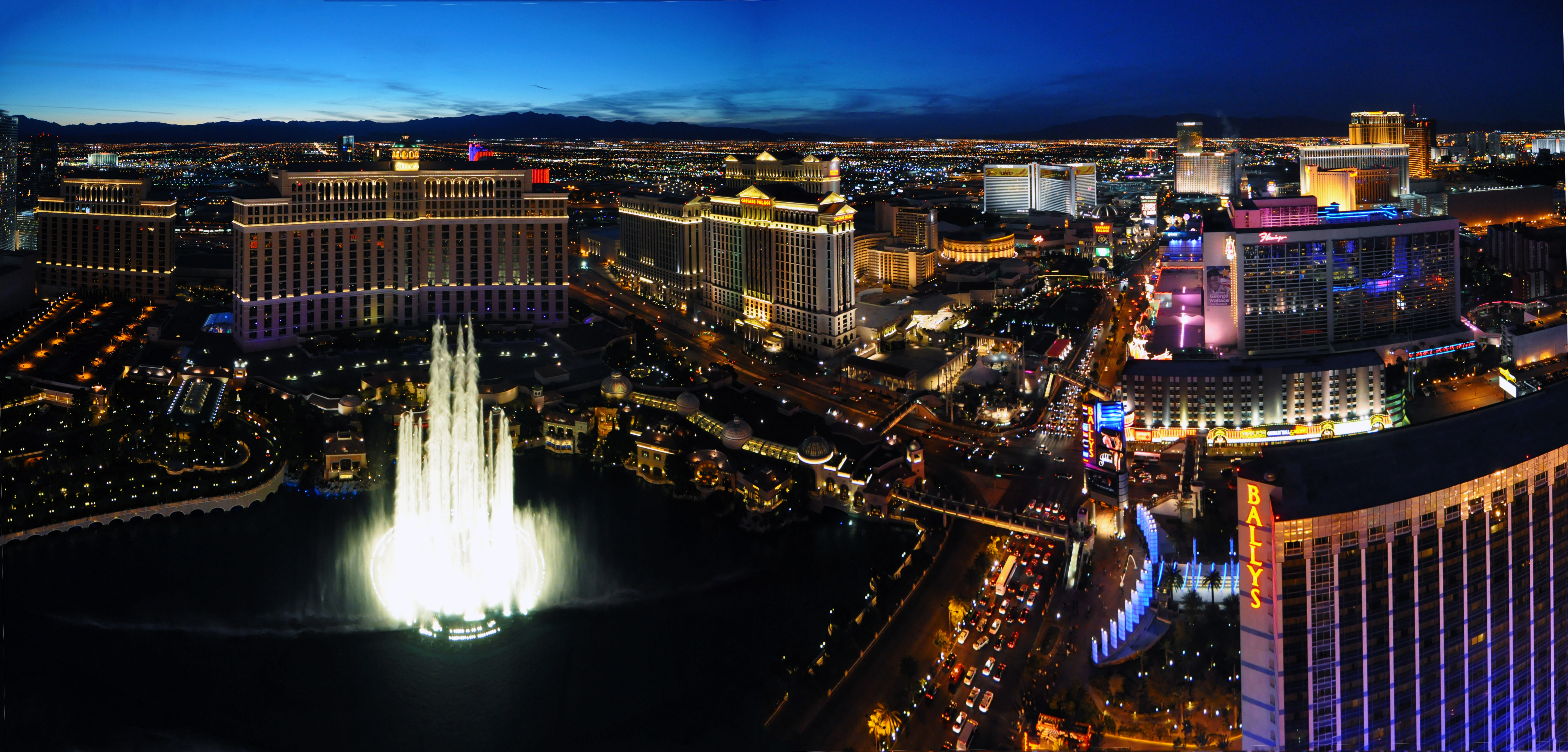
The Las Vegas Strip isn't in Las Vegas - it's in Paradise and Winchester, unincorporated townships that avoid Las Vegas city taxes. The Strip stretches 4.2 miles, concentrating the mega-resorts that define Vegas: the Bellagio's fountains, the Venetian's canals, Caesars Palace's Roman excess, the Luxor's pyramid. The architecture is themed fantasy, environments designed to confuse the sense of time and place, casinos designed to trap visitors inside. The Strip generates more revenue than any comparable commercial corridor in America; the pedestrian traffic exceeds Disneyland's. The experience is sensory overload by design - the point is overwhelming stimulation that makes gambling seem natural.
The Shows
Las Vegas entertainment began with Frank Sinatra at the Sands and Elvis at the International (now Westgate). Elvis performed 636 shows from 1969 to 1976, defining the Vegas residency model that persists today. The current residents are different - Adele, Lady Gaga, Celine Dion's long run at Caesars - but the model is the same: bring performers to audiences rather than touring audiences to performers. The shows range from Cirque du Soleil spectaculars to comedy headliners to adult revues. Entertainment that would struggle to fill theaters elsewhere fills Vegas showrooms nightly.
The Water
Las Vegas depends on Lake Mead for 90% of its water - the same reservoir that's dropping to historic lows as the Colorado River overallocation becomes crisis. The city has responded with aggressive conservation: water-efficient fixtures required, grass removed, recycling increased. Per capita water use has dropped 50% since 2002 even as population doubled. The golf courses, the fountains, the swimming pools persist - but the aquifer beneath them is borrowed time. Las Vegas proves that desert cities can conserve; whether they can conserve enough remains uncertain.
Visiting Las Vegas
Las Vegas is served by Harry Reid International Airport (LAS). The Strip hotels range from budget (Circus Circus) to luxury (Wynn, Bellagio); rates vary dramatically by convention schedule and day of week. The casinos offer free entertainment: the Bellagio fountains, the Mirage volcano, the Fremont Street Experience downtown. Shows require tickets; the half-price ticket booths on the Strip discount unsold seats. The buffets are less dominant than before; celebrity chef restaurants have multiplied. Day trips to the Grand Canyon, Hoover Dam, and Red Rock Canyon escape the neon. The experience is whatever you make it - family-friendly or adult-oriented, gambling or non-gambling, excess or moderation.
From the Air
Located at 36.17°N, 115.14°W in the Mojave Desert of southern Nevada. From altitude, Las Vegas appears as an improbable green-and-neon splash in brown desert - the Strip visible as a corridor of mega-structures, the suburbs spreading in all directions, the mountains defining the valley edges. Lake Mead lies to the east, its low water levels visible in the bathtub ring. What appears from altitude as a major city in impossible terrain is exactly that - a desert metropolis built on gambling money, sustained by Colorado River water, existing because Nevada legalized what other states prohibited.