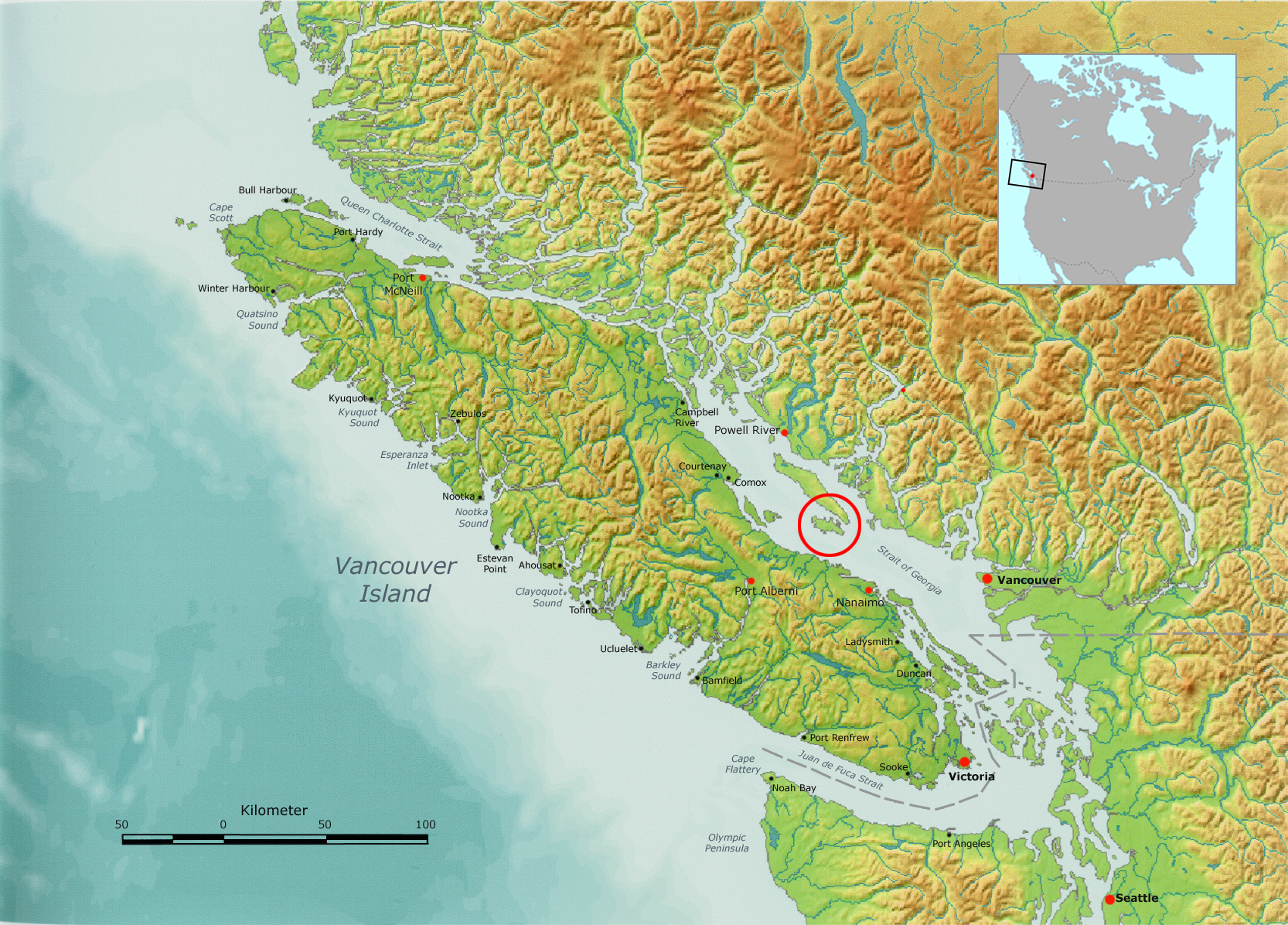
Lasqueti Island
Lasqueti Island has no electrical grid. That is not a temporary condition or a crisis waiting to be resolved. It is a choice. The roughly 498 people who live on this 73-square-kilometre island in the Strait of Georgia generate their own power from solar panels, wind turbines, micro-hydro systems, and diesel generators. They are the only major Gulf Island community that has declined BC Hydro's offer to connect, and they seem perfectly content with the arrangement.
A Spanish Name, a Rebel Spirit
Spanish naval officer Jose Maria Narvaez named the island in 1791 while commanding the Santa Saturnina, honoring fellow officer Juan Maria Lasqueti. That European formality sits oddly on an island that has since become one of Canada's better-known counter-culture enclaves. Roads are mostly unpaved. A passenger-only ferry from French Creek near Parksville makes two to three runs per day, six days a week, weather permitting. You cannot bring a car. Services are seasonal and limited: a hotel and restaurant operate in False Bay where the ferry docks, a handful of bed-and-breakfasts open their doors in summer, and an informal food cooperative keeps irregular hours depending on season and demand. Potable water can be scarce.
The Bolting Brassicas and Other Traditions
Every Canada Day weekend, Lasqueti Island holds an arts festival that showcases its creative community. Local painters, sculptors, poets, and fiction writers display their work alongside performing artists. The Bolting Brassicas, a marching band named after the vegetable gardener's nemesis, parade through the festivities. The Lasquirkus, the island's homegrown circus, performs. These are not polished tourist attractions but genuine expressions of a community that has chosen to live differently and has developed its own culture in the process. A 2012 Global News investigative report called "Off the Grid" brought national attention to the island's lifestyle, though residents have been living this way for decades.
Arbutus, Cacti, and Feral Sheep
The island's landscape splits between dry zones characterized by native arbutus trees, cacti, and succulents, and wetter areas dominated by red cedar. Pockets of old-growth forest survive, providing habitat for a distinctive mix of species. The geology underneath is almost entirely igneous, largely basaltic, covered by shallow stony soils that make farming a stubborn endeavor. Agriculture persists anyway: small farms produce blueberries, apple juice, eggs, and maple syrup. A shellfish farm and hatchery work the surrounding waters, cultivating clams, geoducks, oysters, honey mussels, and prawns. The forests have a less welcome resident, though. Feral sheep have extensively damaged the understory, a problem the island has struggled to resolve.
Treacherous Waters, Quiet Shores
Lasqueti has earned a reputation among sailors and sea kayakers for offering some of lower British Columbia's finest paddling, along with some of its most dangerous. Tides and currents in the Strait of Georgia can shift without warning, and winter storms barreling down the strait have claimed mariners' lives. The island is served by a two-truck volunteer fire department and falls under the jurisdiction of the Oceanside RCMP detachment based in Parksville, a response time that underscores the self-reliance the community takes for granted. Squitty Bay, the island's only provincial park, prohibits camping and campfires, but neighboring Jedediah Island Marine Provincial Park welcomes both, accessible by boat from Lasqueti's shores.
From the Air
Located at 49.48N, 124.28W in the Strait of Georgia between Vancouver Island and the mainland. Lasqueti Island appears as a large forested landmass with no visible electrical infrastructure from the air. Look for False Bay on the south side where the ferry docks. Neighboring Jedediah Island is visible to the northeast, and Texada Island lies to the north. No airstrip on the island. Nearest airports are Qualicum Beach Airport (CAT4) on Vancouver Island and Powell River Airport (CYPW). Best viewed at 3,000-5,000 feet for full island perspective.