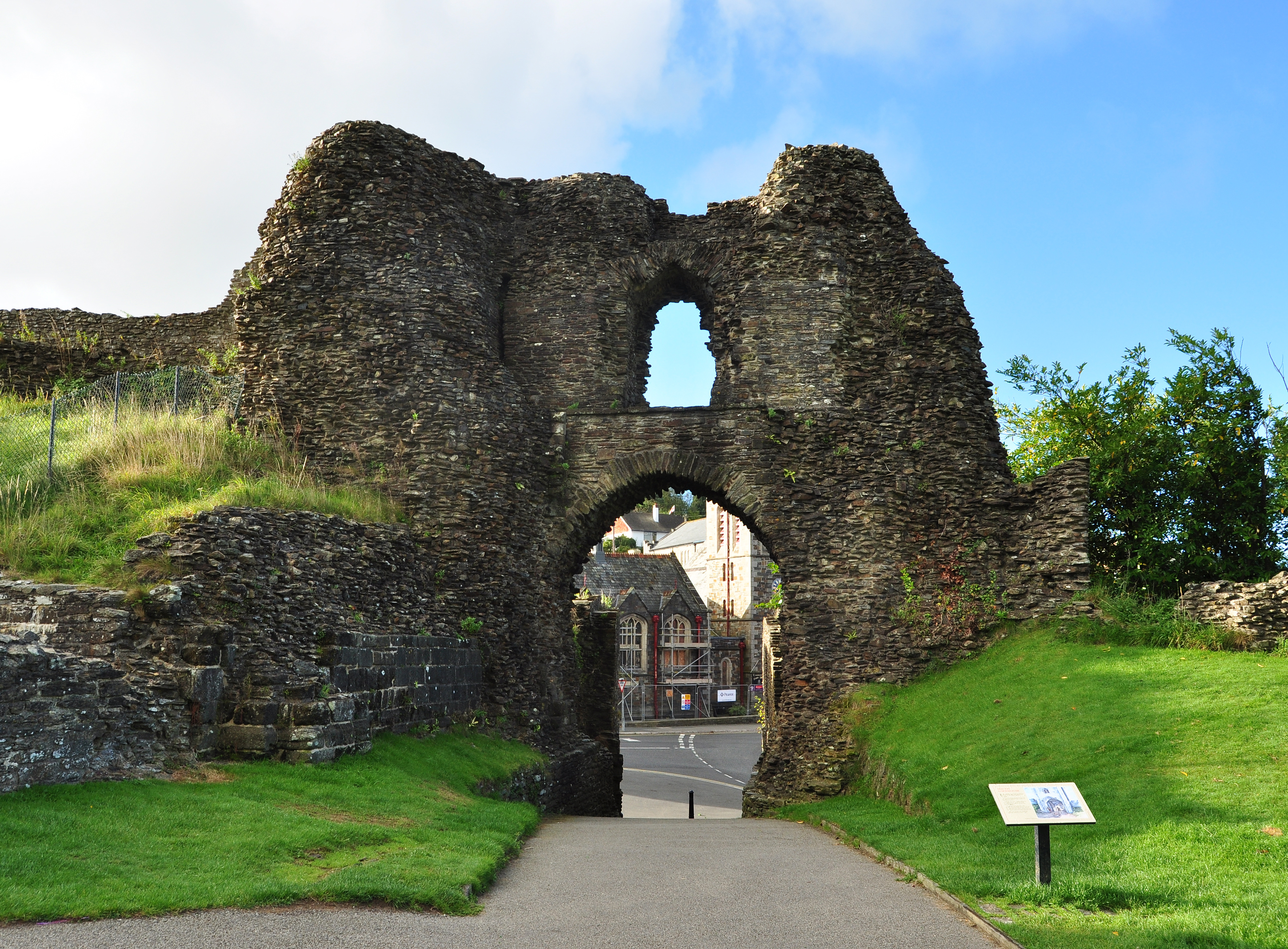
Launceston Castle
George Fox, founder of the Quakers, was imprisoned at Launceston Castle in 1656. He called it a 'nasty stinking place.' Fox was not exaggerating. By then, the castle that had once been the administrative center of the entire earldom of Cornwall -- a fortress so prominent that its high tower was visible to anyone entering from Devon -- had devolved into one of the most reviled prisons in England, earning the nickname Castle Terrible. That a building could travel from seat of power to object of disgust in a few centuries is not unusual in English history. What makes Launceston remarkable is how many times it reinvented itself along the way.
The Town Within a Town
Robert, Count of Mortain, built the castle after the Norman conquest, probably following the capture of Exeter in 1068. The location was strategic: Dunheved, as the site was then known, controlled the passage between Bodmin Moor and Dartmoor and the crossing over the Polson ford into Cornwall. The early castle was an earth-and-timber affair with a defensive motte in its northeast corner, but historian Oliver Creighton has described the busy bailey as resembling 'a town within a town.' Robert appropriated an existing market from the nearby canons at St Stephen's church and moved it to his castle gates to profit from the trade. A watermill was built to the southwest. The documentary record picks up in 1086, but the castle was already functioning as both a military stronghold and an economic hub. When Richard of Cornwall was granted the earldom in 1227, he rebuilt the walls and gatehouses and added a high tower to the keep -- not primarily for defense, but so his guests could admire the view of his deer park. The bailey was cleared and a grand new hall constructed. Archaeologist Oliver Creighton suggests the tower was intended as a 'private grandstand' for lordly display over the local community.
From Grandstand to Gaol
Richard's son Edmund inherited the earldom in 1272 and promptly moved the administrative center to Lostwithiel, closer to the tin mining industries that generated the real money. Launceston Castle entered a long, slow decline. By 1337 it was mainly used for judicial assizes and as a gaol. Edward the Black Prince held a council there in 1353, but the castle's glory days were over. During the Prayer Book Rebellion of 1549, Humphrey Arundell's rebels captured the fortress, and it later held -- and killed -- the royalist Sir Richard Grenville. The English Civil War finished what neglect had started. Royalist forces stripped the lead from the roofs and gave the timbers to townsfolk for fuel before retreating. Colonel Robert Bennett, a Baptist supporter of Cromwell, purchased the castle and its gaol. The prison conditions were atrocious. In 1690, the county complained to the King that male and female prisoners were sleeping together in the same quarters. The prison reformer John Howard reported in 1777 that the gaol consisted of a main room with three cages along one wall, and food was lowered to inmates through a hole by the gaoler.
Pigsties, Skittles, and a Queen's Complaint
By 1842, the last prisoners had been transferred to Bodmin Gaol and the castle's prison was demolished. What remained was a landscape of ruins covered in pigsties, cabbage gardens, and a skittle alley belonging to a local pub. Local tradition holds that the visiting Queen of Portugal, Maria II, was so appalled by the state of the site that she complained to Queen Victoria. Whether the story is true or embellished, the result was concrete: Hugh Percy, the 3rd Duke of Northumberland and the castle's constable, spent 3,000 pounds between 1840 and 1842 landscaping the ruins into a public park. The south gatehouse was repaired and the remains of the north gatehouse were converted into stables. Earlier, in 1834, the construction of Western Road along the castle's southern edge had required demolishing part of the castle wall and a fortified bridge, weakening the foundations enough to collapse the southeastern tower later that year. The castle's constable in 1764, Coryndon Carpenter, had actually demolished part of the north gatehouse himself to build a mansion called Eagle House. Launceston was being dismantled by the very people entrusted with its care.
The Castle That Endures
Today Launceston Castle is owned by the Duchy of Cornwall and operated by English Heritage. Annual visitor numbers average between 23,000 and 25,000. The motte, keep, and high tower remain, still overlooking what was once Richard of Cornwall's deer park. The south gatehouse with its twin drum towers survives, along with stretches of the curtain wall built from dark shale with granite and Polyphant stone detailing. The foundations of the thirteenth-century great hall, a courtroom, and a kitchen have been excavated and are visible within the bailey. The high tower, 12 meters in diameter and constructed from dark shale, leans slightly now but still dominates the town. During the Second World War, the site housed United States Army soldiers and was later used by the Air Ministry for offices, a reminder that even in decay Launceston kept finding uses. The castle sits on a ridge that slopes from east to west, with the ground dropping to the River Kensey on the north side. From the air, the relationship between the circular motte, the rectangular bailey, and the medieval town grid that grew around them is immediately clear -- nearly a thousand years of English history laid out in stone and earthwork.
From the Air
Located at 50.64N, 4.36W in the town of Launceston on the Cornwall-Devon border. The castle's motte and high tower are prominent landmarks on the ridge above the River Kensey. Nearest airports: Exeter (EGTE) 40 miles east, Newquay Cornwall (EGHQ) 30 miles southwest. Best viewed at 1,500-2,500 feet to see the castle's relationship to the town and the surrounding landscape.