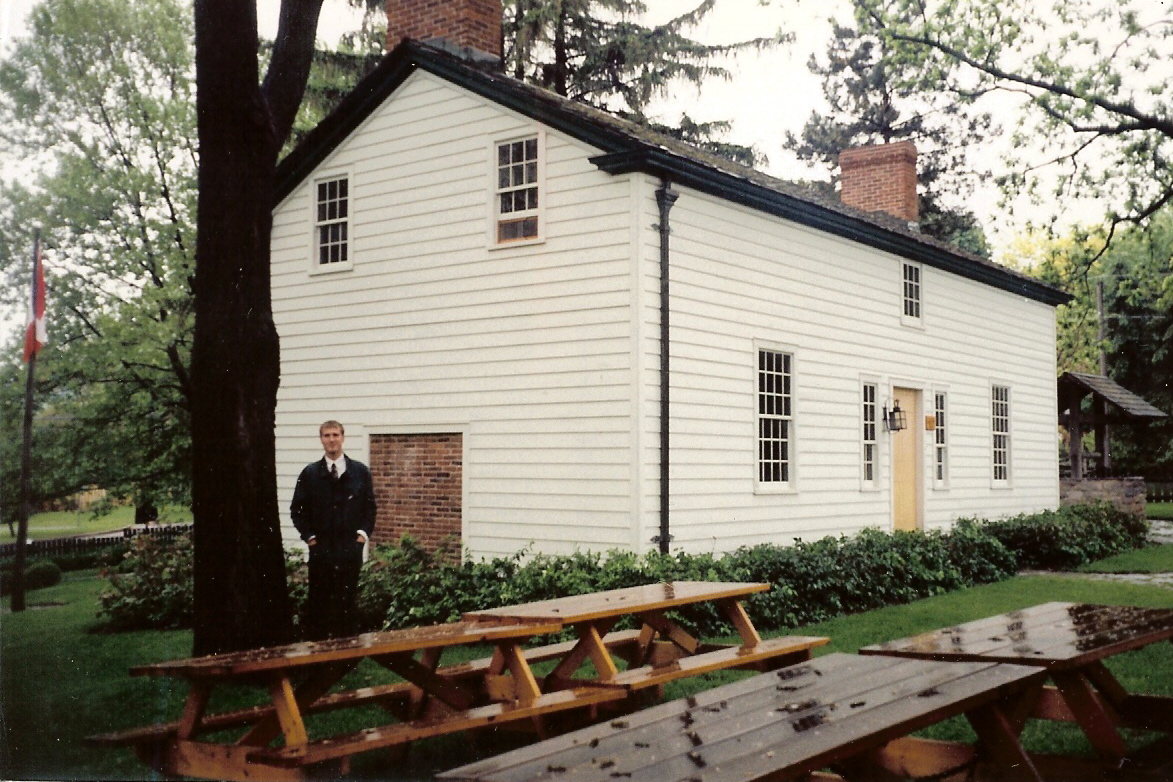
Laura Secord
Most Canadians hear the name Laura Secord and think of chocolate. The candy company, founded in 1913 on the centennial of her famous walk, packaged its confections in black boxes adorned with her cameo and grew into the largest candy retailer in the country. But a century before the chocolates came the woman herself, and her story is far stranger than the legend that grew up around it. On the morning of June 22, 1813, with American soldiers billeted in her Queenston home and her husband still crippled from battle wounds, Laura Secord slipped out before dawn and walked 32 kilometers through swamps, forests, and enemy-controlled territory to deliver a warning that would change the course of a battle. She was 37 years old. No one thanked her for it.
A Patriot's Daughter in Loyalist Country
Laura Ingersoll was born on September 13, 1775, in Great Barrington, Massachusetts, the daughter of a militia captain who fought on the Patriot side in the American Revolution. Her father, Thomas Ingersoll, was a hatter turned soldier who rose to the rank of major after helping suppress Shays' Rebellion in 1786. But postwar Massachusetts offered declining fortunes and deepening debts. In 1793, Thomas met the Mohawk leader Joseph Brant in New York City, who showed him promising settlement land in Upper Canada. Thomas secured a land grant in the Thames River valley and founded Oxford-on-the-Thames, later renamed Ingersoll, Ontario. By 1795, the Ingersoll family had crossed into British territory. Laura stayed behind in Queenston when her father moved again, and in 1797 she married James Secord, a merchant whose father had served as a Loyalist officer in the British Indian Department. The daughter of an American revolutionary had planted her life firmly on the British side of the Niagara River.
Shot Twice at Queenston Heights
When the United States declared war in June 1812, James Secord enlisted in the 1st Lincoln Regiment of Militia. On October 13, 1812, the Americans crossed the Niagara River and attacked Queenston. Laura sheltered with her five children in a farmhouse while James mustered with his unit. During the Battle of Queenston Heights, James was shot twice, once in the shoulder and once in the knee. When the guns fell silent, Laura returned to find her home ransacked by American soldiers. She retrieved her husband from the battlefield and nursed him through months of recovery. James would never fully regain his strength. The couple and their children spent that winter living with relatives in the nearby village of St. Davids, their store in ruins and their livelihood gone. When the Americans captured Fort George the following May, the Niagara Peninsula fell entirely under occupation, and American soldiers moved into the Secords' home.
Thirty-Two Kilometers Through the Wilderness
On the evening of June 21, 1813, Laura Secord learned of American plans to launch a surprise attack on Lieutenant James FitzGibbon's British outpost at Beaver Dams. How she obtained the intelligence remains debated to this day. She told FitzGibbon her husband had heard it from an American officer. Years later, she told her granddaughter she had overheard the billeted soldiers discussing it over dinner. Historian Pierre Berton speculated her source may have been an American informant whose identity she protected to shield him from treason charges. Whatever the source, Secord believed the threat was real. With James still too injured to travel, she set out alone before dawn on June 22. Her route took her through Queenston, St. Davids, Homer, Shipman's Corners, and up the steep terrain of the Niagara Escarpment at Short Hills. After approximately 17 hours of walking, she reached a camp of Mohawk warriors allied with the British, who escorted her the final distance to FitzGibbon's headquarters at DeCew House. Two days later, on June 24, a British and Mohawk force ambushed the advancing Americans at the Battle of Beaver Dams, capturing most of the American force.
Forgotten for Half a Century
FitzGibbon's official report of the battle mentioned only that he had "received information" about the threat. He may have omitted Secord's name to protect her family during wartime. After the war, the Secord family was impoverished, their Queenston store destroyed. They survived on James's small war pension and rent from 200 acres of land in Grantham Township. Laura petitioned the government repeatedly for recognition, but was denied each time. James died of a stroke in 1841, leaving Laura destitute. She sold off land to survive, ran a small school from her cottage, and watched as her daughters, widowed one after another, crowded into her home with their children. It was not until 1860, when Laura was 85 years old, that recognition finally came. Edward, Prince of Wales, heard her story while touring Canada and sent her a gift of 100 pounds. It was the only official acknowledgement she received in her lifetime. She died in 1868 at 93 and was buried beside James at Drummond Hill Cemetery in Niagara Falls.
From Heroine to Chocolate Box
After Secord's death, her story took on mythic proportions. Later tellings added colorful details, including the enduring legend that she brought a cow along as cover in case American patrols stopped her. Historians have debated her actual contribution: some argue Mohawk scouts had already detected the American advance before she arrived, while two testimonials FitzGibbon wrote in 1820 and 1827 support her claim that she arrived on June 22, a day before the scouts. In 1887, Sarah Anne Curzon's verse drama popularized Secord's image. A granite memorial was dedicated at Queenston Heights in 1901. Her portrait was hung in Parliament in 1905. In 2003, she was declared a Person of National Historical Significance, and in 2006 her statue was among fourteen installed at the Valiants Memorial in Ottawa. Today, her restored Queenston homestead operates as a museum, and the Laura Secord Legacy Trail traces her 32-kilometer route from Queenston to DeCew House in Thorold. She has been called Canada's Paul Revere, though her walk was six times longer than his midnight ride.
From the Air
Laura Secord's homestead is in Queenston, Ontario, at 43.16N, 79.06W, on the Niagara Escarpment overlooking the Niagara River. The village sits just south of Niagara-on-the-Lake. From altitude, the Niagara River corridor is unmistakable, running between Lake Ontario and Lake Erie. Brock's Monument on Queenston Heights is a prominent vertical landmark visible from several thousand feet. The Laura Secord Legacy Trail runs 32km southwest to DeCew House in Thorold. Best viewed at 2,000-4,000 feet AGL. Nearby airports: Niagara District Airport (CYSN) 5nm south, Niagara Falls International (KIAG) 8nm south, St. Catharines/Niagara District Airport to the southwest.