Laura Street Trio
A chance encounter at Niagara Falls changed the skyline of Jacksonville. In the early 1900s, a young architect named Henry John Klutho met Frank Lloyd Wright during a honeymoon trip, and the encounter introduced him to a radical idea: an American architecture free from European imitation. When Klutho read about the Great Fire of 1901 that destroyed nearly all of downtown Jacksonville, he saw not catastrophe but canvas. He packed up his New York practice and moved south. The buildings he designed in the fire's aftermath, including a trio of structures clustered on and near Laura Street, brought the Chicago-influenced Prairie Style to a region that had never seen anything like it. More than a century later, those three buildings still stand, barely, locked in a decades-long struggle between decay and preservation.
From Ashes to Ambition
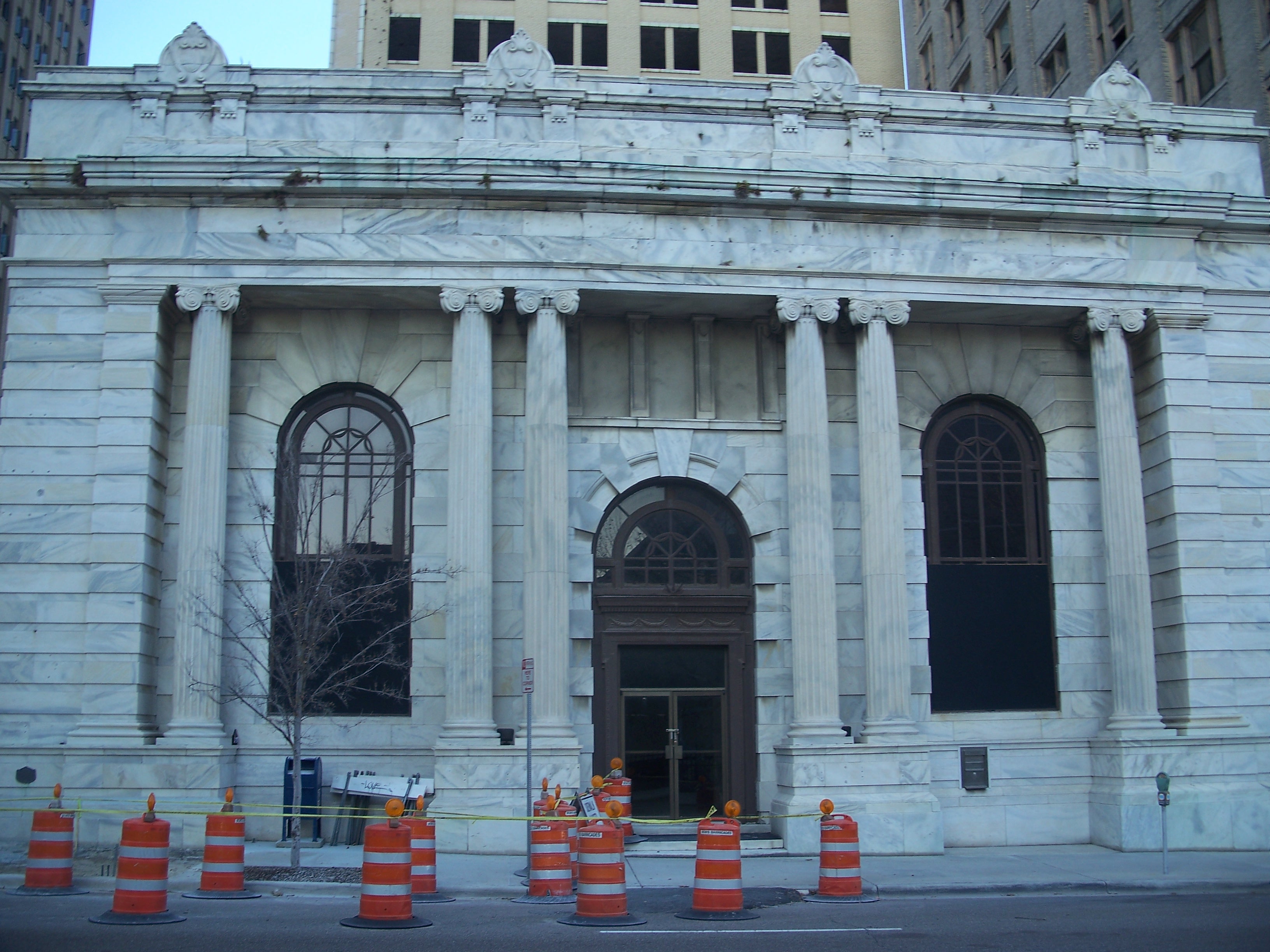
The Great Fire of 1901 burned 146 city blocks and left nearly ten thousand people homeless. It remains one of the largest urban fires in American history. The destruction, however, created an opportunity for Jacksonville to rebuild with modern materials and modern ideas. The first of the Trio to rise was the Old Florida National Bank, also known as the Marble Bank, designed by architect Edward H. Glidden in the Classical Revival style. Built in 1902 as the Mercantile Exchange Bank, it sits on the corner of Forsyth and Laura Streets. A 1916 renovation added a grand banking room with a skylight, plaster detailing, and a coffered ceiling. For decades it served as a working symbol of the city's financial recovery. Then came Klutho's contributions: the Bisbee Building and the Florida Life Building, which frame the Marble Bank in a distinctive perpendicular arrangement unique in downtown Jacksonville.
Concrete, Steel, and Prairie Dreams
The Bisbee Building, completed in 1909, holds a distinction that belies its modest appearance: it was the first reinforced concrete highrise anywhere in the Southern United States. Klutho originally designed it to be only 26 feet wide, but demand for office space in the fashionable new building led the owner to have Klutho double its width. Its flat roof and horizontal lines reflected the Prairie Style principles Klutho had absorbed from Wright. Next door, the Florida Life Building rose between 1911 and 1912. Standing 11 floors and 45 meters tall, it was briefly the tallest building in all of Florida, a record it held for less than a year before the Heard National Bank Building surpassed it. Wayne Wood of the Jacksonville Historic Landmarks Commission has written that the Florida Life Building "was and perhaps still is Jacksonville's purest statement of a 'skyscraper.'" Together, these three buildings represent a rare convergence of Classical Revival and Prairie Style architecture within a single city block.
A Long, Slow Collapse
By the 1990s, all three buildings had been abandoned and were deteriorating rapidly. The Marble Bank's later owners let it crumble. In 1994, Nations Bank removed the original architectural capitals from the Florida Life Building's top floor, causing structural damage in the process. The Bisbee Building stood empty, its reinforced concrete frame exposed to the elements. Orlando developer Cameron Kuhn purchased the Trio along with the nearby Barnett National Bank Building, but went bankrupt in the 2008 housing market crash before any restoration began. In 2010, a Jacksonville investment group proposed a $70 million restoration plan that included converting the Trio into a Courtyard Marriott Hotel. That plan also collapsed. The city filed foreclosure proceedings. Negotiations with subsequent developers fell through in 2024. By then, the Trio had become Jacksonville's most famous preservation failure, buildings everyone agreed should be saved but no one could figure out how to fund.
Hope on Laura Street
In December 2025, Indiana-based Becovic Management Group announced it was purchasing the Laura Street Trio and the adjacent Barnett Building, with plans for a mixed-use development including apartments, a hotel, commercial space, and a restaurant. Whether this latest effort will succeed where others have failed remains to be seen. Jacksonville has one of the largest collections of Prairie Style buildings outside the Midwest, a legacy almost entirely attributable to Klutho's post-fire building campaign. The Laura Street Trio sits at the heart of that legacy. From the air, downtown Jacksonville's grid along the north bank of the St. Johns River looks orderly and modern, but somewhere in those blocks stand three buildings that have been waiting more than two decades for someone to finish what the Great Fire of 1901 started: giving them a second life.
From the Air
The Laura Street Trio is located at 30.328N, 81.659W in downtown Jacksonville, at the intersection of Laura and Forsyth Streets on the north bank of the St. Johns River. The buildings are not individually distinguishable from altitude but sit within the downtown grid clearly visible along the river's north bank. Nearest airports include Jacksonville Executive at Craig Airport (KCRG) approximately 10 nm east and Jacksonville International Airport (KJAX) about 15 nm north. The St. Johns River provides a strong navigational reference. Best viewed below 3,000 ft AGL to appreciate the downtown urban fabric.