A Thousand Doors and the Ghosts Behind Them
The building has about 600 large windows, but the people of Semarang call it Lawang Sewu - a thousand doors. The name is an exaggeration, but only a numerical one. Walk the corridors of this former Dutch railway headquarters and the impression is accurate: doors and arched openings seem to multiply in every direction, framing views into halls that once managed the first railway system in the Dutch East Indies. Designed by Cosman Citroen in the New Indies Style and completed between 1904 and 1919, Lawang Sewu was built to project order and rationality. What happened inside it during the decades that followed was anything but orderly.
Rationalism in the Tropics
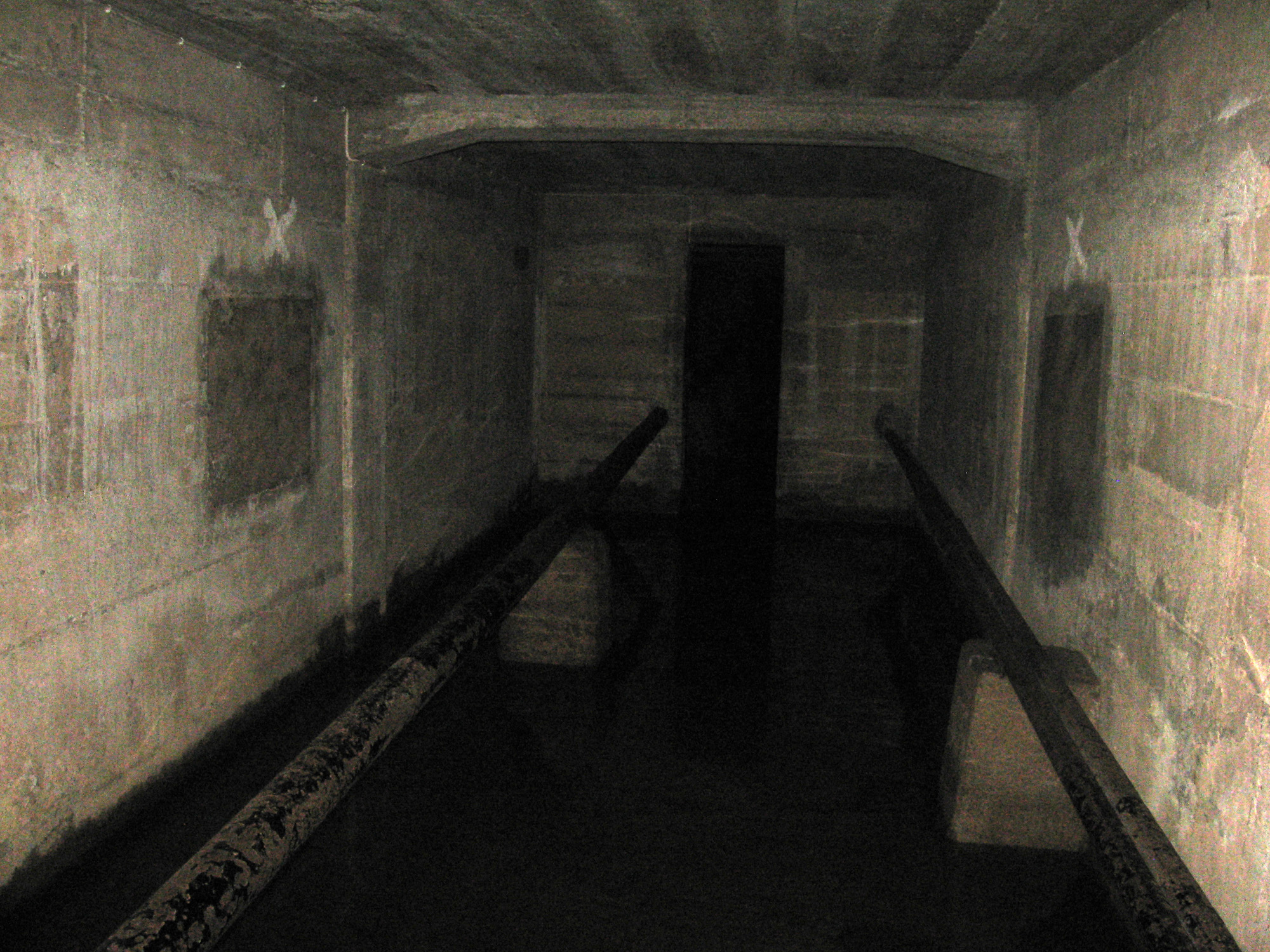
Citroen worked from the firm of J.F. Klinkhamer and B.J. Quendag, and the building he designed for the Nederlandsch-Indische Spoorweg Maatschappij - the first railway company in the Dutch East Indies - drew heavily on the architectural ideas of Hendrik Petrus Berlage. The result was New Indies Style, a transitional architecture that tried to marry European classicism with tropical reality. The complex consists of four buildings. The L-shaped Building A faces the Tugu Muda roundabout and features two identical water towers, each holding 7,000 liters, flanking a grand staircase and large stained-glass windows. A tunnel once connected it to the governor's mansion and the harbor. Building B, three stories tall, housed offices on its lower floors and a ballroom on the third. Its basement was kept partially flooded - not by neglect, but by design. The standing water cooled the building through evaporation, an ingenious response to Central Java's relentless heat. Construction began in 1904 with Building A, completed in 1907. The rest of the complex followed by 1919.
The Basement
When the Japanese army seized Lawang Sewu in 1942, the building's function changed overnight. The basement of Building B - the one with the evaporative cooling system - was converted into a dungeon. Torture and executions took place in the space that Dutch engineers had designed to keep office workers comfortable. The tunnel connecting Building A to other parts of the city, built for administrative convenience, became a military vulnerability. In October 1945, when Dutch forces attempted to retake Semarang, they used that tunnel to infiltrate the city. The battle that followed killed numerous Indonesian fighters defending the building. Five employees working at Lawang Sewu also died. A monument to those five stands today in front of Building A, marking the spot where colonial infrastructure became a site of Indonesian sacrifice.
Dark and Evidently Sick
After the war, the Indonesian army took control of the complex and eventually returned it to the national railway company. In 1992, Lawang Sewu was declared a Cultural Property of Indonesia, a designation that recognized its significance but did not prevent its decline. By 2009, the building was in severe disrepair. Simon Marcus Gower, writing in The Jakarta Post, described what he found: walls blackened by pollution and neglect, cracked rendering exposing the original red bricks beneath, mold and weeds spreading across the structure. The chief residents, Gower noted, were mice and rats. Decades of abandonment had left the building looking exactly like what Semarang's ghost stories said it was. The physical decay fed the supernatural reputation, and the supernatural reputation discouraged investment in repair. It was a self-reinforcing spiral of neglect.
The Ghosts Go National
Lawang Sewu had always generated rumors. A building with a dungeon basement, a wartime tunnel, and battle dead will do that. But the ghost stories transformed from local folklore into national phenomenon in 2007, when the Indonesian horror film Lawang Sewu: Dendam Kuntilanak cemented the building's haunted reputation across the archipelago. As historian Michael G. Vann observed, decades of neglect had made the abandoned building look the part of a haunted house, and the ghost stories multiplied accordingly. The kuntilanak - a female spirit from Malay and Indonesian mythology - was said to haunt the flooded basement and the dark corridors. For many Indonesians, Lawang Sewu became synonymous not with railway history or colonial architecture but with the supernatural. The building's identity had been rewritten by its own decay.
Renovation and Reinvention
The restoration began with Governor Bibit Waluyo mobilizing soldiers for external repairs, and on July 5, 2011, First Lady Ani Yudhoyono inaugurated the newly renovated complex. Initially only Building B was open for tours, but the vision was larger: Lawang Sewu would become a heritage railway gallery and museum, operated by the Heritage Unit of Kereta Api Indonesia and its subsidiary KAI Wisata. In late 2013, the Semarang city government announced plans to eliminate the building's spooky image and reimagine it as a venue for social and cultural activities. By then, Lawang Sewu was attracting an average of 1,000 visitors daily - many of them drawn, ironically, by the very ghost stories the government wanted to dispel. The building that Cosman Citroen designed to embody Dutch Rationalism now embodies something more complex: a place where colonial ambition, wartime horror, revolutionary sacrifice, supernatural legend, and modern tourism all coexist behind those six hundred windows that everyone insists on calling a thousand doors.
From the Air
Located at 6.98S, 110.41E in central Semarang, Central Java, facing the Tugu Muda roundabout. The L-shaped Building A with its twin water towers is a distinctive landmark from the air. Ahmad Yani International Airport (ICAO: WARS) is approximately 6 km to the west. Best viewed at 2,000-3,000 feet. The Tugu Muda roundabout and monument provide a clear reference point; Lawang Sewu is the large colonial-era complex on its northeast side.