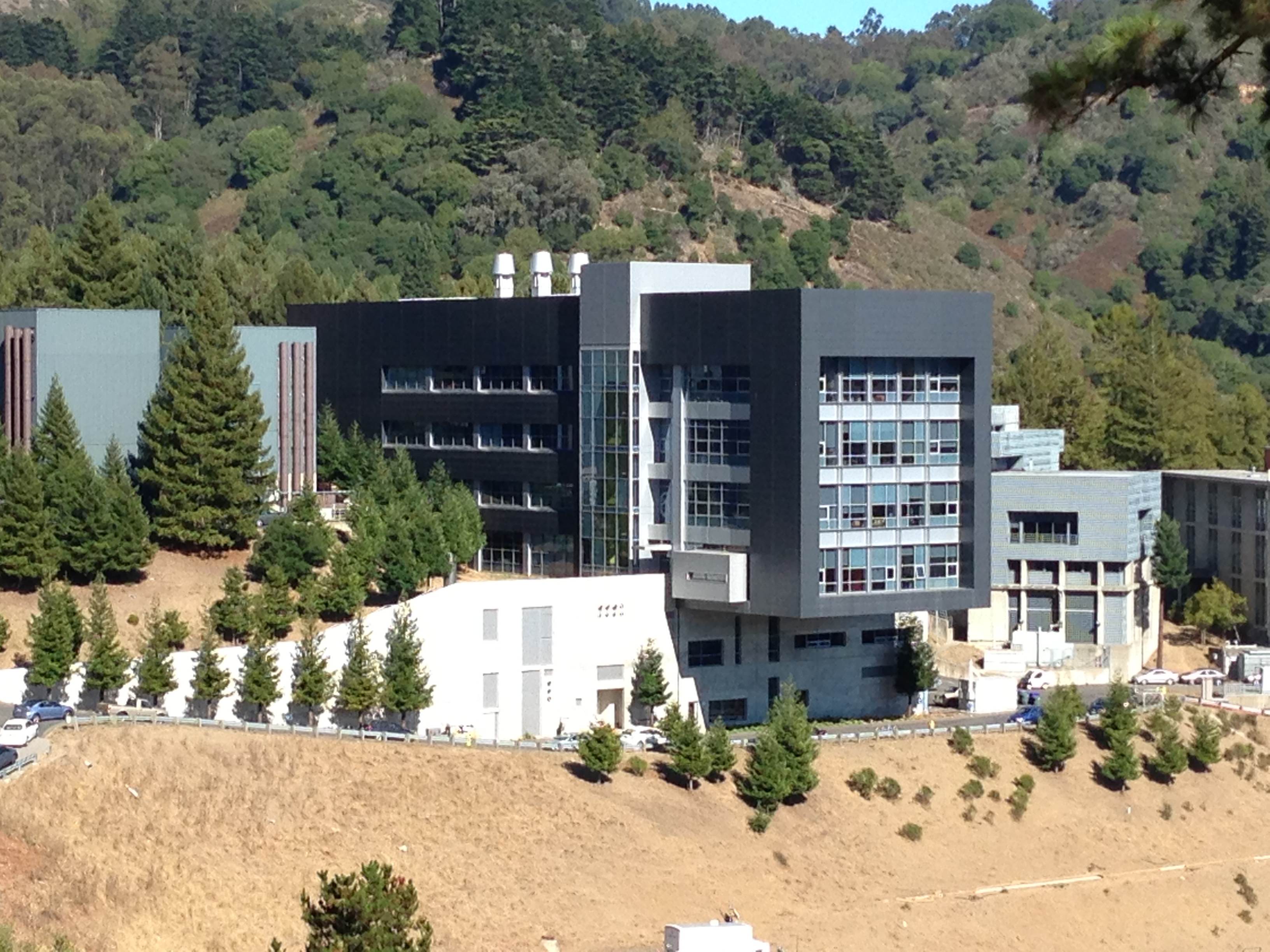
Lawrence Berkeley National Laboratory
Sixteen elements on the periodic table were born here. Not in a gleaming corporate campus or a purpose-built government facility, but in a cluster of buildings perched on a hillside above the University of California, Berkeley, where a young physicist named Ernest Lawrence once scrounged private donations to build machines too large for any university department to justify. Lawrence Berkeley National Laboratory began in 1931 with Lawrence's conviction that the biggest discoveries required the biggest instruments and the broadest teams. Nearly a century later, the lab's 200 acres in the Berkeley Hills still operate on that principle, housing particle accelerators, genome sequencers, and some of the world's fastest supercomputers within earshot of campus bells.
The Cyclotron and Its Children
Ernest Lawrence won the 1939 Nobel Prize in Physics for inventing the cyclotron, a particle accelerator that could smash atoms apart with unprecedented energy. Throughout the 1930s he pushed to build larger and larger machines, courting philanthropists for funding and assembling teams that cut across traditional academic boundaries. By 1940, the instruments had outgrown the campus, and the lab moved to its current hilltop site. The team Lawrence assembled during this era reads like a who's who of twentieth-century physics. J. Robert Oppenheimer, who would go on to direct the Manhattan Project at Los Alamos, worked alongside Lawrence in Berkeley. So did Robert Wilson, future director of Fermilab. When General Leslie Groves visited the Radiation Laboratory in late 1942 to organize the bomb effort, it was here that he first met Oppenheimer. The hillside lab had become a crossroads where pure research collided with the most consequential applied science of the century.
Antiprotons and Bubble Chambers
After the war, the Berkeley accelerator team built the Bevatron, a proton synchrotron designed to reach 6.5 gigaelectronvolts, an energy level chosen specifically because it sat just above the threshold for producing antiprotons. The gamble paid off. In 1955, during the Bevatron's first full year of operation, physicists Emilio Segre and Owen Chamberlain observed antiprotons for the first time, earning the 1959 Nobel Prize in Physics. The Bevatron held the title of highest-energy accelerator on Earth until CERN surpassed it later that same year. Luis Alvarez then used the machine's beams with liquid hydrogen bubble chambers to discover a large number of new elementary particles, winning his own Nobel in 1968. Over 1,700 informal working papers from the Alvarez group survive online, a sprawling record of how big-team physics actually worked day to day.
Building Blocks of Matter
Between 1940 and 1974, Berkeley Lab scientists discovered sixteen chemical elements, more than any other institution in history. Glenn Seaborg was personally involved in nine of those discoveries, sharing the 1951 Nobel Prize in Chemistry with Edwin McMillan. The American Chemical Society later designated the lab a National Historical Chemical Landmark to commemorate the achievement. Every Nobel laureate associated with the lab has a street named after them on campus, a tradition that has accumulated sixteen street names so far. The list kept growing into the twenty-first century: Saul Perlmutter, who led the Supernova Cosmology Project from Berkeley in the 1990s, shared the 2011 Nobel Prize in Physics for co-discovering the accelerating expansion of the universe, a finding that introduced the concept of dark energy to cosmology.
The Rosenfeld Effect
Not all of the lab's breakthroughs involve subatomic particles. When the 1973 oil crisis hit, newly appointed director Andrew Sessler established the Energy and Environment Division, expanding Berkeley Lab into applied research for the first time. Arthur Rosenfeld became the driving force behind a campaign for energy efficiency that changed how Americans use electricity. His team developed compact fluorescent lamps, low-energy refrigerators, and heat-trapping windows. Rosenfeld then pushed California to adopt the nation's first energy-efficiency standards for buildings and appliances. The result was striking: from 1973 to 2006, California's per-capita electricity consumption held essentially flat while the rest of the country's rose by fifty percent. Researchers named this divergence the Rosenfeld Effect. A single hillside lab had reshaped the energy profile of the nation's most populous state.
A Hilltop Humming with Data
Today the lab manages five national scientific user facilities that serve 14,000 researchers from universities, industry, and government. The Advanced Light Source produces beams of x-ray and ultraviolet light for imaging everything from battery materials to biological structures. The Joint Genome Institute sequences DNA for over 2,000 users focused on energy and environmental biology. And the National Energy Research Scientific Computing Center hosts supercomputers that rank among the world's fastest. Its next-generation system, named after Nobel-winning biochemist Jennifer Doudna, will be one of the first to use NVIDIA's Rubin microarchitecture when it launches in 2026. The lab's annual budget now exceeds $1.4 billion, and more than 200 of its researchers hold joint faculty appointments at UC Berkeley. From the hilltop, the view stretches across the Bay to San Francisco and the Golden Gate, a panorama that Ernest Lawrence first took in when the machines he built grew too large for the campus below.
From the Air
Located at 37.876N, 122.249W in the Berkeley Hills, directly above the UC Berkeley campus. From the air, look for the cluster of large buildings and white domes on the hillside east of campus. The Advanced Light Source synchrotron ring is the most distinctive structure. Nearby airports include Oakland International (KOAK, 8 nm south) and San Francisco International (KSFO, 18 nm south-southwest). Metropolitan Oakland International Airport lies just across the Bay. Best viewed at 3,000-5,000 ft AGL on clear days when the lab complex contrasts against the green hillside.