Lawrence Massacre
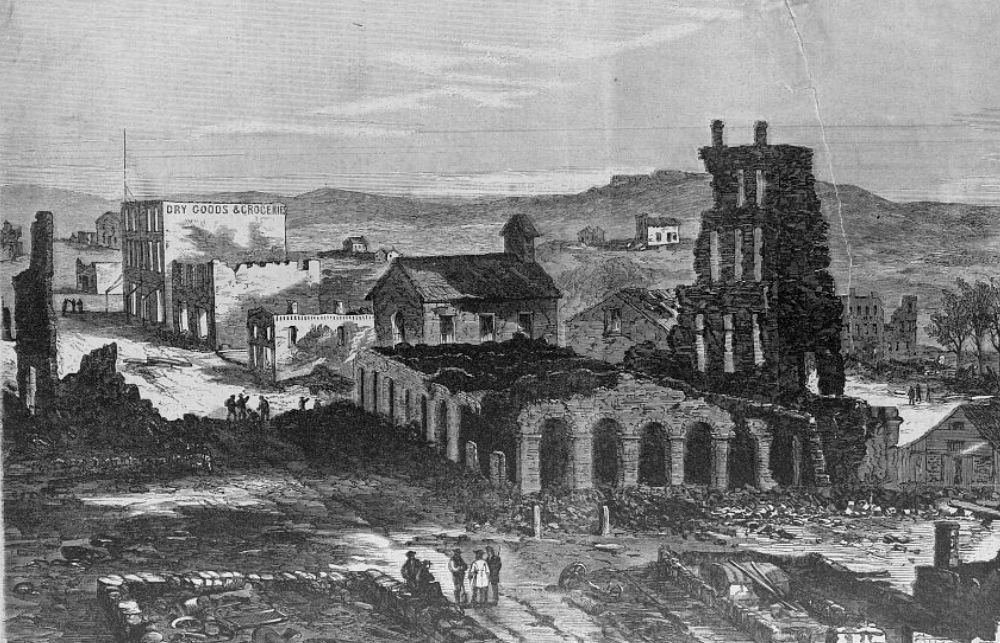
Henry Thompson, a Black servant from the hamlet of Hesper, ran through the dark Kansas night on foot, trying to reach Lawrence before the riders did. He had seen them -- hundreds of guerrillas moving west, armed with multiple six-shot revolvers, some lashed to their saddles to keep riding if they fell asleep. Thompson collapsed from exhaustion at Eudora. A man on a chaise tried to help gather a warning party, but none of them reached Lawrence in time. Shortly after 5 a.m. on Friday, August 21, 1863, roughly 450 guerrillas under William Quantrill descended on the sleeping abolitionist stronghold. Over the next four hours, they killed around 150 men and boys, looted every bank and store, and burned a quarter of the buildings in town. It was not a battle. It was a massacre -- one of the bloodiest single events of the American Civil War, and the culmination of years of savage border warfare between Kansas and Missouri.
The Border That Bled
Lawrence had been in the crosshairs since 1856, when a pro-slavery posse first sacked the town, destroying newspaper presses and the Free State Hotel. The "Bleeding Kansas" years that followed turned the Kansas-Missouri border into a war zone long before Fort Sumter. Lawrence was the abolitionist nerve center, the headquarters of the Jayhawkers -- free-state militia and vigilante groups who raided into pro-slavery western Missouri. Leaders like Charles "Doc" Jennison, James Montgomery, and George Henry Hoyt terrorized Missouri communities, angering pro-slavery and anti-slavery civilians alike. By the summer of 1863, Lawrence had relaxed its defenses, believing the threats had been empty. A squad of soldiers temporarily stationed in town had returned to Fort Leavenworth. The local militia had no chance to assemble when the riders came.
Kill Lists and Cornfields
Quantrill's men entered Lawrence carrying lists of men to kill and buildings to burn. Senator James H. Lane, the Jayhawker leader who had sacked Osceola, Missouri, in 1861, was at the top. Lane escaped death by running through a cornfield in his nightshirt. First Governor Charles L. Robinson hid in his large stone barn on the hillside, watching the entire massacre from beginning to end -- the raiders circled the barn several times but thought it looked too much like a fort to approach. John Speer, a newspaper editor and Lane political ally, survived, but two of his sons were killed. His youngest, 15-year-old Billy, gave the raiders a false name and was released; he later shot one of the departing guerrillas. One of the first to die was pastor Samuel S. Snyder, shot outside while milking his cows. The guerrillas made the Eldridge House hotel their headquarters, then fanned out through the streets. Witnesses described men murdered after surrendering under promises of safety, a sick man shot in his bed, and two captives forced into a burning building.
Bloody Bill and the Aftermath
The men riding with William T. "Bloody Bill" Anderson accounted for a disproportionate number of the dead. Anderson's rage had a personal source: eight days before the raid, a Kansas City building where the Union Army had imprisoned female relatives of the guerrillas collapsed, killing four women and girls, including Anderson's 15-year-old sister Josephine. His 13-year-old sister, shackled inside, suffered two broken legs. While Quantrill had planned the raid before the collapse, the deaths of their women deepened the guerrillas' fury. By 9 a.m., the raiders were riding southeast out of Lawrence. Lane gathered survivors and, joined by 200 U.S. Army cavalrymen under Major Preston B. Plumb, pursued the raiders into southern Kansas. Four days later, General Thomas Ewing Jr. issued General Order No. 11, evicting thousands of Missourians from four border counties. Doc Jennison's raiders then burned everything in those counties to the ground, leaving only the brick chimneys of two-story houses -- still called "Jennison Monuments" in that part of Missouri.
A Town That Rose Again
Reverend Richard Cordley of Plymouth Congregational Church -- one of the few buildings to survive -- told his congregation days after the attack: "My friends, Lawrence may seem dead, but she will rise again in a more glorious resurrection." Lawrence did rise. The U.S. Army built military posts on Mount Oread -- Camp Ewing, Camp Lookout, and Fort Ulysses -- to guard the rebuilt city, and no further attacks came. Quantrill led his men to Texas for the winter and was killed in Kentucky in 1865, with only a few followers remaining. Among them were Frank and Jesse James, who would carry the border war's violence into the postwar era as outlaws. The massacre's legacy runs deep in Lawrence. The Eldridge House was rebuilt and still operates as a hotel. Mount Oread became the site of the University of Kansas. The story has echoed through American culture, from Charles Portis's True Grit to Ang Lee's film Ride with the Devil. Missouri abolitionist George Miller captured the cycle of destruction most clearly: each side's violence fell "upon the innocent and helpless, rather than the guilty ones."
From the Air
Located at 38.973N, 95.236W in Lawrence, Kansas, elevation approximately 850 feet MSL. Lawrence Municipal Airport (KLWC) is 4 miles north of the city. Mount Oread, where the University of Kansas now stands, is the prominent hill on the west side of town -- visible from altitude and central to both the massacre (Quantrill posted lookouts there) and its aftermath (military posts were built on it). The Kansas River flows along the north edge of town. Massachusetts Street, the main commercial corridor that was burned during the raid, runs north-south through downtown. Best viewed at 3,000-5,000 feet AGL, with the grid pattern of downtown and Mount Oread clearly visible.