Leadville
At 10,152 feet, Leadville is the highest incorporated city in North America. In 1880, it was also Colorado's second-largest, a roaring mining camp of 40,000 people extracting $15 million in silver annually from the mountains above. The boom created instant millionaires, opera houses in the wilderness, and stories that became Western legends. Horace Tabor, a storekeeper who grubstaked two German prospectors for $17 worth of supplies, became the richest man in Colorado. His scandalous divorce and remarriage to Elizabeth 'Baby Doe' McCourt scandalized Victorian America. When the 1893 silver crash collapsed prices, Leadville's fortunes crashed with them. Tabor died broke; Baby Doe froze to death in a shack by the mine. Leadville survived as a shadow of itself, preserving Victorian buildings, spectacular mountain scenery, and memories of the boom that created and destroyed it.
The Discovery
Leadville began as a gold camp in 1860, then faded. In 1877, miners discovered that the heavy 'black sand' they'd been cursing for contaminating their gold was lead carbonate - rich in silver. The rush was immediate and overwhelming. Within two years, the population exploded to 40,000. The town sprawled up the mountainsides at elevations where trees couldn't grow. Mines punched into the earth everywhere. The air was thick with smoke from smelters. Saloons, gambling halls, and brothels lined State Street. Leadville was wild, wealthy, and determined to prove it could be civilized.
The Tabors
Horace Tabor embodied Leadville's rise and fall. A Vermont stonecutter, he came west seeking gold and ran a store in Leadville. In 1878, he grubstaked two prospectors for $17; they struck the Little Pittsburg mine, worth millions. Tabor became lieutenant governor, built Denver's Tabor Grand Opera House, and divorced his wife Augusta to marry Baby Doe, 24 years his junior. President Chester Arthur attended the wedding; the scandal was delicious. When silver prices collapsed in 1893, Tabor lost everything. He died nearly penniless in 1899, telling Baby Doe to hold onto the Matchless Mine. She did, for 36 years, until she was found frozen to death in a shack beside it.
The Culture
Leadville wasn't content to be just a mining camp. The Tabor Opera House opened in 1879, hosting Oscar Wilde, John Philip Sousa, and the Metropolitan Opera. Churches, schools, and hospitals went up. The Denver & Rio Grande Railroad arrived in 1880. The wealthy built Victorian mansions on Capitol Hill (yes, Leadville had its own Capitol Hill). Gunfighter Doc Holliday dealt cards and occasionally gunfights on State Street. The town had five newspapers. For a few years, Leadville was as sophisticated as any city in the West - civilization imposed at 10,000 feet by sheer force of silver.
The Crash
The Sherman Silver Purchase Act of 1890 required the government to buy silver, supporting prices. When it was repealed in 1893, silver prices collapsed. Leadville's economy, built entirely on silver, collapsed with them. Mines closed. Workers left. Population dropped from 40,000 to a few thousand. The town survived on zinc and molybdenum mining, but never regained its prominence. The Victorian buildings remained, too expensive to tear down, too worthless to develop. By the late twentieth century, that preservation became an asset. Leadville reinvented itself around heritage tourism and outdoor recreation.
Visiting Leadville
Leadville is located on US-24 in central Colorado, between Vail and Buena Vista. The National Mining Hall of Fame and Museum interprets Colorado's mining heritage. The Tabor Opera House still stands, open for tours. The Matchless Mine, where Baby Doe froze, can be visited. The Leadville, Colorado & Southern Railroad offers scenic excursions. The town's Victorian downtown is well preserved. At 10,152 feet, altitude affects visitors; hydrate and take it easy. The surrounding mountains offer world-class skiing (Ski Cooper is nearby), mountain biking, and the Leadville Trail 100, one of ultrarunning's most demanding races. Eagle County Regional Airport (EGE) near Vail is the closest; Denver (DEN) is 100 miles east.
From the Air
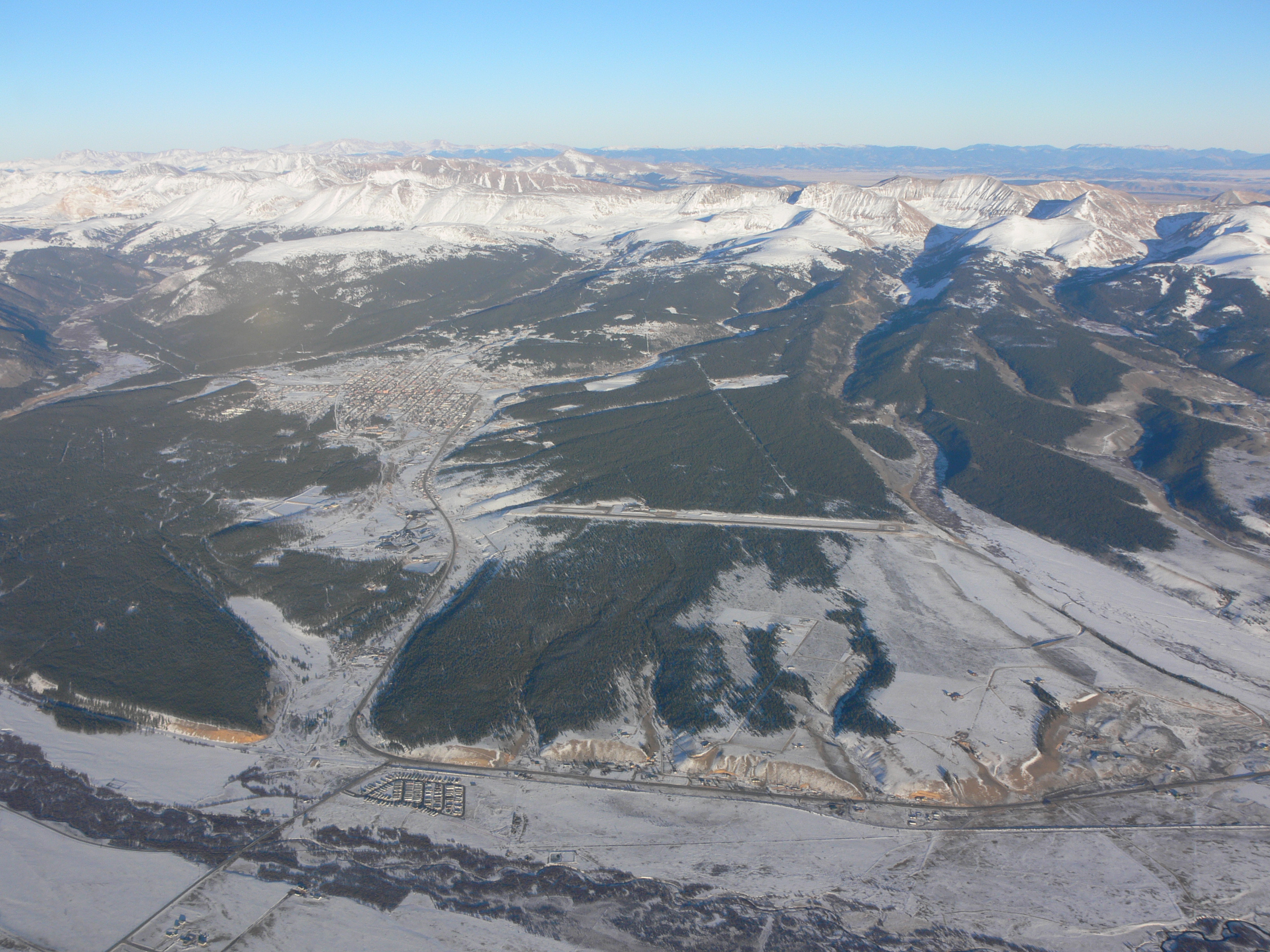
Located at 39.25°N, 106.29°W in the upper Arkansas River valley, Colorado, at 10,152 feet elevation. From altitude, Leadville appears as a small grid of streets in a high mountain valley surrounded by 14,000-foot peaks. Mine dumps and tailings scar the mountainsides above town. The Continental Divide rises to the west. Mount Elbert, Colorado's highest peak, is visible to the south. The Climax molybdenum mine (world's largest) is visible to the north. The extreme altitude is evident in the treeless tundra surrounding the town.