Leadville Historic District
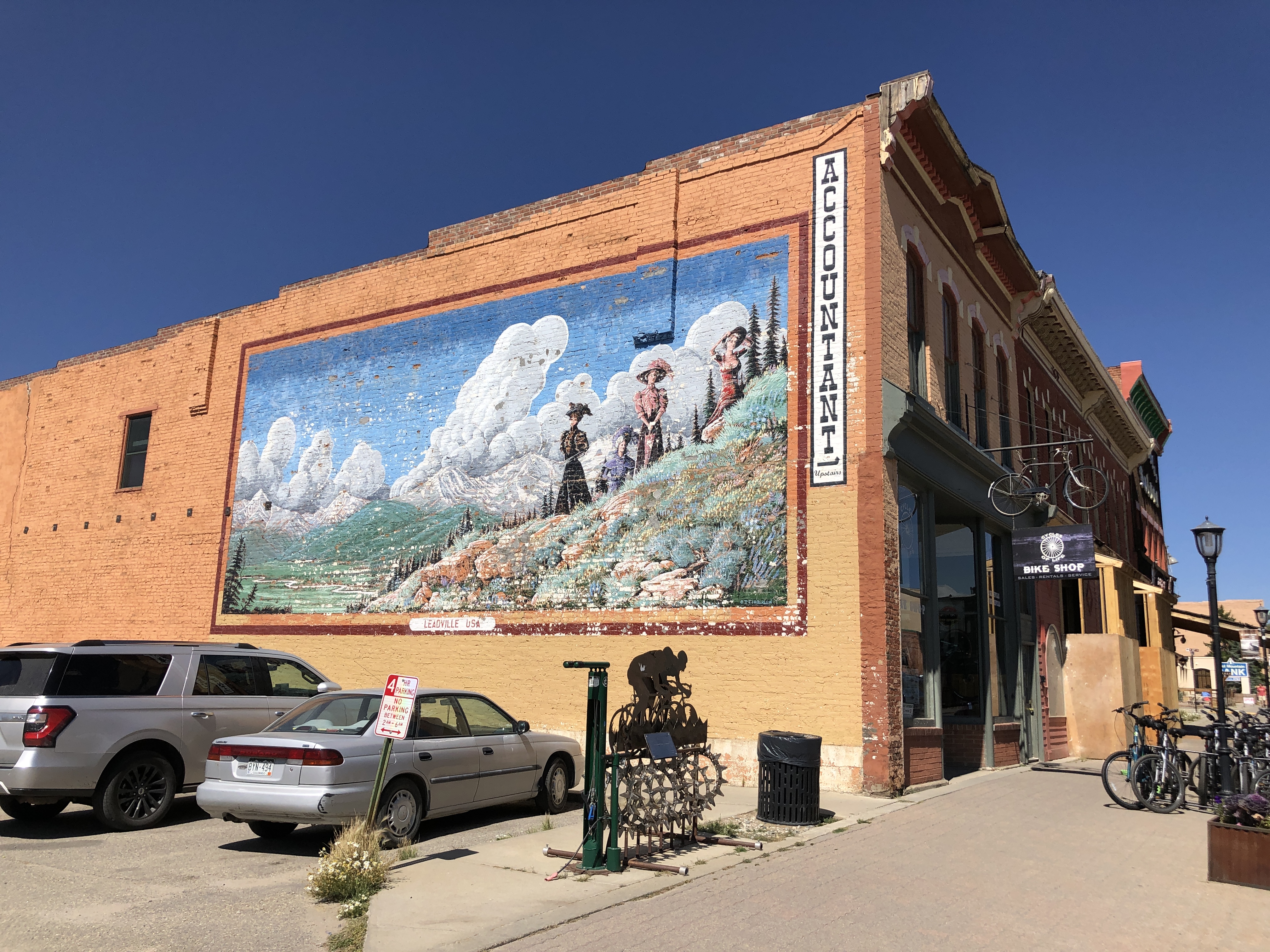
Horace Tabor built his wife Augusta a Carpenter Gothic home on East 5th Street in 1877, then abandoned her for a woman the newspapers called "Baby Doe." The scandal rocked the nation, but in Leadville, it was just another Tuesday. At over 10,000 feet in the Colorado Rockies, this mining town burned through fortunes and reputations with equal speed, and the buildings lining Harrison Avenue still carry the evidence. The Leadville Historic District, designated a National Historic Landmark in 1961, encompasses 67 mines stretching east of the city up to the 12,000-foot level, plus a dense collection of Victorian-era commercial buildings, churches, and mansions that together tell one of the most turbulent stories in the American West.
Harrison Avenue's Stone Witnesses
Walk down Harrison Avenue and the architecture reads like a timeline of ambition. The Tabor Grand Hotel, a four-story brick building designed by architect George King, has cycled through names -- the Maxwell, the Kitchen, the Vendome -- each one marking a new owner's attempt to claim a piece of Leadville's fading glory. The building was renovated and reopened in 1992 with shops below and apartments above. Nearby, the Western Hardware Building, originally Manville and McCarthy Hardware, operated as a hardware store for over a century, its original long counter and wall of drawers still on display. The American National Bank stands in Richardsonian Romanesque solidity, while the Iron Building, erected in 1893 as the silver market collapsed, carries the name Fearnley on its corner pediment. Some say the building's name references the iron used in its construction; others believe it was a nod to the humble iron ore that might save Leadville after silver's fall.
The Tabor Triangle
No single family stamped itself on Leadville more indelibly than the Tabors. Horace Tabor, a shopkeeper who grubstaked the right prospectors and became a silver millionaire, built the opera house, the grand hotel, and a home for his wife Augusta. But in 1881, he moved to the Windsor Hotel to be closer to his mistress, Elizabeth McCourt, known as Baby Doe. The Tabor triangle grew into a national scandal, ending in divorce and Tabor's remarriage. The modest Carpenter Gothic home on East 5th Street still stands, a quiet monument to a marriage that could not survive sudden wealth. A few blocks away, the Dexter Cabin tells a different story of Leadville riches. James Dexter was already wealthy when he built his small log cabin, but he preferred its informality for entertaining. He quickly became known for running the "stiffest and most exclusive private poker club" in town.
Where the Dead Rest Uneasy
Leadville's Boot Hill Cemetery is considered perhaps the most documented of all Boot Hill cemeteries in the Old West. An 1880 eyewitness described it as "an acre plot of ground unfenced, and with the carbonate-like earth thrown up into little heaps," marked by "pieces of boards, slabs and sticks." Two or three graves had marble slabs; a few more were marked with pine boards painted to imitate marble. The witness called it "a barren red clay-colored plot" with "no flowery lawns, spouting fountains, shady nooks," where the sleep of the dead was "forever disturbed by the oaths and the black snake of the irreverent freighter." Freight wagons rumbled past daily, hauling ore from the 67 mines in the district. In death as in life, Leadville offered no peace -- only the constant sound of commerce grinding forward.
Sacred Ground at Altitude
The district's churches reflect the diversity of those who came seeking fortune. Temple Israel, built in 1884 in Carpenter Gothic style, served a Jewish community drawn to the mining economy. The Annunciation Church, a Gothic Revival structure from 1880, anchored the Catholic population at 609 Poplar Street. St. George's Church served the Episcopal congregation. The Neoclassical City Hall, erected in 1905 at the northeast corner of 8th and Harrison, brought civic order to a town that had known precious little of it. The Healy House, built in 1878 by mining engineer August R. Meyer from St. Louis, who established Leadville's first ore sampling works, eventually became a boardinghouse. In 1898, a third story was added to accommodate more boarders, most of them schoolteachers -- a sign that Leadville was slowly domesticating itself.
A District Frozen in Time
When the National Register of Historic Places program launched in 1966, the Leadville Historic District was among the very first listings, included on day one alongside all other existing National Historic Landmarks. The district was later expanded to incorporate additional structures along the Harrison Avenue corridor, making them eligible for historic preservation grants and tax subsidies. Structures built after 1917 are considered non-contributing, drawing a sharp chronological line. Everything within that boundary -- the Englebach House with its Eastlake and Queen Anne detailing, the Silver Dollar Saloon from 1883, the Jesse McDonald Mansion where the 1904 Governor of Colorado once lived -- exists as a physical record of what happens when silver pours out of mountain rock at two miles above sea level.
From the Air
Leadville Historic District sits at 39.244N, 106.228W, elevation approximately 10,152 feet -- making it one of the highest incorporated cities in the United States. From the air, Harrison Avenue is the main north-south corridor through the town grid. The mining district extends east toward the 12,000-foot ridgeline. Nearest airport is Lake County Airport (KLXV), directly south of town. Approach from the Arkansas River valley for the best view of the town's compact grid against the mountain backdrop. Be aware of high-altitude density altitude effects.