Leaning Temple of Huma
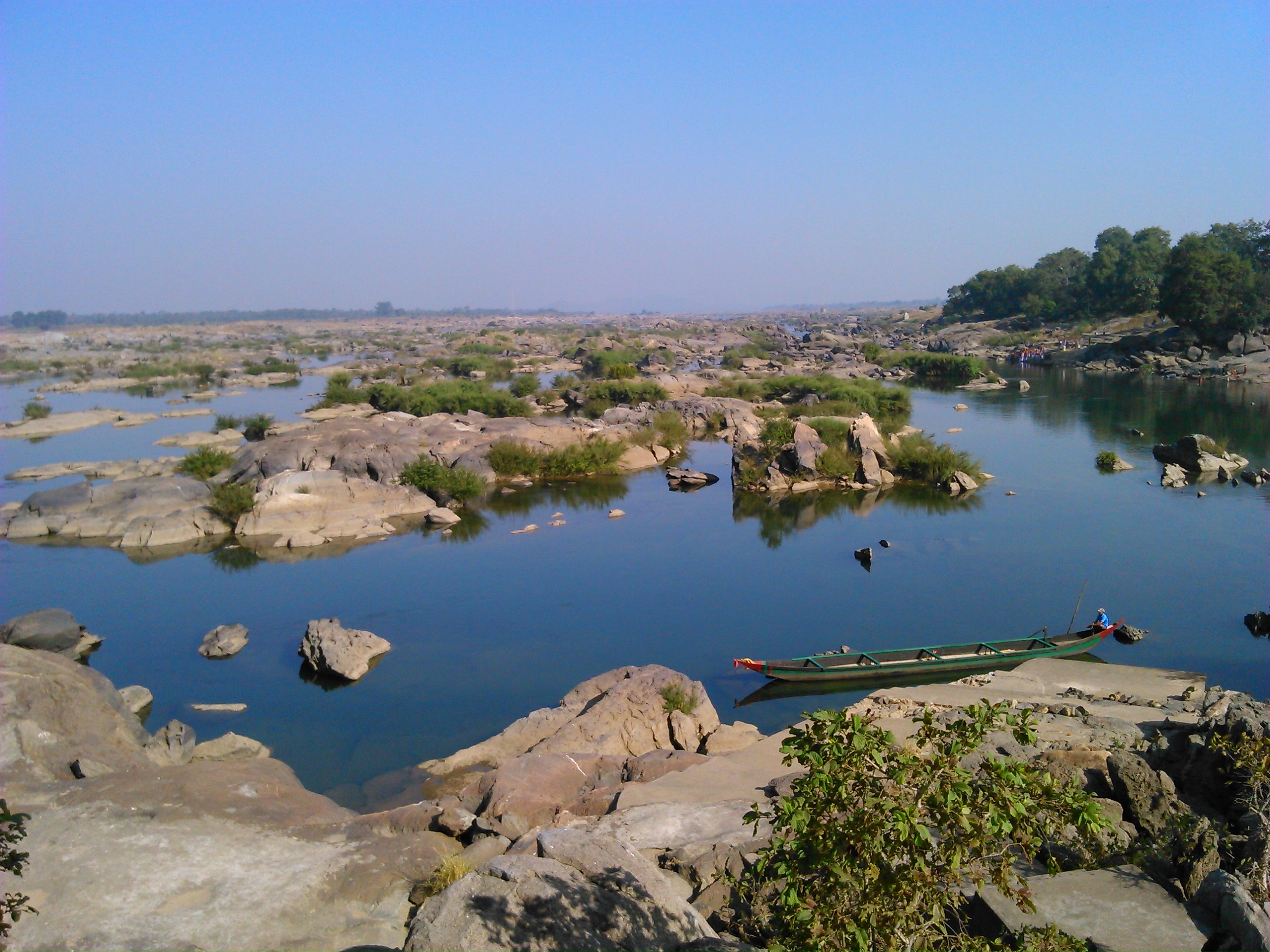
The Leaning Tower of Pisa tilts at about 3.97 degrees. The Leaning Temple of Huma tilts at 13.8. That is not a typo. On the banks of the Mahanadi River, twenty-three kilometers south of Sambalpur in the Indian state of Odisha, a Shiva temple dedicated to Lord Bimaleshwar leans at an angle that makes Pisa look plumb. What makes Huma stranger still is that its satellite temples -- the Bhairavi Devi shrine to the left, the Bhairo temple to the right -- lean in entirely different directions. The compound walls tilt too. Everything within the temple boundaries has shifted, yet according to the priests and villagers, the angle of inclination has not changed in the last forty or fifty years. The tilt is dramatic, stable, and unexplained.
The Milkman and the Hungry Rock
Local legend offers the kind of origin story that temples accumulate over centuries. A milkman, the story goes, crossed the Mahanadi daily to a rocky outcrop on the far bank, where he poured out an offering of milk. The rock consumed it immediately -- absorbed it, swallowed it, left no trace. Word of this miraculous appetite spread, inquiries followed, and the result was the temple that stands today. The story carries the earthy logic of folk religion: the divine reveals itself not through grand theology but through an inexplicable thing that happens to an ordinary person doing an ordinary thing. The milkman's rock became Lord Bimaleshwar's seat, and the riverbank became sacred ground.
Kings and Rebuilders
Historical records attribute the temple's original construction to Ganga Vamsi Emperor Anangabhima Deva III, a 13th-century ruler whose dynasty built many of Odisha's most celebrated temples. By the 17th century, the temple required rebuilding. King Baliar Singh, the fifth Chauhan king of Sambalpur, renovated or reconstructed the main structure during his reign from 1660 to 1690. The smaller surrounding temples came later, built during the rule of King Ajit Singh of Sambalpur between 1766 and 1788. Each generation of builders worked on the same rocky outcrop above the Mahanadi, and each generation's work now leans at its own particular angle -- a geological democracy that treats royal and divine architecture with equal indifference.
Thirteen Point Eight Degrees
Geologists have proposed several explanations for the tilt, none entirely satisfying. The temple sits on a rocky bed above the Mahanadi, and interior displacement of this bedrock -- caused by centuries of flood currents or seismic activity -- may have shifted the foundation unevenly. The plinth has deviated from its original alignment, pulling the superstructure along with it. What puzzles researchers is the stability: the lean has not measurably increased in living memory, defying expectations that a structure this far off-vertical should either continue settling or collapse. Equally puzzling is the directional variety -- if river currents or earthquakes caused the lean, why would adjacent structures tilt in different directions? The underlying rock may simply be uneven in composition, with different sections settling at different rates and in different directions. But the pinnacle of the main temple remains perpendicular to the ground, as though the builders anticipated the tilt and compensated at the top.
Sacred Fish and Stone Curses
The Mahanadi at Huma holds its own mystery. Large fish known locally as Kudo congregate near the temple bank, fed by visiting pilgrims who toss food into the shallows. The Kudo fish eat from visitors' hands with a boldness unusual for wild river fish, a tameness that the faithful attribute to divine protection. According to local belief, anyone who catches a Kudo fish will be cursed and turned to stone. A statue near the temple depicts a woman in the act of cutting a Kudo fish -- said to be a person who defied the prohibition and suffered the consequence. Whether the fish are truly a distinct species, a behavioral population adapted to easy food, or something else entirely, they add one more layer of strangeness to a site that seems to collect mysteries the way the Mahanadi collects tributaries.
Shivratri on the Tilted Ground
Every March, on Maha Shivaratri, an annual fair fills the grounds below the temple. Pilgrims and tourists crowd the riverbank, and the Kudo fish receive more offerings than usual. The Government of Odisha has proposed building a hanging bridge to improve access to the temple, a sign that Huma is moving from regional curiosity to recognized tourist destination. But the temple's appeal is fundamentally about its refusal to be explained. It leans more than almost any other standing structure in the world. Its neighbors lean in contradictory directions. The fish are fearless and supposedly cursed. The rock once drank milk. In a country of 33 million gods, Huma offers something rarer than divinity: a genuine architectural enigma, leaning patiently above the Mahanadi, waiting for an explanation that may never come.
From the Air
Located at 21.160N, 83.540E on the bank of the Mahanadi River, approximately 23 km south of Sambalpur in Odisha. The nearest airstrip is Hirakud Airstrip (VEHK), about 25 km to the north near Sambalpur. The nearest commercial airport is Veer Surendra Sai Airport at Jharsuguda (VEJH), approximately 80 km to the northwest. From the air, look for the Mahanadi's course and the village of Huma on its bank. The temple's lean is not visible from cruising altitude but the temple complex and riverside gathering area are identifiable at 2,000-4,000 feet AGL in clear weather.