The Leaning Tower of Pisa: The Building That's Been Falling for 850 Years
The Leaning Tower of Pisa was a mistake. When construction began in 1173, no one planned for a 4-degree tilt. The soft ground on one side began settling before the third floor was complete. Construction stopped for a century. When it resumed, builders tried to compensate by making one side taller - creating a slight banana curve. The tower has been slowly falling ever since. In 1990, it was closed and 70 tons of lead were placed on one side to prevent collapse. Today, after centuries of engineering interventions, the tower still leans 4 degrees - and will forever, because straightening it would destroy its fame.
The Mistake
Construction began in 1173, intended as the bell tower (campanile) for Pisa's cathedral. The foundation was only three meters deep - grossly inadequate for the soft alluvial soil. By the time the third floor was complete around 1178, the south side was sinking.
Construction stopped - partly due to the tilt, mostly due to wars with neighboring Genoa and Florence. The pause may have saved the tower: the soil had time to settle and compact under the existing weight. When construction resumed in 1272, engineers tried to correct the lean by making the columns and arches on the high side slightly taller.
The Lean
The tower continued to tilt throughout construction, which wasn't completed until 1372 - 199 years after it began. By then, the lean was substantial but stable. The tower stood 186 feet tall, with eight stories of marble arcades, topped by a bell chamber.
Over centuries, the lean increased. Measurements showed the tower moving about 1 millimeter per year. By 1990, it had reached 5.5 degrees - the point where engineers worried about collapse. The center of gravity was extending beyond the base. The world's most famous leaning building was in danger of falling over.
The Rescue
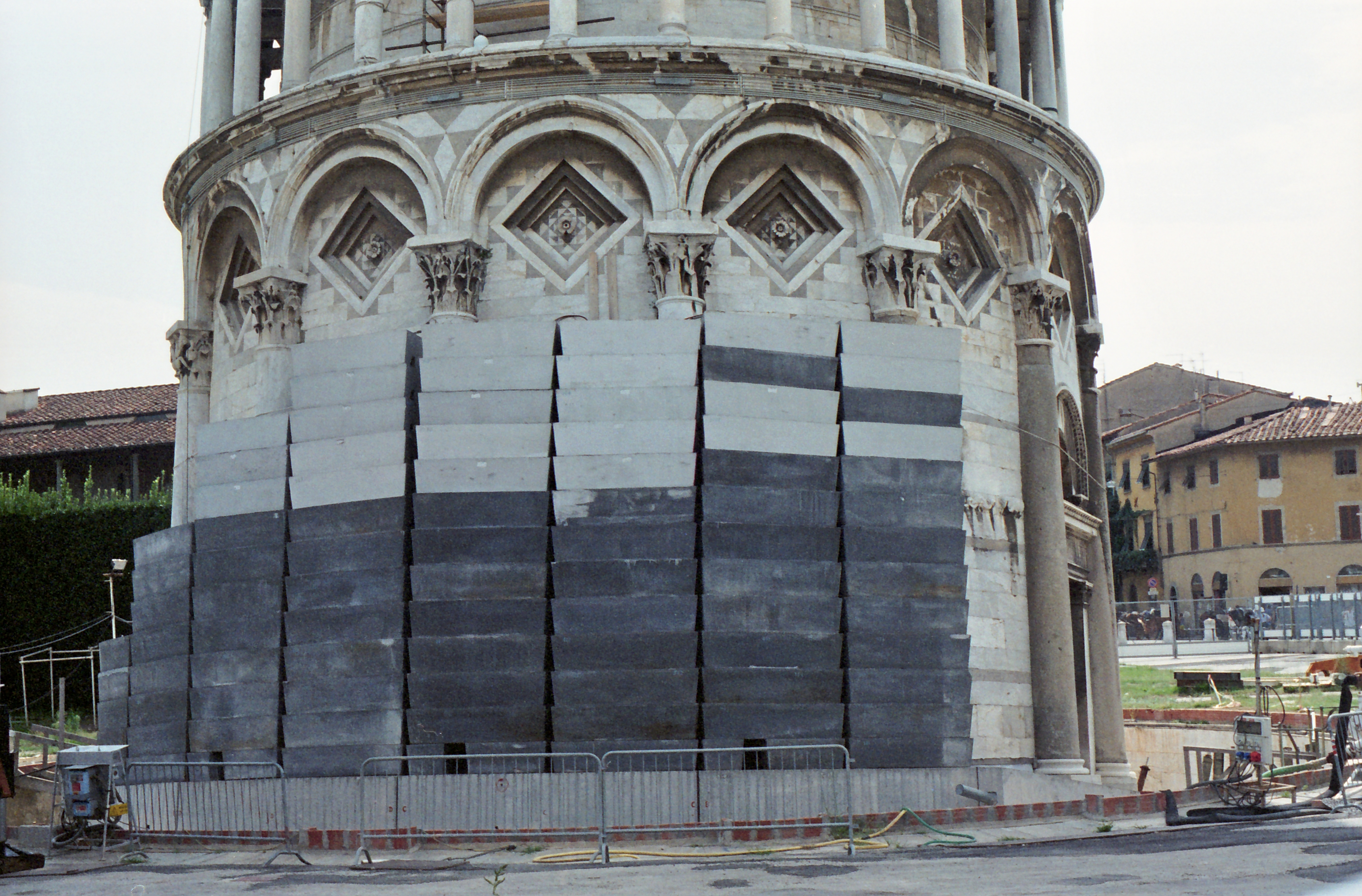
In 1990, the tower was closed to visitors for the first time since 1944. Engineers attached 600 tons of lead weights to the north side. Steel cables were wrapped around the third floor. The lean stabilized but the tower was still in danger.
The solution was elegant: soil extraction. Engineers drilled into the foundation on the north side and slowly removed small amounts of clay. The ground settled, pulling the tower back toward vertical. Between 1999 and 2001, the lean was reduced by 44 centimeters. The tower is now back to where it was in 1838 - still leaning, but safely.
The Science
Galileo Galilei, Pisa's most famous son, reportedly dropped balls of different weights from the tower to demonstrate that objects fall at the same rate regardless of mass. This experiment may be apocryphal - Galileo never mentioned it - but it captures the tower's place in scientific mythology.
The tower has been extensively studied by engineers. Its survival despite the lean has taught lessons about soil mechanics and foundation behavior. The tower that shouldn't have been built, and should have fallen centuries ago, became a laboratory for understanding structural failure.
The Fame
The Leaning Tower draws 5 million visitors annually. Tourists pose pretending to hold it up or push it over. The surrounding Field of Miracles - cathedral, baptistery, and cemetery - is often ignored. The lean made a mediocre bell tower world-famous.
Engineers could straighten the tower further - but won't. The lean is worth billions to Pisa's economy. The mistake became the brand. The Leaning Tower of Pisa proves that sometimes failure is more interesting than success. It will continue leaning, carefully monitored, forever frozen at the angle that made it famous.
From the Air
The Leaning Tower of Pisa (43.72N, 10.40E) stands in the Campo dei Miracoli in Pisa, Italy. Pisa International Airport (LIRP) is 1km south. Florence Airport (LIRQ) is 80km east. The tower is visible from the air as a distinctive tilting cylinder in a green square with the cathedral and baptistery. The Arno River passes through the city center. Weather is Mediterranean - hot dry summers, mild wet winters.