Leather and LGBTQ Cultural District
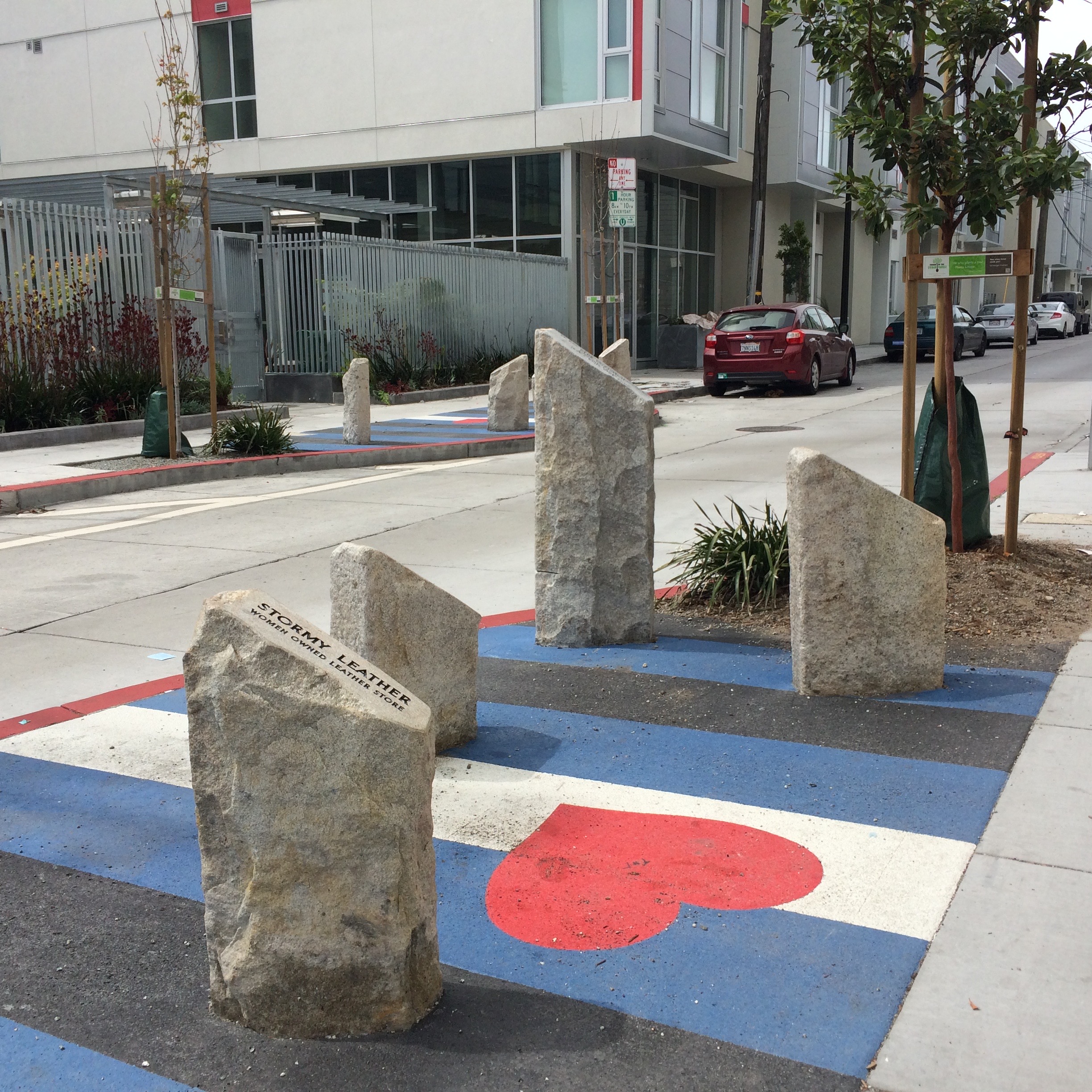
On Ringold Street, a narrow alley in San Francisco's South of Market neighborhood, metal boot prints are embedded in the sidewalk. They mark the San Francisco South of Market Leather History Alley, a memorial to a community that shaped this neighborhood for half a century. In 2018, the San Francisco Board of Supervisors made it official, establishing the Leather and LGBTQ Cultural District to protect what developers and rising rents had already begun to erase.
Where the Culture Took Root
South of Market, or SoMa, became home to San Francisco's leather community starting in the mid-twentieth century. The neighborhood's industrial character, its warehouses and loading docks and cheap rents, provided the anonymity and affordability that marginalized communities needed. Bars, clubs, and gathering spaces opened along Folsom Street and the surrounding blocks, creating a distinct subculture with its own codes, aesthetics, and institutions. For decades, the leather community existed here in a kind of parallel city, visible to those who knew where to look and invisible to everyone else. The district boundaries reflect that geography: Howard Street on the northwest, 7th Street on the northeast, I-80 on the east, and US 101 on the south, with an exclave between 5th and 6th Streets.
An Official Act of Memory
The legislation creating the district was signed into law on May 9, 2018, and a ribbon cutting was held on June 12 outside the Stud, a bar on 9th Street that had been a cornerstone of the community since 1966. The Stud would close its doors in 2020, a victim of the pandemic and the same economic pressures the district was meant to resist. The aim of the designation was explicit: to honor and commemorate the people, places, and institutions that gave South of Market its distinctive culture, and to help protect the remaining businesses and spaces while sustaining the people who live, work, and recreate there. It was an acknowledgment that culture does not preserve itself, especially when the land it occupies becomes valuable.
What Preservation Means Here
Cultural districts in San Francisco are not museums. They are living designations meant to influence zoning, funding, and development decisions in favor of the communities they represent. The Leather History Alley, which opened in 2017 along Ringold Street, includes bronze plaques, metal boot prints, and flagpole bases in the shape of leather caps, all designed to make the neighborhood's history physically present for anyone walking through. The district exists alongside other San Francisco cultural districts, including the Castro LGBTQ Cultural District and the Compton's Transgender Cultural District in the Tenderloin. Together they form an unusual experiment in civic recognition: a city using its planning authority to declare that subcultures matter, that the people who built a neighborhood's identity deserve protection even after the neighborhood becomes desirable.
From the Air
Located at 37.77°N, 122.41°W in San Francisco's South of Market (SoMa) neighborhood. The district sits between major freeways (I-80 and US-101) in an area of mixed industrial and residential development south of Market Street. Nearest airports: SFO (KSFO, 10 nm south), Oakland (KOAK, 10 nm east). The freeway interchanges bounding the district are visible from altitude.