Leeuwarden Air Base
On 31 October 2019 - Halloween, by coincidence - the first F-35A Lightning II touched down on the long runway northwest of Leeuwarden, kicked its drag chute out, and rolled to a stop in front of cameras and senior Royal Netherlands Air Force officers. After more than four decades of F-16 Fighting Falcons taking the same approach, the Dutch had just begun replacing their teen-series workhorse with a stealth jet. The transition happened here first. Leeuwarden Air Base, an airfield originally laid out in 1938 on the flat polder land that defines Friesland, had become the testbed for the Dutch fifth-generation air force - and the place where the country's next forty years of fighter aviation will largely be flown.
Built for Peace, Used for War
The airport opened in 1938 as a quiet civil field, a stepping stone between Amsterdam's Schiphol and Groningen's Eelde. It might have stayed that way. The German invasion of the Low Countries in May 1940 ended that future immediately. The Luftwaffe took the runway and turned it into a base for Messerschmitt Bf 109 fighters and bombers tasked with strikes against Britain. The Royal Air Force returned the favor with interest. On 16 and 17 September 1944, in support of Operation Market Garden, RAF bombers hammered the field. Damage was extensive. After the war the airfield reverted briefly to civil use - KLM even ran a Schiphol service - before the Dutch military took it back permanently in 1949.
The F-16 Decades
From the 1980s onward, Leeuwarden was one of two Royal Netherlands Air Force F-16 bases. Two squadrons made it their home: 322 Squadron, the swing-role unit whose tail flashes carried the Frisian flag and the Polley Grey mascot, and 323 Squadron, the Tactical Training, Evaluation and Standardisation unit that trained the rest of the F-16 force. The F-16s flew over the Wadden Sea, the North Sea, and far beyond on NATO missions. They also drew crowds. Every two to three years the base opened its gates for the Luchtmachtdagen - Air Force Days - air shows that put thousands of spectators within a fence line of the runway. Leeuwarden hosted them in 2006, 2008, 2011, and 2016. The Covid pandemic interrupted that tradition, and as of this writing the open days remain on pause.
Frisian Flag
Every spring, Leeuwarden hosts one of NATO's most demanding tactical exercises: Frisian Flag. The format is loose-knit international combat training - coalitions of allied fighter squadrons flying complex large-force employment missions over the North Sea, scripted to push pilots, controllers, and tankers to the limits of multi-national integration. Visiting units have included F-15Cs from the 125th Fighter Wing of the Florida Air National Guard, which arrived in March 2015 as part of the first Air National Guard theater security package to Europe. German Eurofighters, French Mirages and Rafales, British Typhoons, Polish F-16s, and Norwegian and Danish jets have all flown the exercise out of Leeuwarden. For two weeks each year the Frisian sky fills with afterburners and the radio chatter of half the air forces of NATO.
Switching Generations
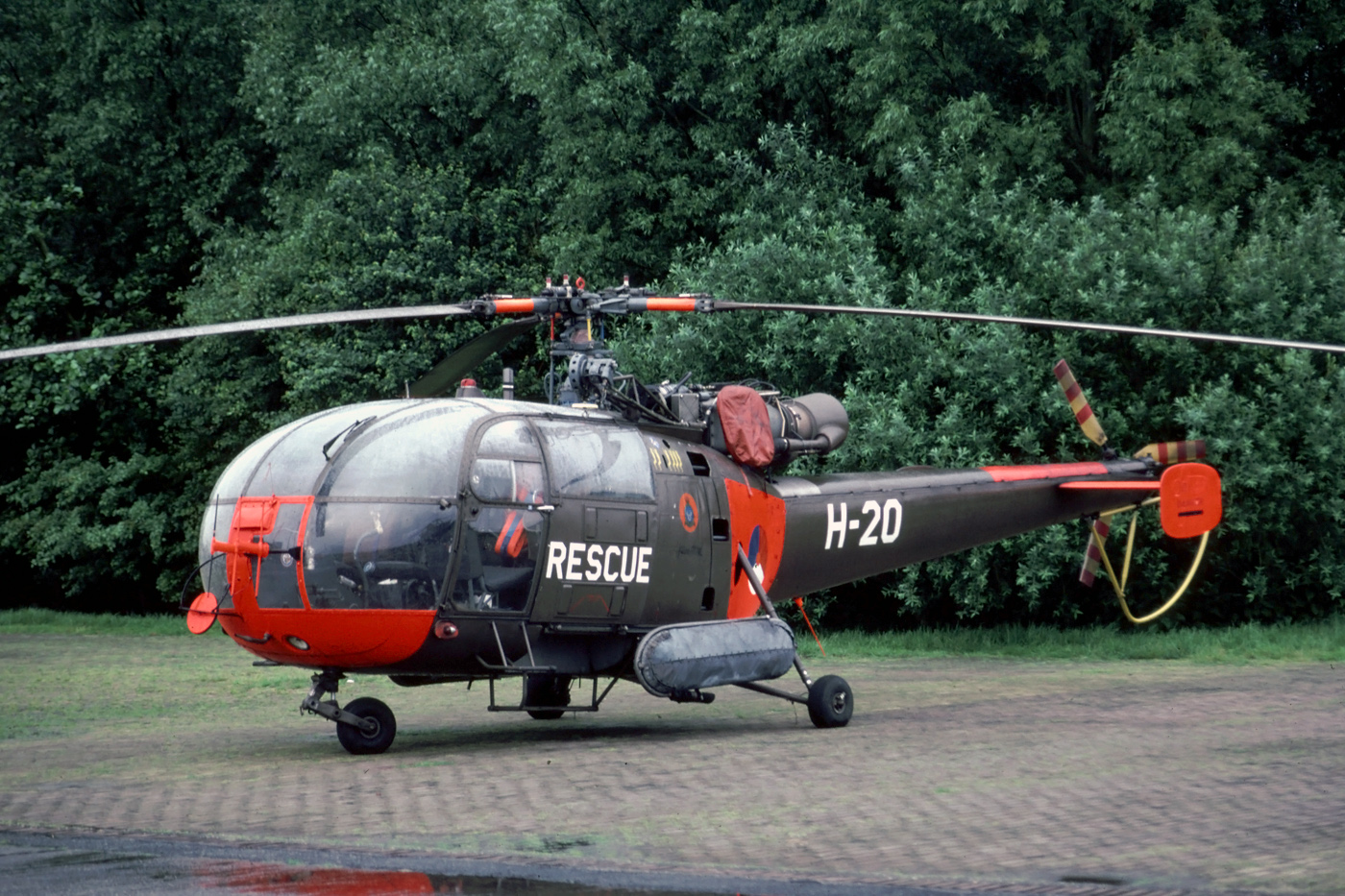
The F-16 stand-down was gradual. On 31 October 2014, 323 Squadron retired as an F-16 unit and passed its TACTES role across the ramp to 322 Squadron the same day. Days later, on 5 November, 323 was reconstituted as the F-35A Test Squadron at Eglin Air Force Base in Florida - half a world away from Leeuwarden, but ready to bring the new jet back home. Five years passed. Then, on Halloween 2019, the first operational F-35A rolled to a stop on Frisian concrete. The base also lost its Search and Rescue role: 303 Squadron, which had flown Agusta-Bell AB 412SP helicopters out of Leeuwarden, stood down on 1 January 2015. Today the base hosts 322 Squadron flying F-35As, 323 Squadron as the Air Combat Development Centre, 306 Squadron flying MQ-9A Reaper drones, and three support squadrons. The next forty years of Dutch tactical aviation will be flown, in large part, from this single Frisian field.
The Sound of the Place
Stand outside the fence on a launch day and you understand why Frisian villages have long since stopped expecting quiet. The F-35 is loud in a different register than the F-16 was - heavier, more sustained, less of the high crackle and more of a chest-shaking rumble. Polders amplify sound; flat land has nothing to absorb it. The cattle keep grazing. The dairy farms keep producing. A jet lifts off, the noise rolls across the fields, and somewhere over the Wadden Sea a future engagement is being practiced. Leeuwarden has been a fighter base, in one form or another, for more than eighty years. The airframes change. The mission, more or less, does not.
From the Air
Leeuwarden Air Base, ICAO EHLW, sits at 53.2278 N, 5.7558 E, approximately 5 km northwest of central Leeuwarden, Friesland. The single main runway runs roughly southwest-to-northeast across flat polder farmland. The base is an active military airfield - check NOTAMs and avoid the control zone unless cleared. From altitude, the field is unmistakable: long runway, hardened aircraft shelters in dispersed rows, large hangar complex on the north side, easily distinguishable from the surrounding agricultural grid. The Wadden Sea coastline lies 12 km to the north. During the annual Frisian Flag exercise (typically late March or April), expect heavy international military traffic in the surrounding airspace.