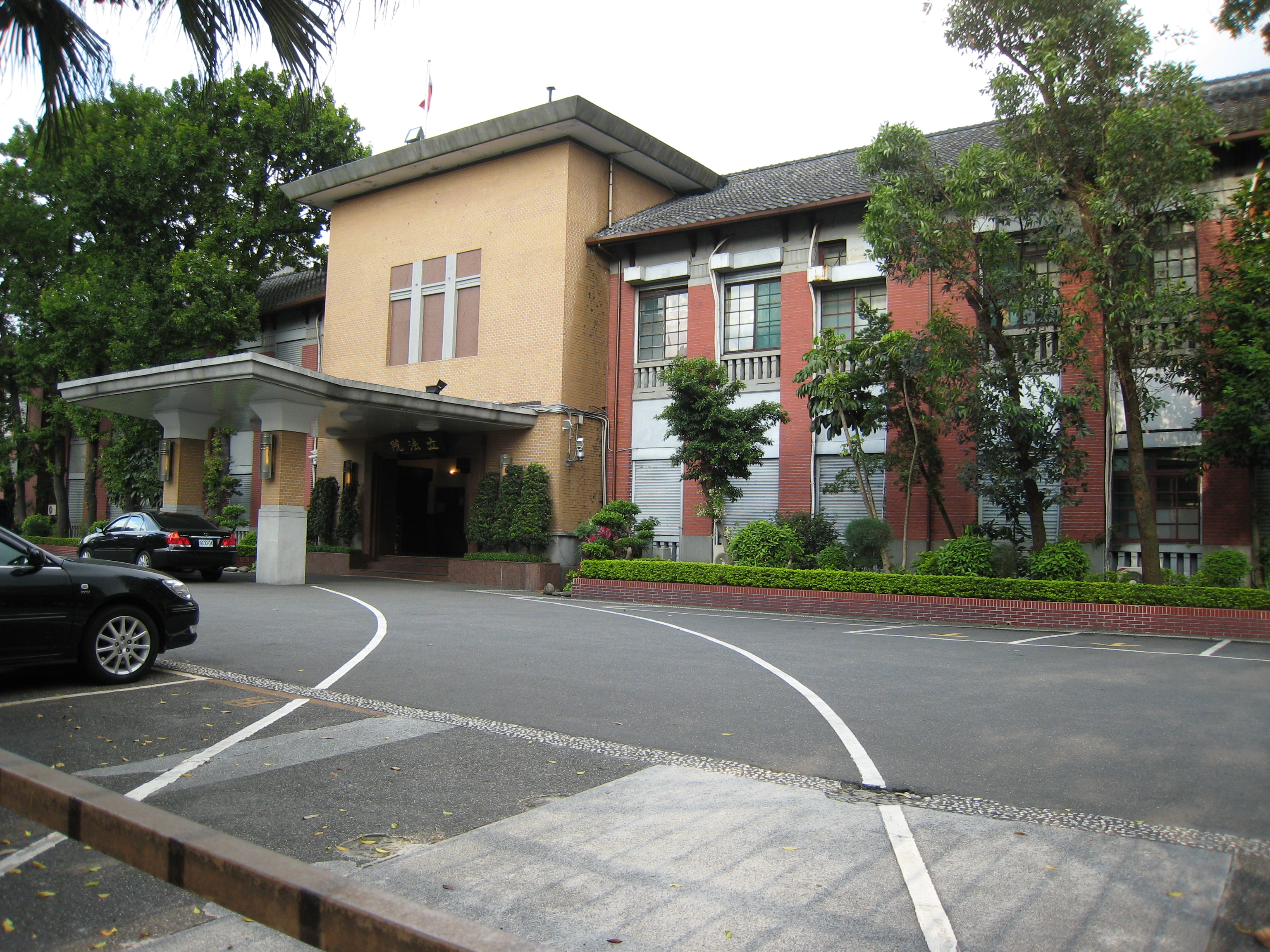
Legislative Yuan
In 1995, the scientific humor magazine Annals of Improbable Research awarded Taiwan's Legislative Yuan its Ig Nobel Peace Prize "for demonstrating that politicians gain more by punching, kicking and gouging each other than by waging war against other nations." The award was a joke, but the brawls were real, and so was the underlying story: a legislature that had spent decades as a frozen relic of civil war was learning, sometimes violently, what democracy actually looks like when everyone gets a voice.
A Parliament in Exile
The Legislative Yuan first convened in Nanjing on May 18, 1948, with 760 members representing constituencies across all of China. Within a year, mainland China had fallen to the Communists, and the entire government -- legislators included -- relocated to Taiwan. The body that arrived in Taipei in 1949 carried a constitutional fiction: these were the elected representatives of a country that no longer existed in the form they represented. Because new elections could not be held in their mainland districts, the Judicial Yuan ruled that the original members would hold their seats until elections were again possible. The assumption was that the Kuomintang would retake the mainland shortly. It did not. The legislators served for life. The body became known as "the Non-reelected Congress," a parliament of aging men representing ghost constituencies, rubber-stamping the policies of a one-party state.
The Long Thaw
Change came slowly, then all at once. Limited supplementary elections began in 1969, allowing a handful of Taiwan-elected legislators to join the body alongside the original mainland members. Through the 1970s and 1980s, the Tangwai movement -- an informal coalition of opposition politicians operating outside the KMT -- gained seats in these supplementary elections. Most Tangwai members eventually joined the Democratic Progressive Party after its founding in 1986. The decisive break came in 1991, when the Constitutional Court ordered all members with extended terms to retire by year's end. For the first time since 1948, every legislator would have to face voters. The second Legislative Yuan, fully elected by Taiwan's citizens, convened in 1993 with 161 members. A frozen institution had finally begun to breathe.
Fists, Chairs, and Stolen Bills
What followed was democracy in its rawest form. Committee hearings became theatrical confrontations, with executive branch officials facing hostile interrogation from opposition members. Physical altercations broke out on the chamber floor throughout the 1990s and beyond, typically triggered by procedural disputes. In January 2007, a brawl involving fifty legislators erupted. In June 2020, more than twenty Kuomintang lawmakers occupied the legislature overnight, blocking entry to the main chamber with chains and chairs. On May 18, 2024, a lawmaker physically attempted to steal a bill to prevent a vote, sparking yet another melee. Some observers have alleged the fights are staged. Staged or not, they reflect a legislature where the stakes feel real to the participants -- a marked change from the decades when the body existed merely to ratify decisions already made.
From 760 Ghosts to 113 Voices
A 2004 reform, passed with overwhelming support, halved the legislature from 225 to 113 seats and shifted to a parallel voting system: 73 members elected by first-past-the-post in single-member districts, 34 by party-list proportional representation (with a requirement that at least half be women), and 6 seats reserved for indigenous candidates. Terms were extended from three to four years to synchronize with presidential elections. The reform also abolished the National Assembly and gave the Legislative Yuan sole power to propose constitutional amendments, initiate presidential recalls, and approve appointments to the judiciary and watchdog agencies. Sun Yat-sen's original vision had called for five branches of government; modern Taiwan has condensed legislative power into one chamber, elected entirely by the people of Taiwan.
The Building That Keeps Threatening to Move
The Legislative Yuan occupies a building in Taipei that dates to the Japanese colonial era, repurposed for legislative use since 1960. The cramped quarters have inspired repeated relocation proposals. A 1990 plan to move to the site of the defunct Huashan railway station passed in 1992 but was later abandoned when the budget was cut. A 1999 proposal to relocate to the former Air Force Command Headquarters was opposed by the Taipei City Council and derailed by the 1999 Jiji earthquake. Other suggestions have included moving the legislature to Taichung, New Taipei, or even Yilan County. None has succeeded. The building stays, its age and inadequacy somehow fitting for an institution that has outlasted every expectation placed on it -- from rubber stamp to frozen relic to one of Asia's most contested democratic arenas.
From the Air
The Legislative Yuan building is located at approximately 25.045N, 121.522E in Taipei's Zhongzheng District, near the junction of Zhongshan South Road and Jinan Road. The colonial-era building is difficult to distinguish individually from the air but sits within a cluster of government buildings near Liberty Square and the Presidential Office Building. Taipei Songshan Airport (RCSS) is about 4 km northeast. Taiwan Taoyuan International Airport (RCTP) is approximately 35 km west.