Legoland Japan Resort
Exactly 10,496,352 LEGO bricks. That is the count for Miniland alone -- just the centerpiece of a 22-acre theme park that contains roughly 17 million bricks in total. Legoland Japan Resort opened on April 1, 2017, in Nagoya's Minato Ward, planted on reclaimed waterfront land along Ise Bay where industrial piers once dominated the shoreline. It was the first Legoland in Japan, the second in Asia after Malaysia, and the eighth worldwide. Merlin Entertainments spent $250 million bringing it to life, and to mark the occasion, a commemorative Lego-themed commuter train began running on the Aonami Line from central Nagoya to the park's front gate. For a city better known for automobiles and heavy manufacturing, the arrival of ten million plastic bricks was a deliberate pivot toward a different kind of engineering.
Japan in Miniature
The heart of the resort is Miniland, where Japan's most recognizable landmarks rise in meticulous LEGO detail at the park's center. Tokyo Station's brick facade, Kyoto's Kiyomizu-dera temple, Osaka's streetscapes, and Nagoya Castle all stand at a scale where a child can look them in the eye. The builders did not settle for static dioramas -- trains move, water flows, and lights cycle through day and night. Every one of those 10,496,352 bricks was placed by hand during months of painstaking assembly. For visitors who have seen the real landmarks, the pleasure is in recognizing tiny details; for those who have not, Miniland serves as a brick-built travel itinerary across Japan.
Seven Kingdoms of Plastic
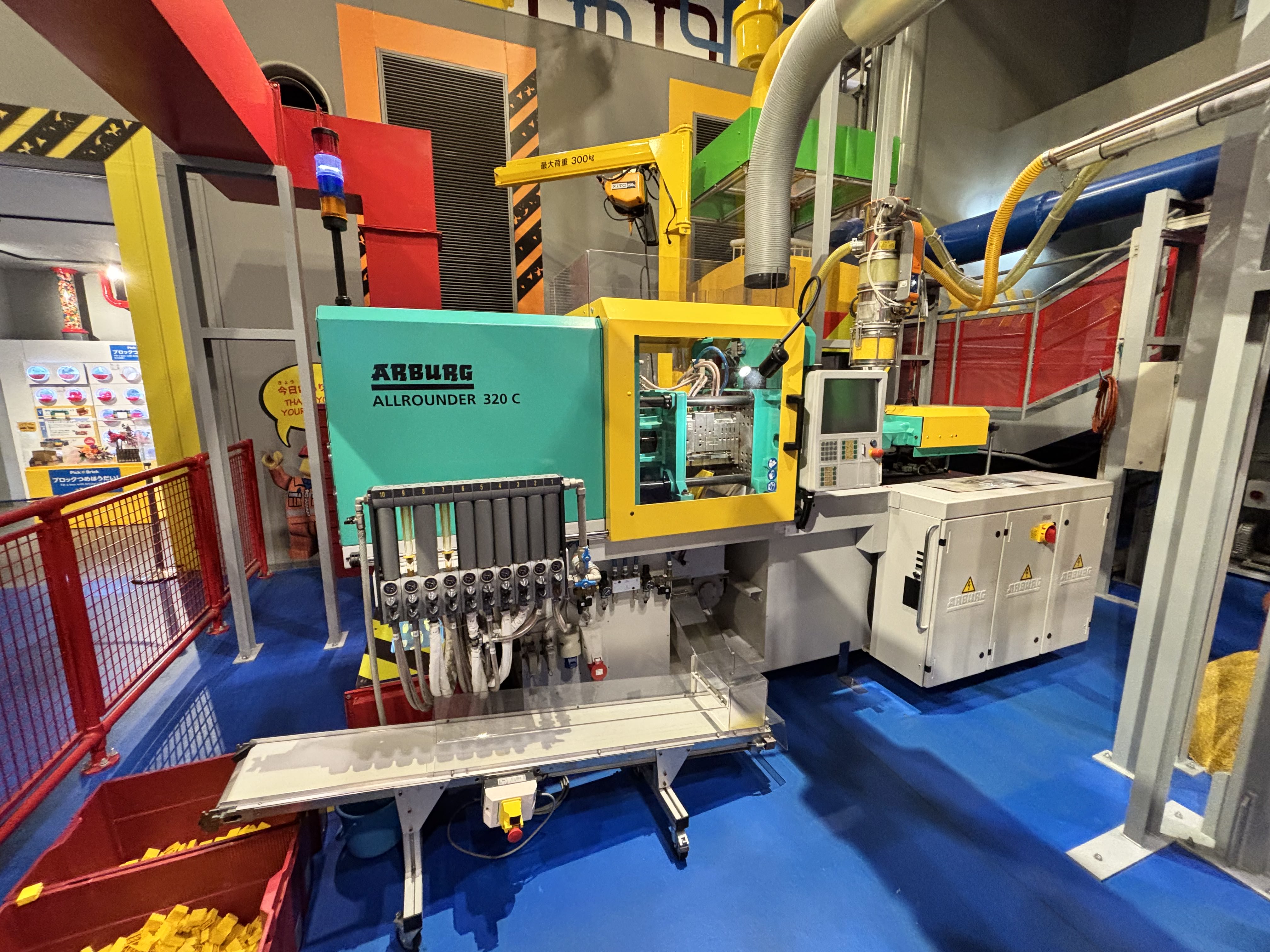
Beyond Miniland, the park divides into seven themed zones spread across its nine hectares. Bricktopia offers robotic workshops where children build and program their own creations, alongside a 4D Ninjago experience. Lego City puts kids behind the wheel of electric cars at Junior Driving School and at the helm of boats at Coast Guard HQ. Knight's Kingdom delivers medieval-themed roller coasters -- the Dragon and its gentler sibling, Dragon's Apprentice -- alongside Merlin's Flying Machines. Pirate Shores surrounds visitors with water on all sides, and the Adventure zone houses the Submarine Adventure ride, where guests descend into a tank stocked with real fish visible through the portholes. The Factory rounds things out with a working production line tour where visitors watch LEGO pieces being manufactured and receive a freshly pressed brick as a souvenir.
Growing Into a Resort
Legoland Japan was never meant to stand alone. Within a year of opening, Merlin Entertainments expanded the site with a Legoland Hotel -- a riot of primary-colored rooms where children sleep in themed suites while parents navigate hallways studded with brick sculptures. The hotel opened on April 28, 2018, after a 10-billion-yen investment. Two weeks earlier, on April 15, Sea Life Nagoya had opened its doors next to the park, adding a Lego-themed aquarium to the complex. The combination of theme park, hotel, and aquarium transformed what had been a single-day attraction into a multi-day resort destination. Most rides were imported and then modified by Sansei Technologies to meet Japanese safety regulations, a process that added a layer of local engineering precision to a Danish toy company's global template.
The Aonami Line Connection
Part of Legoland's identity is inseparable from its commute. The park sits at the end of the Aonami Line, a rapid transit route that runs from Nagoya Station to the Kinjo-futo waterfront district. On March 27, 2017, days before the park's grand opening, a Lego-themed train began daily service on the line -- its exterior wrapped in colorful brick patterns, turning the 24-minute ride from downtown into a preview of the experience ahead. The transit link was deliberate. Nagoya's Minato Ward had long been an industrial port district, and the Aonami Line was the infrastructure backbone that made a family theme park viable in a location surrounded by container yards and shipbuilding heritage. The bet paid off: the park projected over two million annual visitors at launch, and the waterfront has steadily shifted from cargo to tourism.
From the Air
Located at 35.05N, 136.84E in Nagoya's Minato Ward, on the western shore of Ise Bay. The park's colorful layout and distinctive Observation Tower are visible from moderate altitude against the industrial port surroundings. The adjacent Legoland Hotel with its bright primary-color facade is a secondary visual landmark. Nearest airport: Chubu Centrair International Airport (RJGG) approximately 18nm south across Ise Bay. Nagoya Airfield/Komaki (RJNA) lies approximately 14nm north. The Aonami Line rail corridor running southeast from Nagoya Station toward the waterfront is a useful navigation reference. Expect good visibility over the bay except during summer haze and typhoon season.