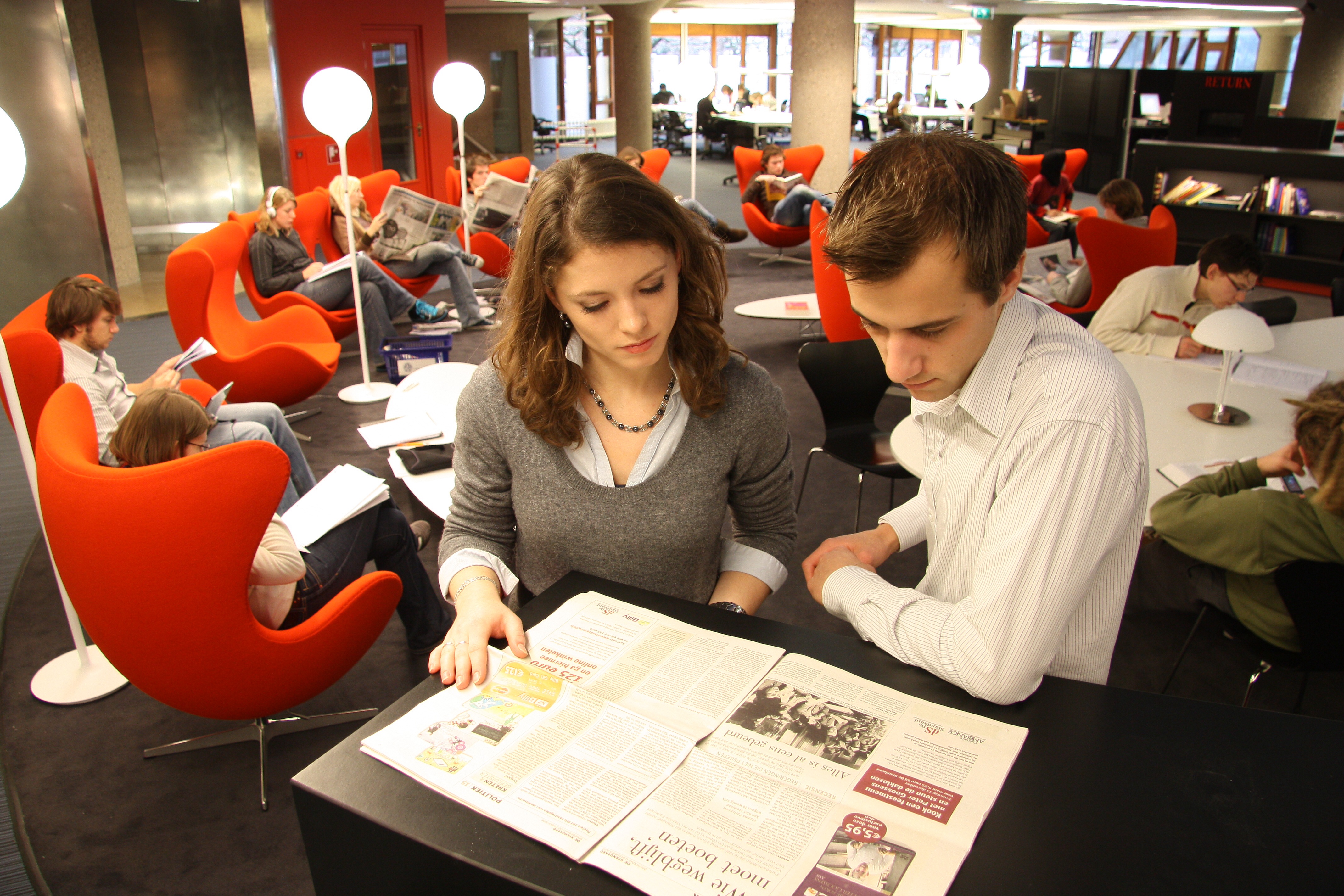
Leiden University Library
The library began with one book. William of Orange, who had founded the new Protestant university in 1575 as a reward for Leiden's defiance of the Spanish, donated a copy of the Polyglot Bible printed by Christoffel Plantijn. Latin chroniclers called it fundamentum locans futurae aliquando bibliothecae, the laying of the foundation of an eventual future library. From that single Bible, set down in a vault under the Academy Building on the Rapenburg, the collection has grown for four and a half centuries into one of the most cosmopolitan research libraries on earth: five million volumes, three thousand cuneiform tablets, thirty thousand Oriental manuscripts, and the largest archives on Indonesia and the Caribbean anywhere in the world.
A Catalogue, Probably the First
In 1595 the library issued the Nomenclator, an alphabetical catalogue of its holdings. It is generally considered the first printed catalogue of an institutional library, anywhere. Joseph Justus Scaliger, the great philologist who taught at Leiden from 1593 until his death in 1609, captured the spirit of the place in a single Latin line: Est hic magna commoditas bibliothecae ut studiosi possint studere - here, at Leiden, is the great convenience of a library so that those who want to study can. Scaliger left his manuscripts and all his Oriental books to the library when he died. They are still here, in a special collection that bears his name.
Warner's Legacy
Around 1645, the Dutch Republic sent a young scholar named Levinus Warner to Constantinople as its representative to the Sublime Porte. Warner spent twenty years in the Ottoman capital and used the time to acquire about a thousand Middle Eastern manuscripts in Arabic, Persian, Turkish, Hebrew, and Syriac. When the Ottoman bibliophile-encyclopedist Katip Celebi died in 1657, Warner managed to buy part of his library, then the largest private collection in Istanbul. Warner died in 1665 and bequeathed everything to Leiden. The Oriental Collections of the library are still called the Legatum Warnerianum in his honour. They have grown to thirty thousand manuscripts and two hundred thousand printed books in languages ranging, the catalogue notes with some pleasure, from Arabic to Zulu.
The Indonesian Connection
By the early twentieth century the library held what is arguably the largest collection on Indonesia in the world, much of it gathered through the Royal Netherlands Institute of Southeast Asian and Caribbean Studies, known as KITLV. In 2013 the colonial collections of the Royal Tropical Institute, including maps both colonial and modern, were transferred to Leiden. The following year KITLV's complete collection joined them. The library also took over the KITLV-Jakarta office, where collecting on contemporary Indonesia continues. To house these holdings the library built an open-stack area making five kilometres of materials directly available, plus a remote storage facility holding another thirty-eight kilometres. On 14 September 2017, Queen Maxima opened a new floor on top of the building dedicated entirely to the Asian collections.
Treasures and the UNESCO Register
Some of what the library safeguards is, in the literal UNESCO sense, world heritage. Seven Leiden holdings appear in the UNESCO Memory of the World Register, including the Leiden La Galigo manuscript in Bugis script, the Babad Diponegoro autobiographical manuscript of the exiled Javanese prince, the Panji manuscripts of medieval Javanese romance, and the Kartini Letters and archive. Among the broader treasures are the eighth-century Leiden Pliny, the Leiden Aratea with its starry illustrations of constellations copied around 816, the medieval Leiden Jerusalem Talmud, a Rembrandt study of Adam and Eve, and Christiaan Huygens's scientific archive. The collection also holds the Dutch Society of Letters library, transferred in 1876, and now contains roughly seven hundred incunabula printed before 1501.
From Cards to Code
For four centuries Leiden catalogued its holdings on slips, then on bound cards known to readers as the Leidse boekjes, the Leiden booklets. The system was painstakingly maintained until 1988, when the first online catalogue went live. The library's librarian Johan Remmet de Groot had launched a Dutch library automation project called PICA in 1969; OCLC bought it in 2000. In 1983 the library moved into a modernist building on the Witte Singel designed by architect Bart van Kasteel. Since then it has steadily absorbed other Dutch scholarly libraries, including the Walaeus medical library in 2021 and the library of the Netherlands Institute for the Near East, whose Assyriology holdings brought the cuneiform tablets along with them. In 2024 three new specialized libraries opened: Science, African, and Middle Eastern. The institution William of Orange started with a single Bible now operates as a network of reading rooms whose subjects, taken together, sketch the contours of the world Dutch scholarship once tried to map.
From the Air
Leiden University Library is at the Witte Singel in central Leiden, roughly 52.16N, 4.48E, a few hundred metres southwest of the Rapenburg canal. The building sits within the easily recognized medieval centre of Leiden, about 15 km north-northeast of The Hague. Schiphol (EHAM) is about 30 km northeast; Rotterdam The Hague (EHRD) about 25 km south.