Leiden University
Philip II of Spain, who hated the place, signed the founding charter. He did not mean to. As de jure Count of Holland in 1575, his name still appeared on Dutch official documents, even on the certificate that established the new Protestant university at Leiden, a town that had just spent the previous year defying his armies. Once he understood what he had inadvertently authorized, he forbade his subjects to study there. They came anyway. So did Descartes. So did Spinoza. So did, eventually, ten future Dutch prime ministers, three reigning monarchs, and sixteen Nobel laureates. The oldest surviving university in the Netherlands has been quietly accumulating that kind of company for four hundred and fifty years.
A Reward for Not Surrendering
Leiden University was founded by William of Orange on 8 February 1575, four months after Dutch ships sailed across deliberately flooded farmland to relieve the city's starving defenders. Tradition says the university was offered as a reward. The Republic had no university in its northern heartland at the time; the nearest were Leuven and Douai, both deep in Spanish-controlled territory. Prince William wanted an institution that could train Protestant clergy and educated administrators for the new state. The first classes met in the Convent of Saint Barbara. By 1581 the university had moved into a former convent of Cistercian nuns on the Rapenburg, where it still operates, although the original building burned down in 1616 and was rebuilt. From the start, the university was tolerant by the standards of its century. That tolerance was its real founding gift.
The Coldest Laboratory in the World
On 10 July 1908, in a basement laboratory in Leiden, Heike Kamerlingh Onnes succeeded in turning helium gas into liquid. He had been working towards this for decades, building the world's first university low-temperature laboratory and pushing the limits of refrigeration to within a single degree of absolute zero. Three years later, almost as an aside, he discovered that mercury cooled below 4.2 kelvin lost all electrical resistance. He had stumbled into superconductivity. The Nobel Prize followed in 1913. Onnes was not alone. Pieter Zeeman discovered the splitting of spectral lines in a magnetic field at Leiden in 1896, and Hendrik Lorentz explained it. Both shared the 1902 Nobel Prize. The physiologist Willem Einthoven built the string galvanometer here, the device that made electrocardiograms possible. Einstein lectured here. Paul Ehrenfest, his closest scientific friend, held the theoretical physics chair. For roughly forty years, this small Dutch university was one of the most consequential addresses in physics.
The Sweat Room
Behind a heavy door in the Academy Building on the Rapenburg is a small chamber whose walls are covered, floor to ceiling, in signatures. This is the Zweetkamertje, the Sweat Room, where for more than two centuries doctoral candidates have waited for their committees to finish deliberating. The name is honest: defending a Leiden dissertation can take an hour, and the wait afterward is reportedly worse. Successful candidates sign the walls. So have honorary doctorate recipients, which is how the names of Winston Churchill, Nelson Mandela, and most of the modern Dutch royal family ended up clustered beside the names of working chemists and Sanskrit specialists. The plaster grew so fragile over time that a 2014 crowdfunding campaign was needed to stabilize it. Centuries of nervous handwriting are not easily preserved.
Indonesia, Manuscripts, Einstein in a Drawer
The university library holds more than five million books and fifty thousand journals, but the more remarkable holdings are the manuscripts and special collections, including what is generally considered the largest collection on Indonesia and the Caribbean in the world. The Scaliger Institute, named for the great early modern philologist who taught here from 1593, oversees medieval codices and early modern letters that scholars still travel from around the world to read. In 2005 a student working in one of these collections noticed an unrecognized manuscript among Paul Ehrenfest's papers. It turned out to be an Einstein draft on the quantum theory of the monatomic ideal gas, an early piece of what is now called Bose-Einstein condensation. The paper had been sitting in a drawer in Leiden for about eighty years, waiting for someone to look.
Two Cities, One University
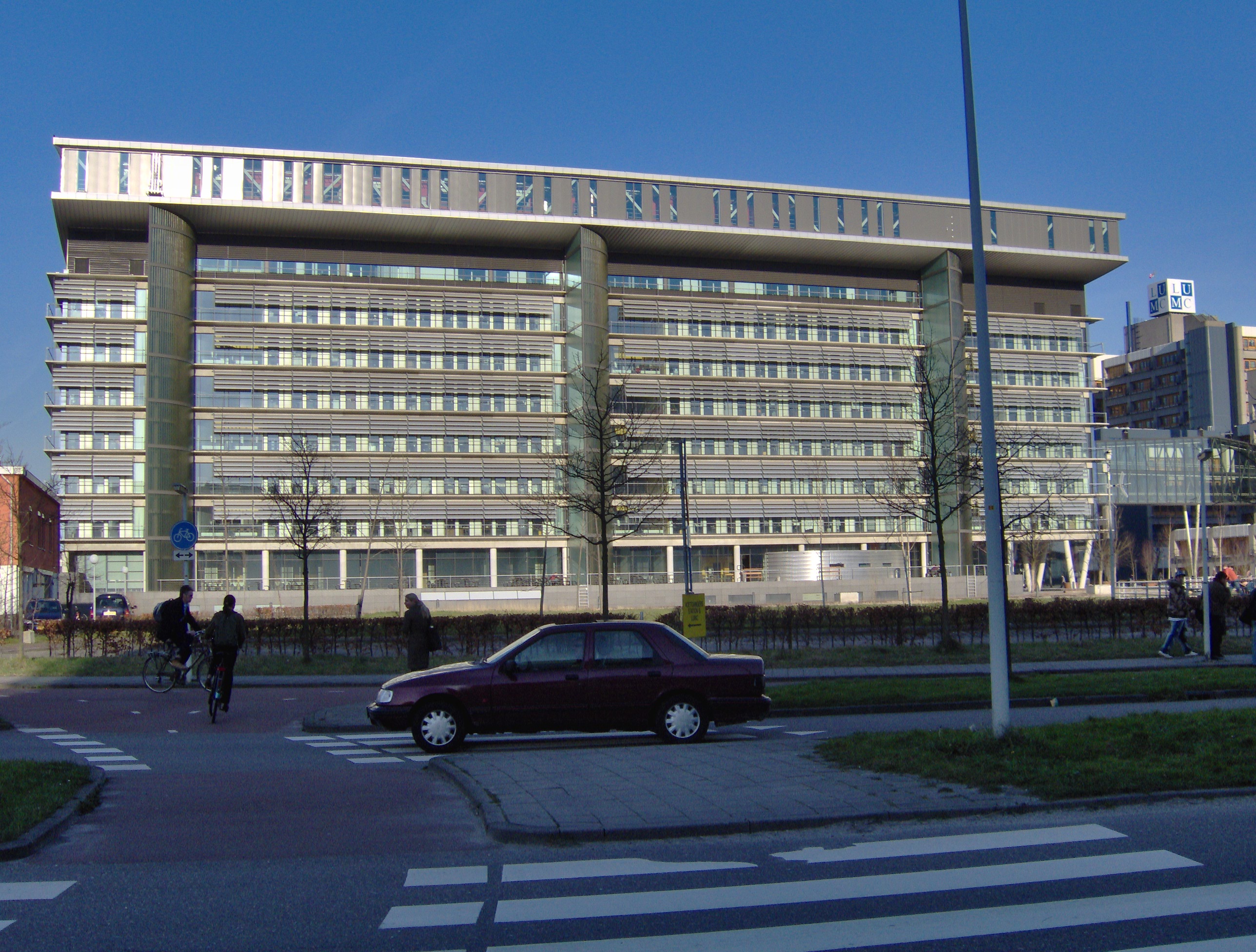
Leiden University has no central campus. Its faculties occupy buildings scattered through the medieval centre of the city, from the old Kamerlingh Onnes laboratory now used by the law school to the modern Gorlaeus complex for the sciences. Since 1998 the university has also operated a second campus in The Hague, where Leiden University College offers liberal arts and sciences, the Faculty of Governance and Global Affairs trains future diplomats and policymakers, and the law school runs a joint summer program with Duke. The botanical garden behind the centre, the Hortus Botanicus, has been cultivating plants without interruption since 1590, including specimens collected during Philipp Franz von Siebold's nineteenth-century travels in Japan. Some of those trees, planted as saplings hundreds of years ago, are still standing where their first gardeners left them.
From the Air
Leiden University is concentrated along the Rapenburg canal in central Leiden at 52.16N, 4.49E, with a secondary campus in The Hague about 15 km south. Schiphol (EHAM) lies roughly 30 km northeast and Rotterdam The Hague (EHRD) about 25 km south. The historic Academy Building and Hortus Botanicus are visible against the regular grid of canals in the old town.