Leipzig
On the evening of 9 October 1989, an estimated 70,000 people walked out of the Nikolaikirche and around the inner ring of Leipzig, carrying candles. Many of them genuinely believed the police would shoot. Hospital beds had been requisitioned across the city. Stasi units were positioned along the route. The chant - 'Wir sind das Volk,' 'we are the people' - had been rehearsed in the Monday peace prayers at the church for years, but it had never been said this loudly outside. Nothing happened. The police stood down. Within a month the Berlin Wall fell. Leipzig had earned a name, used informally ever since, that the Soviets had once reserved for cities decisive in World War II - Heldenstadt, Hero City. The marchers had not been the first East Germans to protest, but on that particular evening, in that particular city, they had broken the regime's nerve. It is impossible to walk Leipzig today without feeling 9 October layered into other histories - Bach worked here, Mendelssohn lived here, Wagner was born here, the trade fair has run since 1190 - but October 1989 is the chapter that defines the modern city in a way the older ones do not.
City of Trade
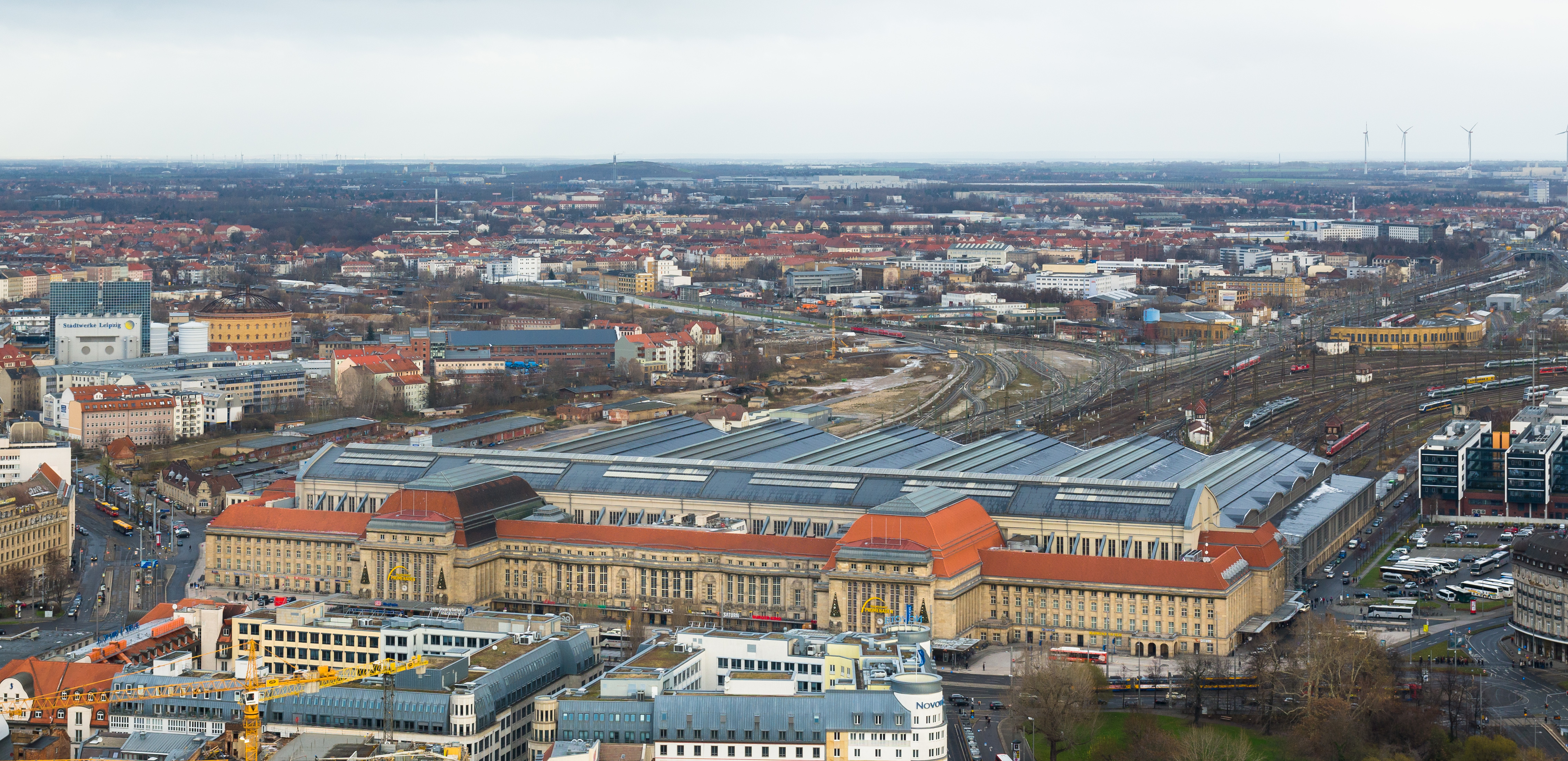
Leipzig was first documented in 1015 as urbs Libzi - the name probably from the Slavic lipa, linden tree - and granted city and market privileges in 1165 by Otto the Rich. Its location, where two great medieval roads crossed (the Via Regia running east-west from Spain to Russia, the Via Imperii running north-south from the Baltic to Italy), made it a natural trading center. The Leipzig Trade Fair, dating back to 1190, is the oldest continuously operating trade fair in the world. From the Middle Ages through the twentieth century the fair shaped the city's character: cosmopolitan, mercantile, willing to host whoever brought goods to sell. Between 1764 and 1945 Leipzig was also a global center of book publishing - the Leipzig Book Fair, second only to Frankfurt's, dates from 1632. The German National Library has one of its two locations here. The Leipzig Hauptbahnhof, opened in 1915, is still Europe's largest railway station by floor area.
Bach at St. Thomas
Johann Sebastian Bach arrived in Leipzig in 1723 to become Thomaskantor - cantor of the St. Thomas School and music director for the city's principal churches. He stayed twenty-seven years until his death in 1750, producing in this period most of the great choral works: the St. Matthew Passion, the Mass in B minor, the cantata cycles. The Thomanerchor, the boys' choir he directed, was already old when he took it over (it was founded in 1212) and is still active eight centuries later. A century after Bach, Felix Mendelssohn moved to Leipzig in 1835 to direct the Gewandhaus Orchestra, founded in 1743 and one of the world's oldest. Mendelssohn lived here until his death in 1847, founding Germany's first conservatory in 1843 - the institution that became the Hochschule fur Musik und Theater Felix Mendelssohn Bartholdy. Richard Wagner was born in Leipzig in 1813. Robert and Clara Schumann lived here from 1840 to 1844. Friedrich Schiller wrote 'Ode to Joy' in nearby Gohlis in 1785 - the lines that eventually became the European anthem.
Reich and Ruin
Leipzig was claimed by the Nazi state in 1933, and what happened in the next twelve years happened here as it happened across Germany. Mayor Carl Friedrich Goerdeler, an early conservative joiner, broke with the regime in 1937 over the destruction of the Mendelssohn statue and would later be executed in 1945 for involvement in the 20 July plot. The Moorish-revival Leipzig synagogue of 1855, one of the city's most beautiful buildings, was destroyed on Kristallnacht in 1938. The Jewish population fell from over 11,000 in 1933 to about 2,000 by January 1942, when deportations to extermination camps began. The Polish consulate sheltered 1,300 Polish Jews. RAF firebombing in 1943-44 destroyed every theater in the city and significant parts of the historic center. The American 2nd and 69th Infantry Divisions captured Leipzig on 18-19 April 1945 in fierce house-to-house fighting; the Mayor and his deputy, both SS officers, killed themselves and their families in the City Hall.
Forty Years of Plattenbau
When the Americans pulled back to the agreed occupation lines in July 1945, Leipzig went to the Soviets and became part of East Germany. The GDR was not kind to the city. The trade fair survived, repurposed as Comecon's window to the West, but the publishing industry moved to West Germany, the legal-services sector concentrated in East Berlin, and Leipzig was left with heavy industry that polluted heavily. Population fell from 600,000 in 1950 to 500,000 by 1989. Plattenbau prefab apartment blocks went up across the outer districts; the historic center decayed; in 1968 the regime dynamited the Gothic Pauliner Church next to the university and built a brutalist tower in its place. By the 1980s the air in Leipzig was actively toxic, and the smell of two-stroke Trabants and lignite heating defined the city in autumn. The fall of communism after October 1989 brought brief disaster - 90 percent of industrial jobs vanished within six years - and then a long, slow recovery.
Hypezig
Today Leipzig has about 628,000 inhabitants and is Germany's fastest-growing city of over half a million. The nickname 'Hypezig' captures the joke and the truth: a generation of artists and musicians and entrepreneurs priced out of Berlin moved sixty miles south, found cheap rents in restored Grunderzeit apartment buildings, and began making the city famous for the New Leipzig School of painters (Neo Rauch and his circle) and for techno labels like Kann Records and Moon Harbour. The Wave-Gotik-Treffen at Pentecost has become the world's largest goth festival. The Leipziger Auwald riparian forest stretches through the city's center. The Neuseenland project is converting old open-pit mines south of the city into an enormous lake district. The St. Thomas boys' choir still sings the motets Bach wrote for them. The Nikolaikirche still holds its Monday peace prayers. The S-Bahn Mitteldeutschland, opened in 2013 through the Leipzig City Tunnel, is now Germany's largest commuter network. A city defined by trade and music and one extraordinary October has remade itself, again, into something new.
From the Air
Located at 51.34 degrees N, 12.38 degrees E in the southernmost part of the North German Plain, at the confluence of the White Elster, Pleisse, and Parthe rivers in Saxony. The flat-roofed silhouette of the inner city is dominated by the Volkerschlachtdenkmal (Battle of the Nations Monument, 91 m) about 4 km southeast and the City-Hochhaus (142 m) just south of Augustusplatz. Nearest major airport: EDDP (Leipzig/Halle) about 18 km northwest. EDDB (Berlin Brandenburg) about 165 km north-northeast. Best aerial views of the historic center are from the southwest in late afternoon.