Lemmenjoki National Park
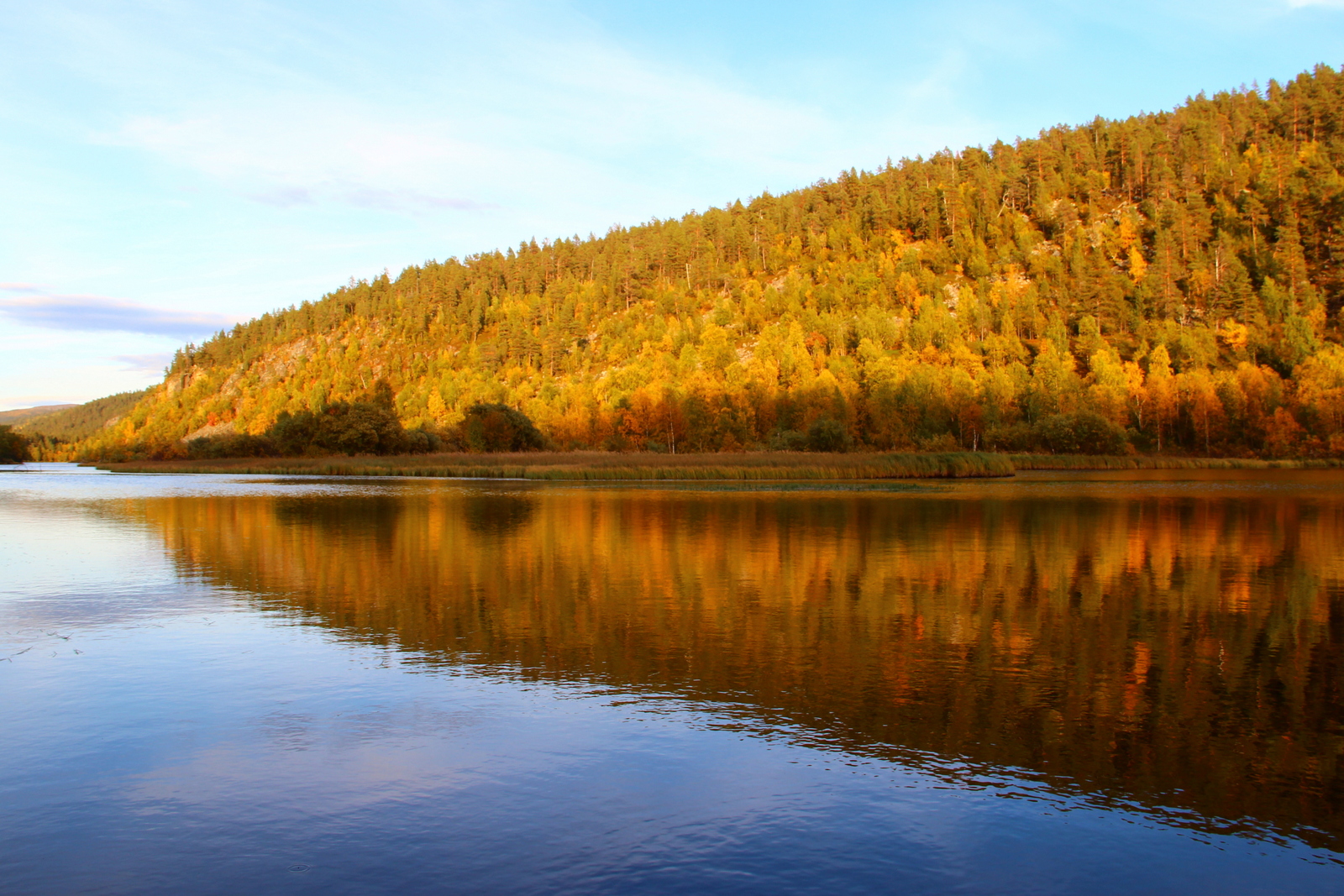
The Sami people named this river Leammi, meaning warm, because the valley's microclimate nurtures vegetation lush beyond what the latitude should allow. When the name crossed into Finnish, Leammi became Lemmenjoki, which translates as river of love. It is a beautiful accident of language, and somehow fitting for a place that inspires the kind of devotion that brings gold panners back summer after summer to claims their grandfathers staked. Lemmenjoki National Park is the largest national park in Finland, covering an expanse of wilderness in the municipalities of Inari and Kittila in Finnish Lapland that Metsahallitus, the state forestry agency, describes as one of the most extensive uninhabited and roadless backwoods in all of Europe.
A Wilderness That Connects
The park does not stand alone. It shares its western border with Pulju Wilderness Area, its southern edge with Hammastunturi Wilderness Area, and across the Norwegian frontier it adjoins Ovre Anarjohka National Park. Together these protected lands form one of the last great wilderness corridors in Europe. Within Lemmenjoki, the landscape unfolds in layers: old-growth pine forests, short and wide from centuries of slow Arctic growth, line the river valleys. Above them, fell birch forests give way to treeless fell tops where views stretch tens of kilometers in clear weather. Open aapa mires and palsa mires, where permafrost pushes turf into mounds, occupy the spaces between. Golden eagles patrol the skies. Brown bears, wolverines, and moose move through the forest. And everywhere, reindeer.
The Gold That Never Quite Ran Out
Gold was discovered at the nearby Ivalojoki river in the 19th century, triggering a rush that peaked in 1871-1872 with 500 to 600 people working the gravel. By 1902, prospectors had pushed into Lemmenjoki, staking some 70 claims. But the real gold rush came in the 1940s and continued into the 1950s, drawing diggers to these remote river banks in numbers that the wilderness had never absorbed before. They are still here. About a hundred people work claims in the summer, though few earn a living wage from it. The gold of Lapland is exceptionally pure, often used directly for jewelry rather than being melted and refined. Machine digging once produced roughly 20 kilograms annually while hand panning yielded about one kilogram, but environmental concerns led to the phasing out of mechanized extraction.
Pitfalls and Reindeer Fences
Long before the gold panners arrived, river valleys drew people for simpler reasons: they were places to live. Remains of pitfalls used for hunting wild reindeer dot the park, relics of a time before reindeer herding replaced hunting in the 1800s. Today the Sami reindeer husbandry cooperatives manage herds that are half-wild, providing supplemental food in severe winters, maintaining the fences that keep reindeer from straying, and conducting round-ups twice a year to mark calves and select animals for slaughter. The Sallivaara reindeer round-up site remains a working cultural landmark, accessible by a 12-kilometer trail from Repojoki. These are not museum exhibits but active traditions, shaped by centuries of practical knowledge about survival in the subarctic.
Into the Roadless Country
There are no roads inside Lemmenjoki National Park. Access begins at the village of Njurkulahti on the park's eastern edge, where a motorboat service runs up the Lemmenjoki river to Lake Ravadasjarvi and the old gold settlement of Kultahamina. From there, marked trails thread through the recreational zone along the river valley, passing open wilderness huts and campfire sites. Beyond the marked trails lies the remote zone, where hikers navigate by compass and topographic map through terrain that demands genuine wilderness skill. The park was founded in 1956 and has expanded twice since, now encompassing even the gold digging areas. In September, the ruska season paints the fell birch forests in yellows and reds, drawing the park's largest crowds to witness the Arctic autumn at its most vivid.
From the Air
Located at 68.61N, 25.87E in Finnish Lapland, covering a vast roadless area in the municipalities of Inari and Kittila. The Lemmenjoki river valley is the primary visual feature, cutting through forested terrain with treeless fell tops above. The park borders Norway to the northwest. Nearest airports are Ivalo Airport (EFIV) approximately 60 km east and Kittila Airport (EFKT) approximately 100 km southwest. At 5,000-8,000 feet, the scale of the wilderness is apparent: unbroken forest, mires, and fell tops with no visible roads or structures.