Les Invalides
Six coffins, nested one inside the other like Russian dolls: the innermost of tin, then mahogany, then two of lead, then ebony, then oak, and finally the massive red quartzite sarcophagus visible to visitors today. Napoleon Bonaparte lies beneath the golden dome of Les Invalides in a tomb designed to make everyone who approaches look down - literally, from a circular gallery above. The architect Louis Visconti intended the effect, and it works. But Napoleon was a latecomer here. Les Invalides had been serving France's soldiers for nearly two centuries before the emperor arrived, and it continues to serve them today.
A King's Debt to His Soldiers
In 1670, Louis XIV ordered the construction of a hospital and retirement home for soldiers wounded or aged in his wars. Before Les Invalides, disabled veterans begged in the streets or were warehoused in monasteries, an embarrassment to a king who needed an endless supply of willing fighters. The architect Liberal Bruant designed a vast complex organized around a series of courtyards, capable of housing up to 4,000 residents. The first soldiers moved in by 1674, even as construction continued. Jules Hardouin-Mansart took over the project and added the Eglise du Dome, the royal chapel whose gilded dome - 107 meters high, covered in 12 kilograms of gold leaf - became the tallest church building in Paris. The complex stretched 450 meters along the Left Bank, its northern facade presenting a dignified front to the city while behind it, soldiers lived by military discipline: rising at six, attending mass, eating communally, and working in workshops that produced uniforms and tapestries.
Arsenal of Revolution
On July 14, 1789, before the crowds stormed the Bastille, they stormed Les Invalides. The complex housed one of the largest arms depots in Paris, and the revolutionaries needed weapons. They seized approximately 28,000 muskets and twenty cannons from the cellars - the firepower that made the subsequent attack on the Bastille possible. The governor of Les Invalides, the Marquis de Sombreuil, offered no serious resistance; many of the resident veterans sympathized with the uprising. The raid is sometimes overshadowed by the more dramatic events at the Bastille later that afternoon, but without the guns of Les Invalides, the most iconic moment of the French Revolution might have ended very differently.
The Emperor Returns
Napoleon died on Saint Helena in 1821, but his remains did not reach Paris until December 15, 1840, when King Louis-Philippe orchestrated a spectacular state funeral to bolster his own legitimacy. The coffin was carried up the Seine on a black-draped barge, through streets lined with hundreds of thousands of spectators, to Les Invalides. The permanent tomb took another twenty years to complete. Visconti excavated a circular crypt directly beneath the dome, placing the sarcophagus at its center, ringed by twelve pillars representing Napoleon's major victories and figures symbolizing his civil achievements. The red quartzite came from Russia, a geographic irony given that the Russian campaign destroyed his empire. Today, Napoleon shares the complex with other military luminaries: Marshals Foch and Lyautey, and more recently General Leclerc.
A Living Museum of War
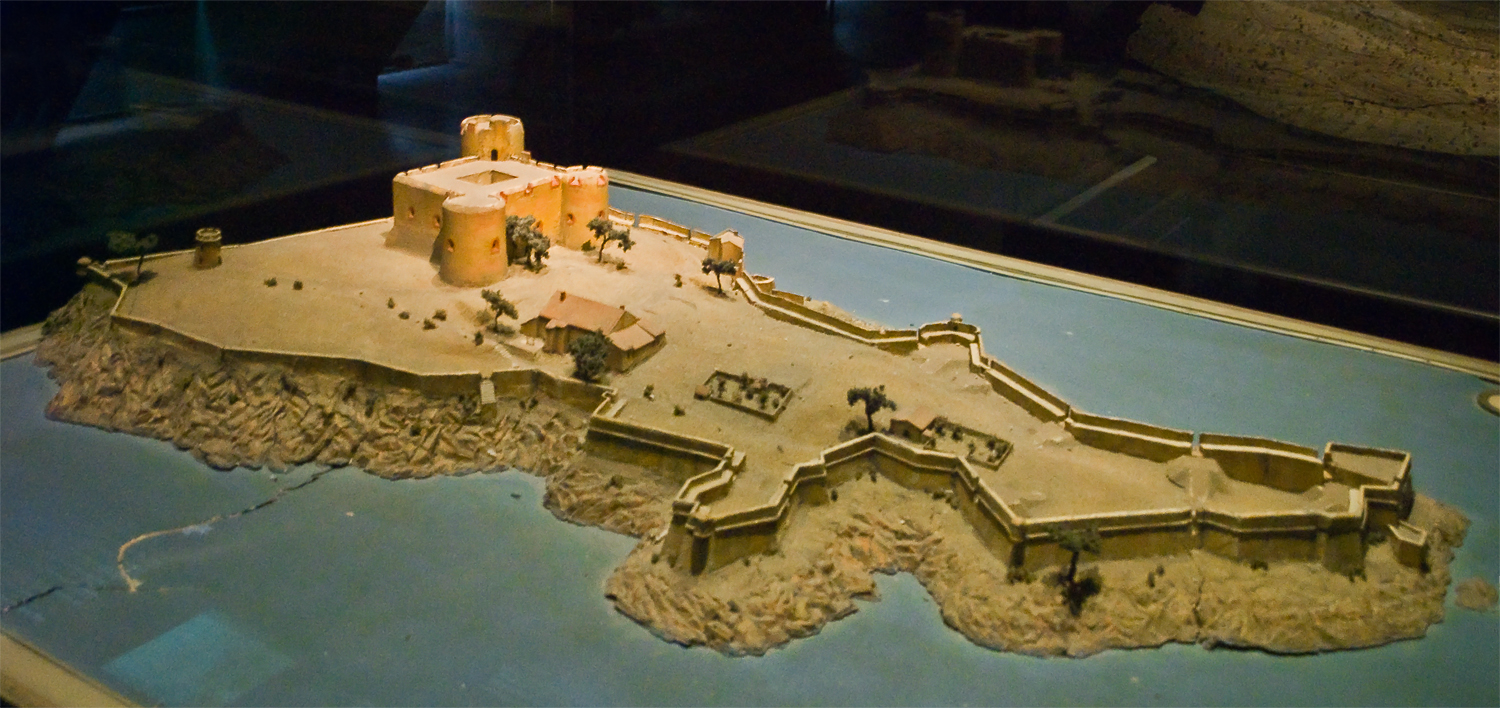
Les Invalides houses the Musee de l'Armee, one of the world's great military history collections, spanning from medieval armor to the world wars. The collection includes over 500,000 items: Napoleon's campaign coat, the cab that carried Parisian soldiers to the Battle of the Marne in 1914, Charles de Gaulle's uniform. The Musee des Plans-Reliefs occupies the attic, displaying detailed three-dimensional models of French fortified cities built for military planning from the 17th century onward - some measuring over 10 meters across, still classified as military secrets until 1927. The Cathedral of Saint-Louis-des-Invalides, the soldiers' church distinct from the royal dome chapel, serves as the national cathedral of the French military, its walls hung with captured enemy flags.
Still on Duty
What distinguishes Les Invalides from other military monuments is that it never stopped doing what it was built to do. The Institution Nationale des Invalides still operates as a hospital and care facility for wounded veterans, making it one of the oldest continuously operating military hospitals in the world. About 100 residents live in the complex today - soldiers injured in France's modern conflicts, from Algeria to Afghanistan. They share their home with millions of tourists who come each year for Napoleon's tomb and the museum, a coexistence that would have pleased Louis XIV. The Sun King built Les Invalides to demonstrate that France honored its soldiers. Three and a half centuries later, beneath the golden dome that catches every aircraft's eye on approach to Paris, the institution still fulfills that promise.
From the Air
Les Invalides (48.857°N, 2.313°E) occupies a large complex in the 7th arrondissement on the Left Bank, immediately recognizable from the air by its golden dome - the tallest church building in Paris at 107 meters, glinting in sunlight. The complex extends 450 meters along the Esplanade des Invalides northward toward the Seine, with the Pont Alexandre III providing a visual axis to the Grand Palais across the river. The Eiffel Tower stands 1km to the west. From altitude, the formal gardens and courtyard layout are clearly visible. Nearest airports: Paris Charles de Gaulle (LFPG) 25km northeast, Paris Orly (LFPO) 14km south. The dome serves as one of the most reliable visual navigation landmarks in central Paris, particularly effective in afternoon light.