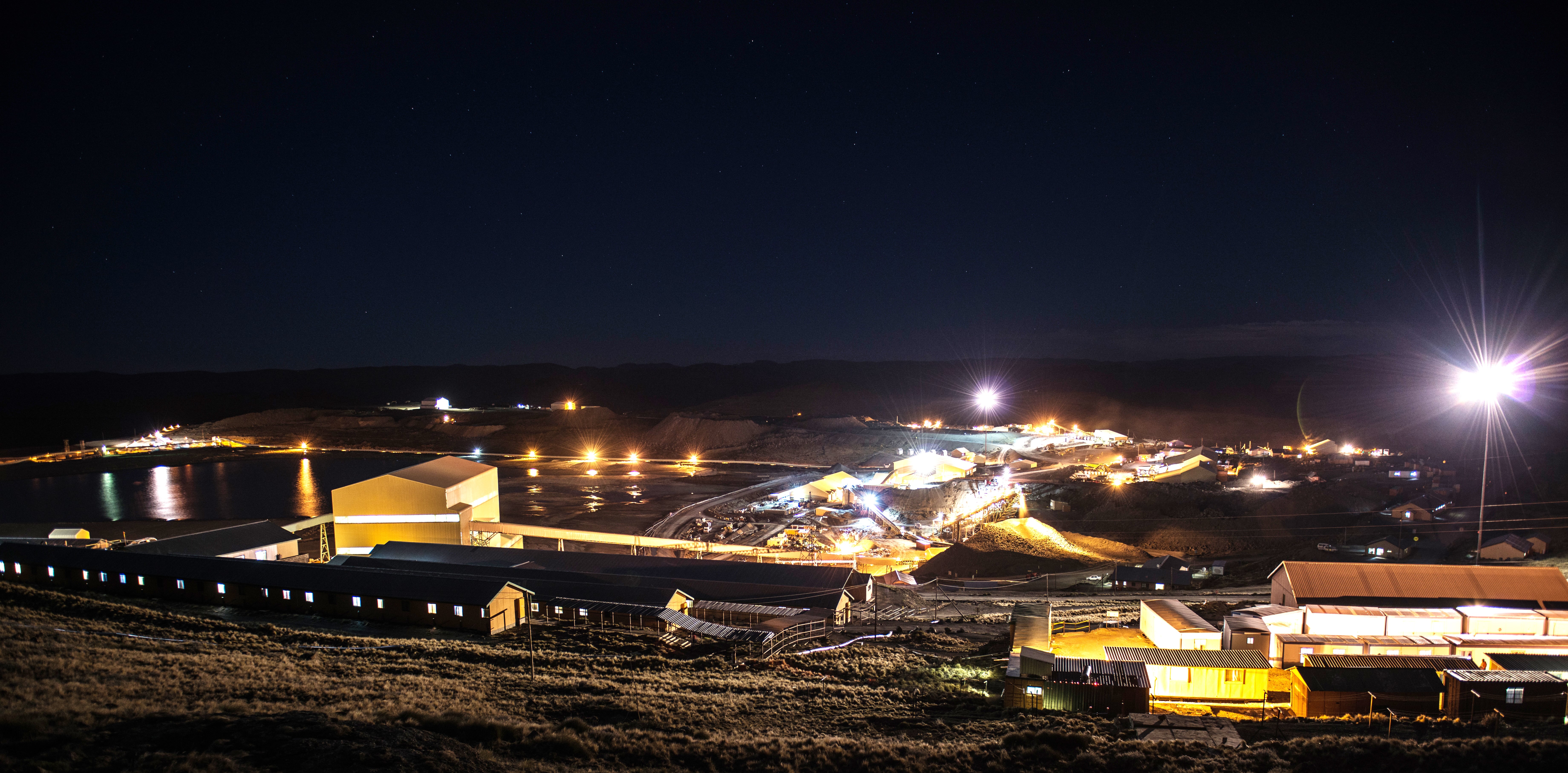
Letseng Diamond Mine
Most diamond mines chase volume. Letseng chases perfection. Perched in the mountains of Lesotho at an elevation that makes it the highest diamond mine on Earth, Letseng yields fewer than two carats per hundred tons of ore processed, a grade so low that most mining companies would abandon the site. But those rare stones are extraordinary. The mine holds the highest percentage of large diamonds, those exceeding ten carats, of any operation in the world. In the first half of 2007, while the global average hovered around eighty-one dollars per carat, Letseng averaged over nineteen hundred. What it lacks in quantity, it compensates for with gems so large and so pure that they rewrite the record books every few years.
Mining in the Clouds
Letseng sits at Letseng-la-Terae in the Mokhotlong district of Lesotho, a landlocked kingdom entirely surrounded by South Africa. The elevation places it in an alpine tundra climate, a classification unusual for anywhere in Africa. Winter temperatures plunge to minus twenty degrees Celsius. Snowfalls blanket the mine and surrounding highlands regularly. The average annual temperature hovers at just 5.2 degrees, and only January brings warmth that might be called mild, with highs averaging 14.8 degrees.
Rainfall follows a pronounced wet-dry cycle. From October to March, precipitation is abundant, with January alone averaging 133 millimeters. From May to August, the land dries out, and July delivers a mere eight millimeters on average. The mine operates through all of it, its heavy equipment grinding through kimberlite ore in conditions that would shut down operations almost anywhere else. Gem Diamonds, Ltd. owns the mine in partnership with the Lesotho government, and the partnership reflects the stone's importance to a country where diamond revenue forms a critical share of the national economy.
A Catalogue of Giants
Letseng's record reads like an auction catalog for a museum of superlatives. The Lesotho Brown, a 601-carat stone, was recovered in 1967 and held the mine's size record for decades. In 2004, the 123-carat Star of Lesotho emerged. Then came the 603-carat Lesotho Promise on 4 October 2006, a white diamond rated D color, the highest grade achievable, which at the time was the fifteenth largest diamond ever found.
The discoveries kept coming. The 493-carat Letseng Legacy surfaced in September 2007 and sold to the Graff-SAFDICO partnership for $10.4 million. In September 2008, the 478-carat Leseli La Letseng was unearthed, a Type II D-color stone with the potential to yield a 150-carat polished gem. The 550-carat Letseng Star appeared in August 2011. The Letseng Dynasty and Letseng Destiny, at 357 and 314 carats respectively, were announced in 2015. And then, in January 2018, the mine produced its masterpiece: the 910-carat Lesotho Legend, a Type IIa D-color diamond that sold in March of that year for forty million dollars.
The Paradox of Low Grade
What makes Letseng economically viable despite its vanishingly low ore grade is a geological quirk. The kimberlite pipes beneath the mine apparently preserve diamonds with minimal breakage during their violent journey from the upper mantle to the surface. Elsewhere, the explosive forces that drive kimberlite eruptions tend to shatter larger stones, leaving mines with abundant small fragments but few headline gems. At Letseng, something in the pipe geometry or eruption dynamics left big stones intact.
The result is a mine where processing a hundred tons of ore might yield fewer than two carats total, but those carats are disproportionately likely to include stones over ten carats. In a market where a single exceptional rough diamond can sell for tens of millions of dollars, Letseng's economics work not despite the low grade but because of the size distribution it conceals. Every truckload of ore is a lottery ticket, and Letseng's tickets win more often than any other mine's.
A Kingdom Built on Kimberlite
Lesotho is one of the smallest and poorest countries in Africa, a mountainous enclave with few natural resources beyond its water and its diamonds. Letseng is the crown jewel of Lesotho's mining sector, and the government's ownership stake ensures that the mine's extraordinary per-carat value flows, at least in part, into national coffers. The relationship between a tiny highland kingdom and the diamonds beneath its mountains has shaped Lesotho's modern economy in ways both beneficial and precarious, tying national fortunes to a resource that is finite and subject to global market fluctuations.
From the air, Letseng looks improbable: heavy mining infrastructure carved into green mountain slopes, surrounded by the vast emptiness of the Lesotho highlands. No palm trees, no tropical heat. Snow on the ground in winter. Workers bundled against cold that would be familiar in Scandinavia, not in southern Africa. It is a mine that defies every expectation of what African diamond mining looks like, producing stones of extraordinary quality from a landscape of extraordinary severity.
From the Air
Located at 29.00S, 28.86E in the Mokhotlong district of Lesotho, in the Maluti Mountains at extreme elevation. This is the world's highest diamond mine. The terrain is rugged, mountainous, and green in summer, snow-covered in winter. The mine is visible as a large open-pit operation carved into the mountain slopes. Nearest significant airport is Moshoeshoe I International Airport (FXMM) near Maseru, approximately 200 km to the west. Mokhotlong Airstrip may offer closer access but has limited facilities. From altitude, Lesotho's highlands are dramatically mountainous with deep valleys and limited infrastructure. Weather is highly variable with strong winds, low cloud, and winter snow common. Recommended viewing altitude: 5,000-8,000 feet AGL, but be cautious of terrain elevation, as the mine itself sits at approximately 10,000 feet above sea level.