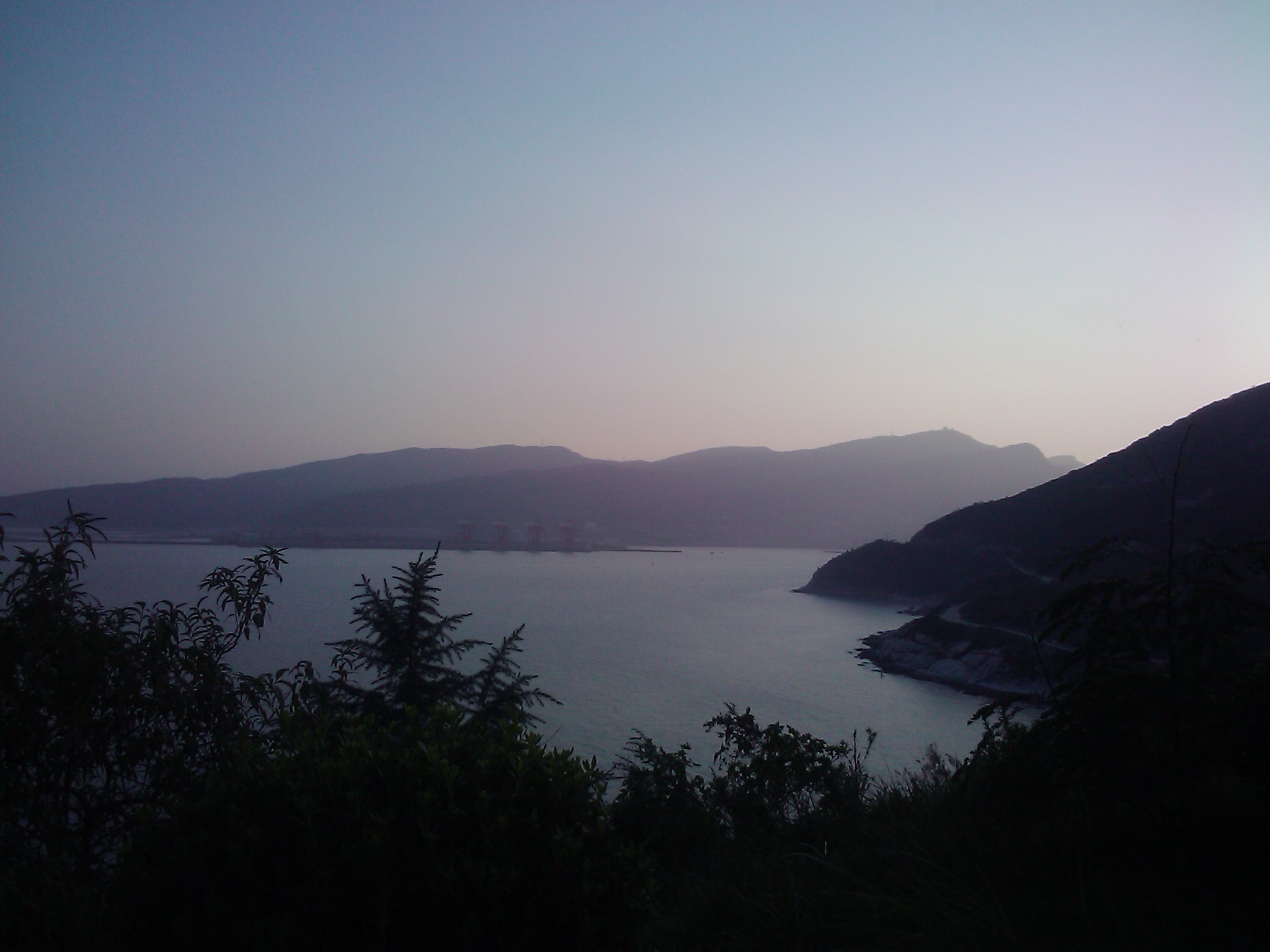
Lian Island
A 6.7-kilometer sea dyke -- the longest in China -- connects Lian Island to the city of Lianyungang, threading across open water like a thread stitching the mainland to something wilder. The island is nine kilometers from east to west, its 7.57 square kilometers blanketed in forest that covers eighty percent of the landmass. It is the largest island in Lianyungang's Lianyun District and the only seashore tourist attraction in Jiangsu Province to earn China's AAAA rating, a distinction that draws visitors seeking something the province's flat coastal plains cannot provide: beaches, cliffs, and the clean blue water of Haizhou Bay.
Dashawan and the Beaches of Jiangsu
Jiangsu is not a province known for its beaches. Its coastline is predominantly mudflat and reclaimed agricultural land, which makes Lian Island's Dashawan beach genuinely unusual. Stretching 1,800 meters long and averaging 150 meters wide, Dashawan is the largest beach in the province, with fine sand, clean water, and moderate temperatures that have earned it a reputation as one of the best beaches in eastern China. The island's subtropical monsoon maritime climate keeps temperatures mild -- an annual average of 14 degrees Celsius, peaking at 26.8 in August and dipping to 1.1 in January. For residents of Lianyungang and the broader Jiangsu region, this is the nearest approximation of a tropical escape, even if the latitude sits firmly in the temperate zone.
A Boardwalk Between Bays
The Seashore Boardwalk runs two kilometers along Lian Island's southern coast, connecting Dashawan in the west to Sumawan in the east. Along the way, it threads past the Forest Park, a Peacock Garden, and fishing islands that dot the nearshore waters. Sumawan, also known as Valentine's Bay, sits at the boardwalk's eastern terminus -- a cove surrounded by mist-softened hills on three sides, opening to the sea on the fourth. The beach here is softer and more intimate than Dashawan's broad sweep, sheltered enough that couples come specifically for wedding photographs. Birdsong fills the surrounding forest, and the contrast with the industrial port city visible across the water is deliberate and complete.
A Statue Facing the Sea
On the island's highest point stands a six-ton bronze statue of Deng Xiaoping, designed by Professor Li Xiangqun of Tsinghua University's Statues and Sculptures College. The statue faces the sea, and the reason is personal. When Deng died on February 19, 1997, his wishes called for his ashes to be scattered over the ocean. On March 2, then-President Hu Jintao and Deng's wife Zhuo Lin fulfilled that request in the waters the statue now overlooks. The monument transforms a scenic island into something more layered -- a place where China's reform-era history intersects with its geography, where a bronze figure gazes across the Yellow Sea toward the future Deng helped set in motion.
Beyond the Dyke
Twenty-four nautical miles northeast of Lian Island lie the Qiansan Islands -- Pingshan, Dashan, and Cheniushan -- reachable by a two-and-a-half-hour yacht journey from the main island. These smaller, less developed islands offer a glimpse of what Haizhou Bay's coastline looked like before development reshaped it. Formerly known as Yingyou Hill, Lian Island itself was once far more isolated, accessible only by boat. The great sea dyke that now connects it to the mainland changed its character fundamentally, making it both more accessible and less remote. The tension between preservation and development that defines so much of China's coastal landscape plays out in miniature here, on an island that owes its popularity to a road built across the water.
From the Air
Located at 34.76°N, 119.46°E in Haizhou Bay on the Yellow Sea coast. The island is clearly visible from altitude as a forested landmass connected to Lianyungang by the distinctive 6.7 km sea dyke. Nearest airport: Lianyungang Huaguoshan International Airport (ZSLG/LYG), approximately 25 km to the west. At 3,000-5,000 feet AGL, the island, dyke, and surrounding bay are all visible. The Qiansan Islands are visible further northeast in clear weather.