Liberation War Museum
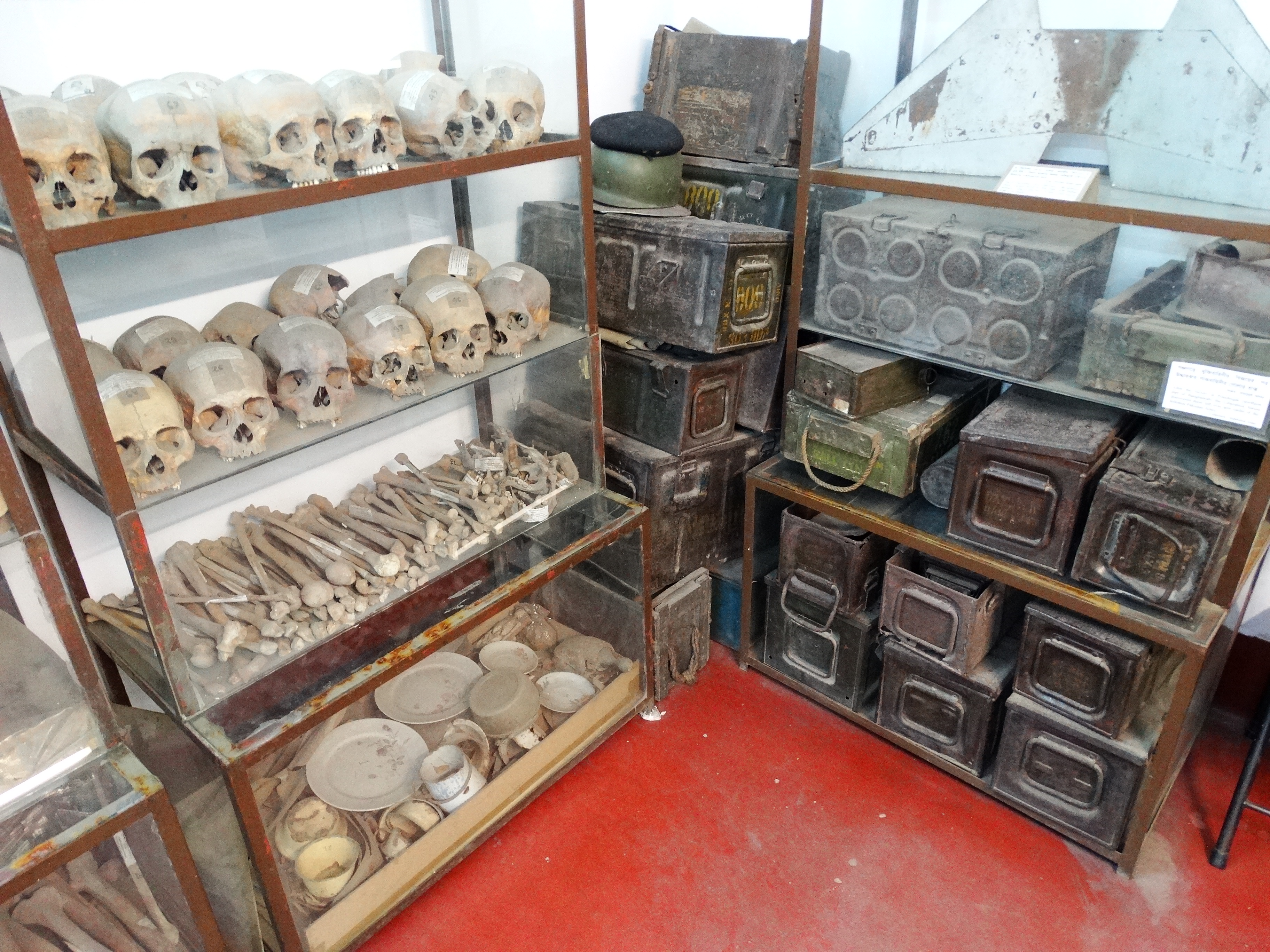
The skulls in the glass cases were pulled from mass graves. The uniforms belonged to guerrilla fighters who did not survive to wear anything else. The personal effects -- a student's notebook, a doctor's stethoscope, a journalist's pen -- were donated by families who had nothing left of their loved ones but these objects and the need to ensure that what happened to them would not be forgotten. The Liberation War Museum in Dhaka's Agargaon neighborhood is not a government institution. It was built with public donations, filled with artifacts given by ordinary citizens, and exists because a group of Bangladeshis decided that their country's bloodiest chapter deserved a permanent record independent of whichever party happened to hold power.
A People's Museum
What makes the Liberation War Museum unusual is its independence. In a country where the history of 1971 has been politically weaponized by every faction, this museum operates outside government control, funded by public contributions and guided by a board of trustees that includes cultural figures like actor Aly Zaker and theater director Sara Zaker. Its collection was assembled not through state acquisition but through an act of collective memory: families across Bangladesh donated the possessions of fighters and victims -- weapons carried by Mukti Bahini guerrillas, personal effects of civilians killed in Pakistani military operations, documents from the chaotic months of war. The museum is an institutional member of the American Alliance of Museums and a founding member of the International Coalition of Historic Site Museums of Conscience, placing it in the company of institutions like Auschwitz-Birkenau and the District Six Museum in Cape Town.
From a Cramped House to Agargaon
The museum originally operated from a much smaller venue where space constraints meant only a fraction of its holdings could be displayed. In 2009, an architectural competition produced a winning design by Tanzim Hasan Salim and Naheed Farzana. Land was acquired in Agargaon in 2013, construction began, and the new premises opened on 16 April 2017 -- the day after Bengali New Year, a date loaded with cultural significance. The new building provided 3,500 square meters of gallery space, a dramatic expansion that allowed the museum to tell the story of 1971 with the scope it demanded. In 2006, the Japanese government donated modern audiovisual and exhibition equipment, helping the museum preserve and present its holdings with greater technical sophistication.
Walking Through 1971
The galleries are arranged chronologically, beginning with the early history of Bengal and the Indian independence movement against British rule. A major section covers the 1952 Language Movement -- the fight for recognition of Bengali in Pakistan -- which is regarded as the starting point of the independence struggle. The narrative then tracks the escalating conflict between West Pakistan and East Pakistan: Sheikh Mujibur Rahman's rise, the Awami League's 1970 election landslide, and the military's refusal to transfer power. The war galleries are unflinching. Operation Searchlight, the Pakistani army's systematic campaign targeting Bengali intellectuals, students, Hindus, and Awami League leaders, is documented with photographs, survivor testimonies, and physical evidence. An estimated ten million refugees poured into India during the conflict. The museum displays the weapons carried by the Mukti Bahini, the guerrilla army that resisted Pakistani forces with Indian support until the Indo-Pakistani War of December 1971 ended with Pakistan's surrender on 16 December.
Bones, Belongings, and the Duty to Remember
The most confronting exhibits are the human remains -- skulls and bones retrieved from mass graves of civilians killed by Pakistani forces. These are displayed not for shock value but as evidence, the physical proof of atrocities that some political factions in Bangladesh and Pakistan have periodically tried to minimize or deny. Alongside the remains are the personal effects of individual victims, donated by their families. A fighter's belt. A professor's glasses. Each item is a point of connection between the visitor and a specific human being who lived and died in 1971. The museum's outreach programs extend beyond its walls, working with schools to educate younger generations about the Liberation War. It commissions art projects and hosts conferences, ensuring that the memory of 1971 is not confined to a building in Agargaon but woven into the ongoing cultural life of Bangladesh.
From the Air
Located at 23.7756N, 90.3697E in the Agargaon area of Dhaka, northwest of the city center. Approximately 7 km south of Hazrat Shahjalal International Airport (VGHS). Best viewed at 2,000-3,000 feet. The large green spaces of the National Parliament complex (Jatiya Sangsad Bhaban) are visible nearby to the east, providing a useful navigation reference.