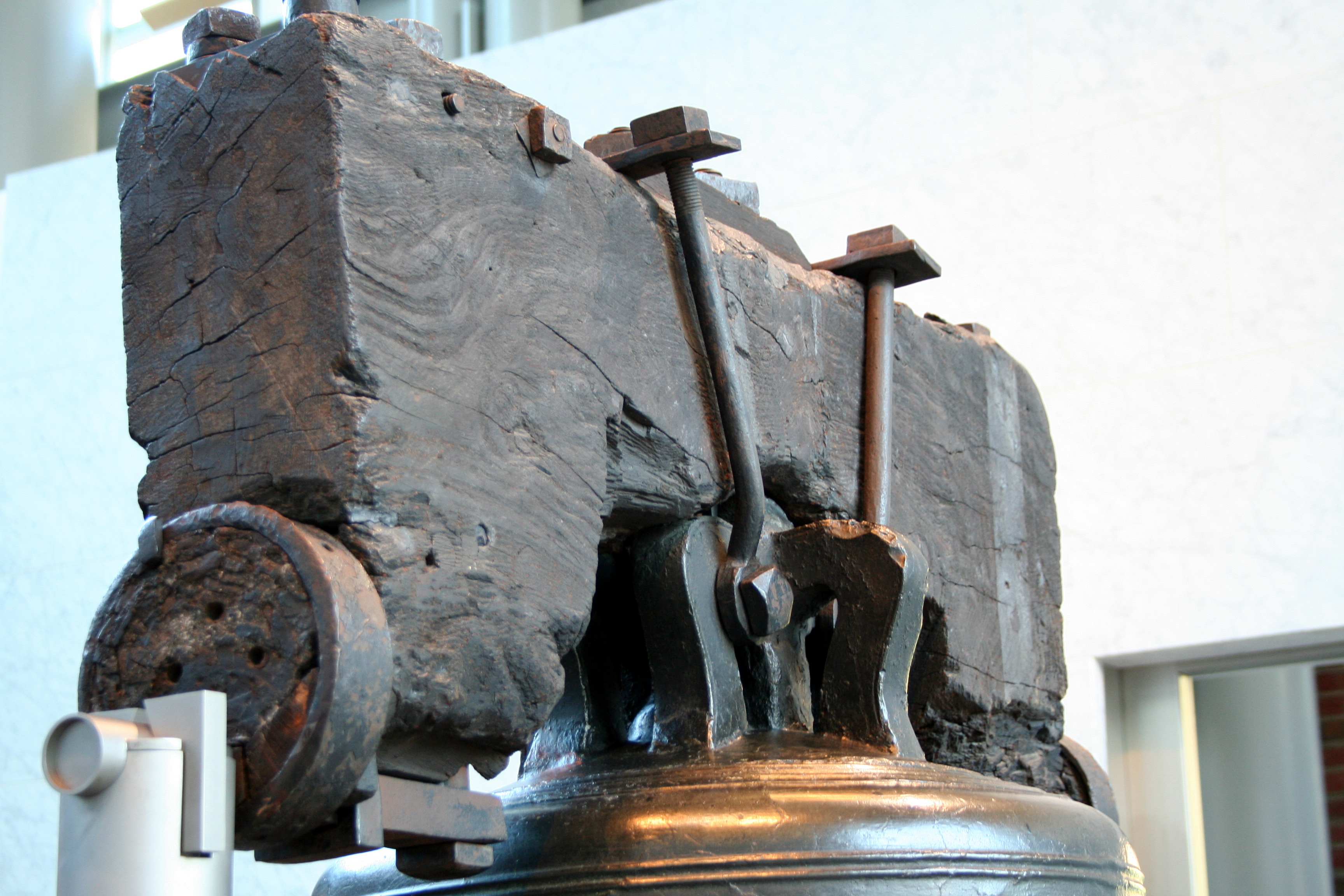
The Liberty Bell: America's Cracked Symbol of Freedom
The Liberty Bell didn't ring on July 4, 1776. The famous crack didn't happen dramatically. The inscription about 'liberty throughout the land' was chosen before anyone had revolutionary intentions. Nearly everything Americans believe about the bell is mythology grafted onto an artifact that would be unremarkable except that we made it remarkable. The bell was cast in 1751 for the Pennsylvania State House, cracked on first testing, was recast twice, served as an ordinary public bell, developed its famous crack sometime in the early 19th century, and sat in storage for decades before abolitionists seized upon it as a symbol. The Liberty Bell teaches us that American symbols are made, not born.
The Origin
The Pennsylvania Assembly ordered the bell in 1751 to hang in the new State House (now Independence Hall). The inscription - 'Proclaim Liberty Throughout All the Land Unto All the Inhabitants Thereof' - came from Leviticus, chosen to commemorate the 50th anniversary of William Penn's 1701 Charter of Privileges. The bell arrived from London in 1752, cracked on first testing, and was recast twice by local metalworkers John Pass and John Stow. The result was a functional bell used for public announcements, including readings of the Declaration of Independence in 1776. The bell performed no historic act; it was simply present.
The Crack
The famous crack's origin is unknown. The bell cracked sometime between 1817 and 1846 - multiple stories exist, none verified. One account claims it cracked tolling for Chief Justice John Marshall's funeral in 1835; another blames a celebration for Washington's Birthday in 1846. The crack made the bell unringable - useless as a bell. But the crack also made it distinctive, memorable, visually dramatic. The flaw that destroyed the bell's function created its identity. The crack became essential to the symbol.
The Mythology
The bell became 'Liberty Bell' in the 1830s when abolitionists adopted it as their symbol - the Leviticus inscription about liberty applied to enslaved people. The name spread; the mythology accumulated. Stories claimed the bell rang on July 4, 1776 (it didn't - the Declaration was adopted on July 2, read publicly on July 8). Stories described the crack as dramatic rupture during important events (unverified). The mythology served purposes: the bell became a unifying symbol during Civil War division, a focus for patriotic education, a physical object embodying abstract ideals. The real bell didn't matter; the symbolic bell was what Americans needed.
The Tourism
The Liberty Bell traveled extensively in the late 19th and early 20th centuries, displayed at expositions and celebrations nationwide. The travel expanded the mythology and probably worsened the crack. Since 2003, the bell has resided in the Liberty Bell Center, a glass pavilion across from Independence Hall. Visitors view the bell for free; the line can extend for hours. The experience is brief - walk past, photograph, contemplate. The bell is smaller than expected, more cracked than imagined, less impressive than the mythology suggests. But millions come anyway, seeking contact with something that represents the nation they believe in.
Visiting the Liberty Bell
The Liberty Bell Center is located on Chestnut Street in Philadelphia, across from Independence Hall. Admission is free but requires passing through security screening. Lines are shortest early morning and late afternoon; peak summer days can mean hour-long waits. Independence Hall tours require timed tickets (also free, available at the visitor center). The surrounding Independence National Historical Park includes Congress Hall, Old City Hall, and other Revolutionary-era sites. Philadelphia has extensive lodging and dining; the historic district is walkable. Combine with the Museum of the American Revolution and the Constitution Center for comprehensive founding-era context. The bell is worth seeing despite the crowds - American mythology made visible.
From the Air
Located at 39.95°N, 75.15°W in Philadelphia's Independence National Historical Park. From altitude, the Liberty Bell Center is not individually visible, but the Independence Hall complex is identifiable - the historic brick buildings surrounded by green park space in Philadelphia's downtown. The city spreads to the horizon in every direction. The Delaware River runs to the east; the Schuylkill to the west. Philadelphia's street grid, one of America's first planned cities, is visible as regular blocks. The bell that symbolizes American liberty rests in a glass box in a city that was the nation's capital when the symbolism began. From the air, it's invisible. From the ground, it's everything.