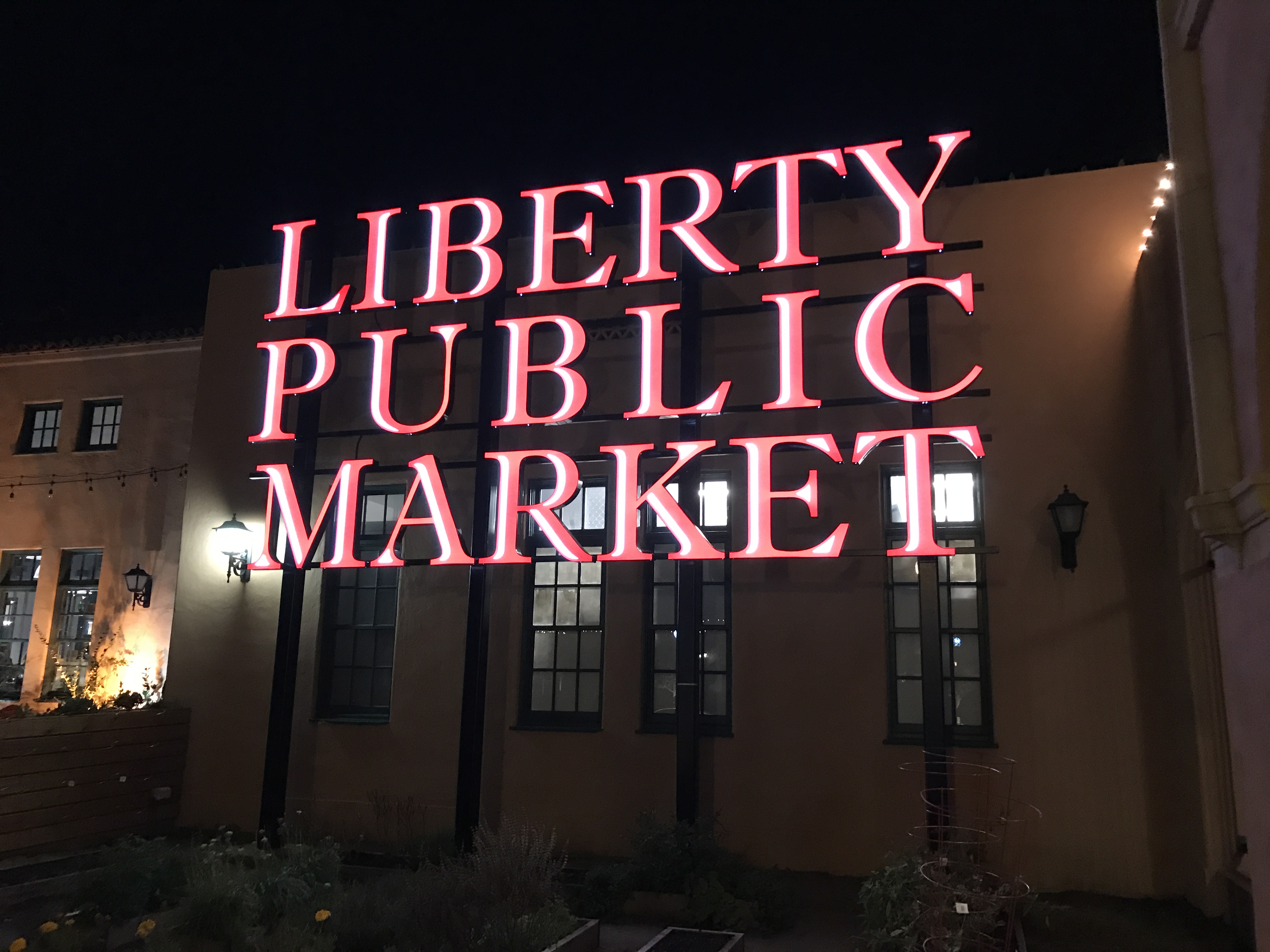
After the Navy Left
For most of the twentieth century, the Naval Training Center occupied 361 acres of San Diego's Point Loma peninsula, turning generations of American sailors into the Navy's enlisted force. When the base closed in 1997 after the Cold War downsizing that shuttered military installations across the country, the city faced a question that is always harder than it sounds: what do you do with a place that shaped so many lives, once those lives have moved on?
The Training Ground
The Naval Training Center opened in 1923 and over the following seven decades processed more than a million recruits. Young men arrived from across America to be measured, issued uniforms, and trained in the basic disciplines of naval service. The base had its own rhythms, its own geography of barracks and drill fields and parade grounds, and for the residents of San Diego, it was simply part of the city's texture — present but separate, military in its precision and its sense of purpose.
The architecture was worth preserving. Spanish Colonial Revival buildings designed with the kind of civic ambition that characterized public construction in the 1920s lined the base's broad avenues. When the federal government began the closure process, preservationists and city planners recognized that what stood on those 361 acres was not just real estate but an architectural legacy.
Reinvention on the Peninsula
The redevelopment plan that emerged in the years after closure was called Liberty Station. The approach preserved the historic buildings — repurposing them as restaurants, galleries, offices, and retail spaces — while adding new construction in complementary styles around them. The result is something genuinely unusual: a former military base that feels, in its mature state, like a neighborhood that grew naturally rather than was planned.
The 361 acres contain parks, a waterfront promenade, a culinary district with restaurants in renovated Navy buildings, arts spaces, a church, a school, and residential development. The transition took years and continues in phases, but the essential character is established: a place where San Diego's civilian and creative communities have taken up residence in spaces that once hummed with military purpose.
Fifty-Two Boats
At the heart of Liberty Station stands a memorial that refuses to let the site forget what it once was. The 52 Boats Memorial commemorates the 52 American submarines lost during World War II and the 3,505 submariners who died aboard them. Each lost boat has its name inscribed; the scale of the loss is made concrete through repetition.
Near the memorial stands the USS Recruit — nicknamed the USS Neversail — a two-thirds-scale model of a Dealey-class destroyer escort, built as a landlocked training vessel during the base's operational years. Sailors who would never yet serve aboard a real warship could learn the fundamentals of shipboard life on this concrete stand-in. Commissioned in 1949 and now open as a museum, it remains at Liberty Station as an artifact of the Navy's pedagogical imagination, a landlocked ship in a city that now teaches cooking classes in the adjacent buildings.
A New Kind of Civic Space
What Liberty Station demonstrates is that military bases, with their scale and their infrastructure, can become remarkable public assets if the transition is handled with care. The wide avenues designed for marching are now used by cyclists and joggers. The parade grounds are parks where children play and weekend markets set up. The mess halls serve craft beer.
This is not a forgetting of what came before — the 52 Boats Memorial and the Neversail ensure that the Navy's presence is honored rather than erased. But it is a genuine transformation, the kind that allows a community to inherit a place and make it their own without pretending the prior occupants were never there. San Diego is lucky to have it. Many cities with similar closed bases have struggled to achieve anything approaching this kind of coherent second life.
From the Air
Liberty Station occupies a large, recognizable footprint on the Point Loma peninsula near San Diego Bay, easily identified from the air by its preserved Spanish Colonial architecture and waterfront promenade.