Liège Revolution
The Liege Revolution started, improbably enough, in a quarrel over a casino. In 1785 a nobleman named Noel-Joseph Levoz tried to open a gambling house in the spa town that gives Spa its name, a third casino in a town that already had the oldest in Europe and a long-standing royal monopoly on the trade. The prince-bishop did not approve. In June 1787 he sent 200 men and two cannons to Spa to shut Levoz down. The lawsuits that followed dragged through the Tribunal des XXII and as far as the imperial court at Wetzlar, and they gave the people of Liege time to read the news from Paris. The Bastille fell on 14 July 1789. Five weeks later, on 18 August, the citizens of Liege stormed the citadel of Sainte-Walburge, dragged the prince-bishop from his summer palace at Seraing, and made him sign the documents that ended six hundred years of his rule.
A principality on the edge
The Prince-Bishopric of Liege had survived for eight centuries as a peculiar independent state, an ecclesiastical principality that sat between France and the Holy Roman Empire and somehow remained both. By 1789 it was breaking down. The price of bread was rising. Unemployment in nearby Verviers had hit 25 percent and was a catastrophe. In the countryside, the church collected ten or eleven percent of labor output in tithes, the nobles demanded maintenance fees, and the middle classes were quietly enclosing the common land. Meanwhile, 75 percent of the principality's 1787-88 grain harvest was exported even as people starved. The prince-bishop, Cesar-Constantin-Francois de Hoensbroeck, had a reputation for autocratic stubbornness that would soon earn him a nickname: the tyrant of Seraing.
The day the citadel fell
On 18 August 1789, just over a month after the storming of the Bastille, the democrat Jean-Nicolas Bassenge and a crowd of followers met at the Liege city hall and demanded that the magistrates be dismissed. The citadel of Sainte-Walburge was taken by the insurgents. Hoensbroeck was hauled from his summer palace at Seraing and made to sign documents ratifying the election of new aediles and abolishing the 1684 ruling that had cemented his power. He signed under duress, and days later he fled to Trier. The Liege estates began drafting a constitution. They wrote a Declaration of the Rights of Man and Citizen of Franchimont, modeled on the French declaration of twenty days earlier but with telling differences. In the French version, sovereignty rested in the nation. In the Franchimont version, it rested in the people. The new republic abolished the principality, and for two years there was no prince-bishop in Liege.
The Austrians return him
Liege was a small republic surrounded by empires, and that geography decided everything. From November 1789 to April 1790 Prussian troops occupied the city to mediate between the revolutionaries and the imperial circles. Mediation failed. Hoensbroeck would not bend. Leopold II, the new Holy Roman Emperor, eventually restored episcopal power by force. The Austrian army marched into Liege on 12 January 1791, and Hoensbroeck came back with it. He took his vengeance immediately, confiscating the rebels' properties and forcing most of the democrats to flee to France, where they joined the swelling cause of revolutionary war. Hoensbroeck died in June 1792. By then the war had spread, and on 6 November the French general Dumouriez crushed the Austrians at Jemappes. Three weeks later he entered Liege to popular acclaim, and the prince-bishop fled into exile.
A plebiscite, and the cathedral comes down
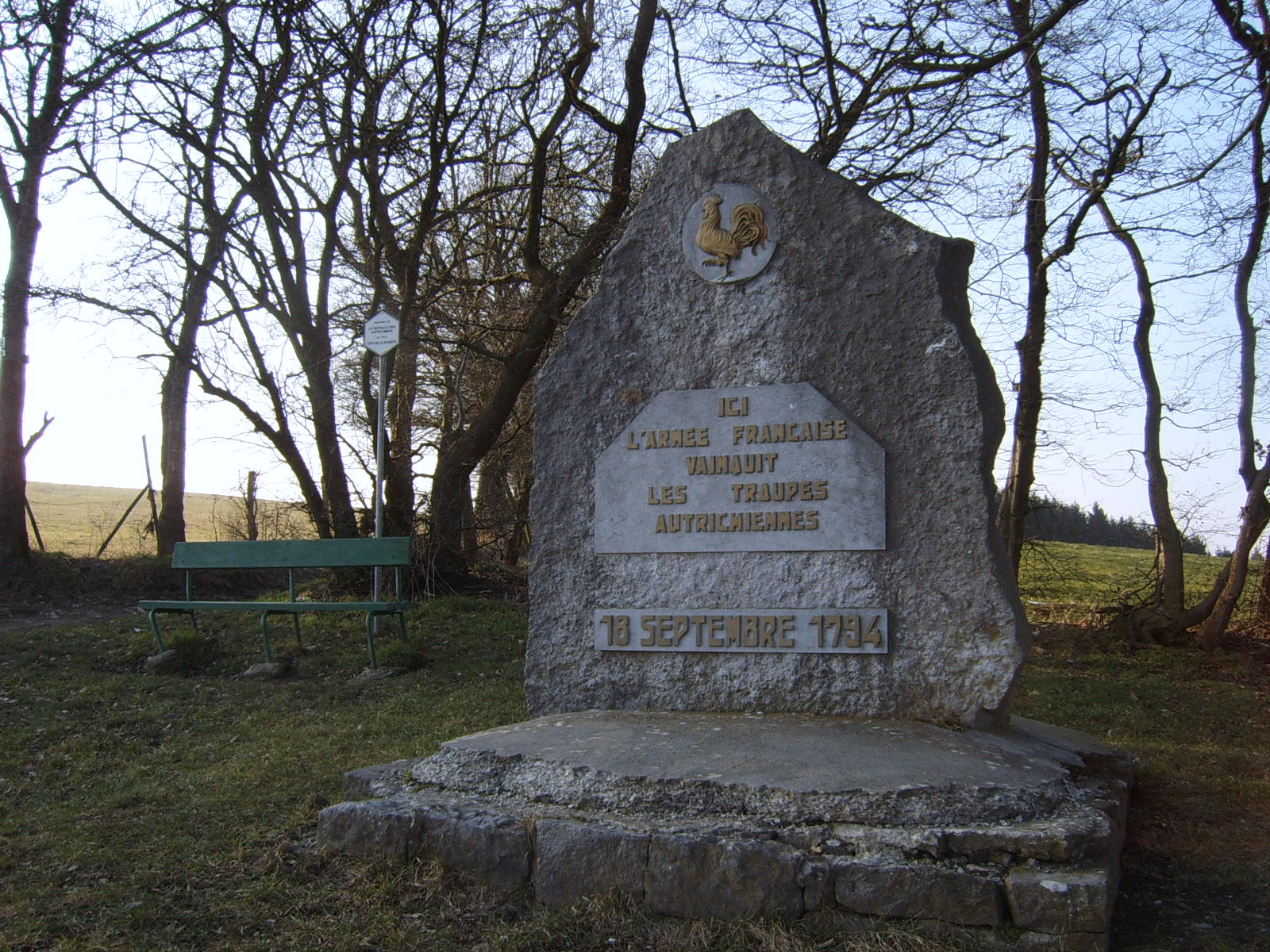
The French this time invited the people to vote. The Liege elections of early 1793 were among the freest yet held in the former Low Countries. Around 9,700 voters registered in Liege, about 50 percent of the eligible electorate. Forty voted no. Seven hundred forty-eight voted for a conditional merger with France. Fifteen hundred forty-eight voted for an unconditional merger. The Austrians beat the French at the second Battle of Neerwinden in March, and the prince-bishop returned briefly for one last act, but at Fleurus in June 1794 the French won the campaign for good. On 27 July the Austrian army left Liege after bombarding and burning the Amercoeur district. The last prince-bishop went into exile. The next year the revolutionaries demolished the cathedral of Saint Lambert, the eight-hundred-year heart of the old principality, stone by stone. By 1795 the principality of Liege had ceased to exist and its territory had been carved into three French departments.
What the city remembers
The Liege Revolution is sometimes called the elder sister of the French Revolution because it began in the same summer, ran parallel through the same years, and ended in the same annexation. La Redoute, the gambling house in Spa that started the whole quarrel, gave its name to a fortified position used in the final battle of Sprimont in 1794. Today, La Redoute is one of the famous climbs in the Liege-Bastogne-Liege cycling race, riders panting up a hill named for an obscure casino fight that nobody would remember if it had not lit a fuse. The cathedral of Saint Lambert is gone. The Palace of the Prince-Bishops still stands on the Place Saint-Lambert in central Liege, repurposed now as a courthouse and provincial administration. The hard-won liberties that the people of Liege took back in 1789 were lost the same year they were won, then taken back again by France, then again by the Netherlands, before Belgium finally inherited them all in 1830.
From the Air
The revolutionary city of Liege sits at 50.65 N, 5.58 E, in the Meuse valley of eastern Belgium. Best viewed from 2,500 to 4,500 feet, where the historic core wraps around the Place Saint-Lambert (the former site of the demolished cathedral) and the Palace of the Prince-Bishops. Nearest airport is Liege (EBLG), 8 km west. Brussels (EBBR) is 80 km west, Maastricht Aachen (EHBK) 30 km north, and Cologne Bonn (EDDK) 100 km east. The summer palace of Seraing, where the prince-bishop was dragged from his bed in 1789, lies 7 km southwest along the Meuse.