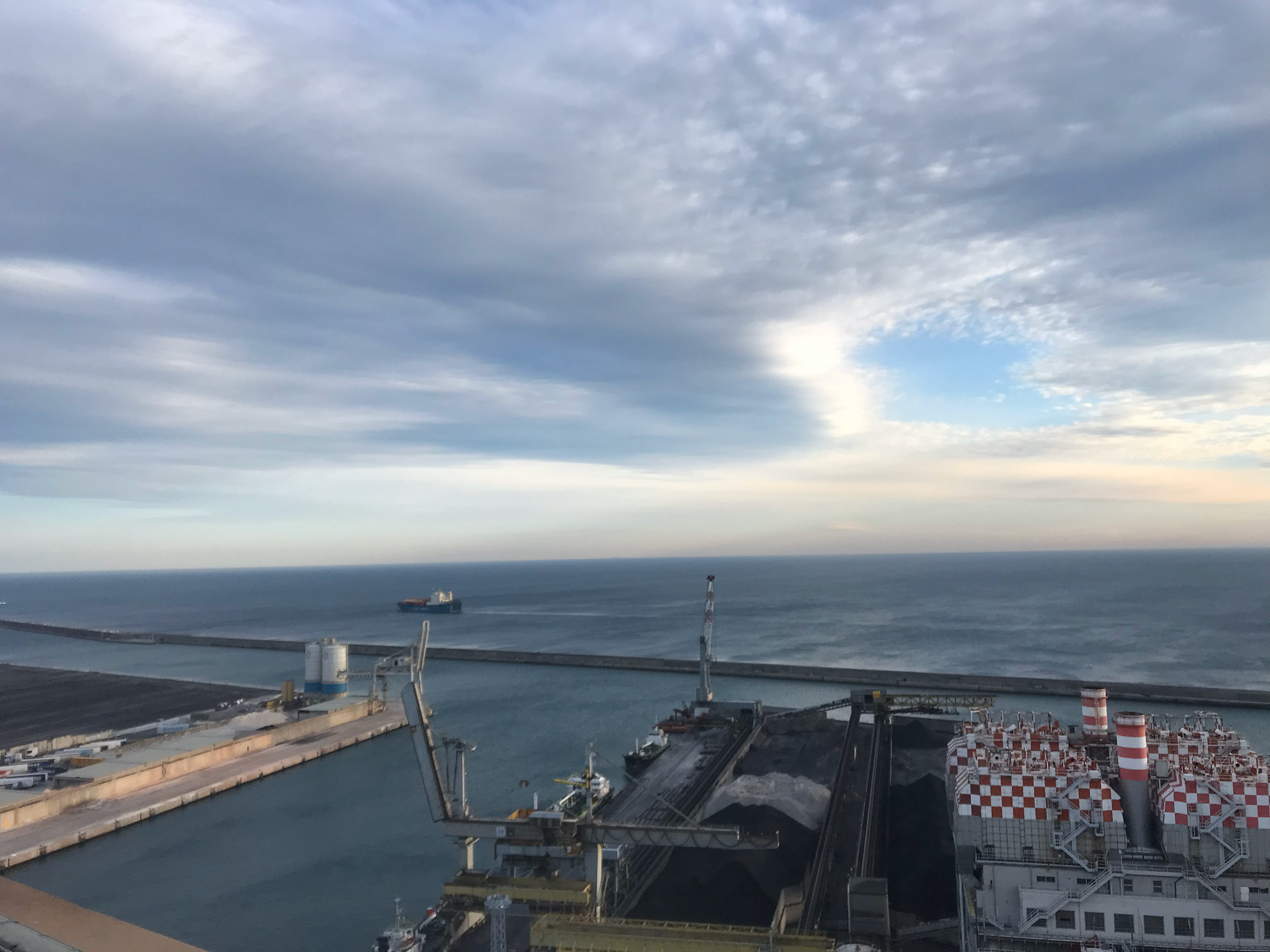
Lighthouse of Genoa
The hill it stands on is mostly gone. Over the centuries, Genoa devoured the cape of San Benigno for landfill, quarrying away the rock to reshape its coastline and expand its port. What remains is a stubborn rise of stone, and on it, a tower that has marked the entrance to the harbor for nearly nine hundred years. La Lanterna -- the Lighthouse of Genoa -- stands 77 meters tall, making it the tallest lighthouse in the Mediterranean. Including the rock beneath it, it rises 117 meters above the sea. It is the fourth oldest lighthouse in the world, after the Tower of Hercules in Spain, Hook Head in Ireland, and Kopu on the Estonian island of Hiiumaa.
A Light Since the Crusades
The first tower on this spot was built around 1128 -- a structure of three crenellated towers that served as both a defensive fortification and a navigational beacon. For a medieval port city whose wealth depended on maritime trade, a lighthouse was not a convenience but a necessity. Genoa's harbor, tucked into a curve of the Ligurian coast, was difficult to approach at night, and the cape that would become known as Capo di Faro -- Lighthouse Cape -- marked the western entrance to the port. At the opposite end of the harbor stood a smaller companion tower, working in tandem with the Lanterna to guide vessels safely through the approach. That second tower is long gone, replaced by the cotton warehouses of the Porto Antico.
Rebuilt in Stone and Ambition
The lighthouse that stands today is not the medieval original. In 1543, the tower was rebuilt in its current form: two square masonry sections stacked vertically, each capped by a terrace, the whole crowned by a lantern chamber. The result was, at the time, the tallest lighthouse in the world -- a record it held for 359 years, until France built the lighthouse on Ile Vierge in 1902. The 1493 woodcut in the Nuremberg Chronicle shows the earlier version of the Lanterna at the edge of Genoa's skyline, already a defining feature of the city's profile. A Latin inscription mounted at the base of the upper tower reads: 'Jesus Christ king came in peace, and God became Man.' The tablet remains in place today, a devotional marker on a working navigational structure.
The Cape That Disappeared
What makes the Lanterna's survival remarkable is how thoroughly its surroundings have changed. The cape of San Benigno was once a genuine peninsula, jutting into the sea with a convent and hillside rising behind the lighthouse. The convent gave the cape its alternative name. But as Genoa grew, the city consumed the hill. Rock was quarried for construction and coastal infill. The peninsula became part of the mainland. The hillside shrank to the small rise that exists today. The Sampierdarena neighborhood pressed in from one side, the port infrastructure from the other. The lighthouse, once isolated on a windswept headland, now stands between a highway overpass and the container terminals of one of the Mediterranean's busiest commercial ports.
Still Burning
Since 1910, Italy's lighthouses have been managed by the Marina Militare, the Italian Navy, directed from its center in La Spezia. The Lanterna falls under military authority -- a working aid to navigation, not merely a monument. But it has also become a museum. In 2004, restoration work created the Museo della Lanterna, accessible via a walkway from the old city walls. The museum opened in 2006, and visitors can now approach the base of the tower through a rehabilitated city park. The local football derby between Genoa and Sampdoria is called the Derby della Lanterna, proof that the lighthouse has transcended its practical function to become the city's central symbol. From the air, the tower is visible on the western edge of Genoa's waterfront, a slender vertical accent rising from the port's industrial landscape -- the oldest thing in sight, still doing its original job.
From the Air
Located at 44.40N, 8.90E on the western edge of the Port of Genoa. The lighthouse is a tall, slender masonry tower visible from the air on a small rise between the port facilities and the Sampierdarena district. Nearest airport is Genova-Sestri (LIMJ), along the coast to the southwest. The Porto Antico waterfront area is visible to the east. The tower stands at the transition between the old harbor and the modern container port.