Lillehammer Olympiapark
Most Olympic venues become expensive ghosts. The stadiums built for Athens, Beijing, and Rio sit half-empty or abandoned, monuments to two weeks of glory and decades of maintenance bills. Lillehammer's Olympic Park is the exception that proves how difficult the alternative is. Five venues built for the 1994 Winter Games -- a ski stadium, an ice hockey arena, a bobsled track, a freestyle hill, and twin ski jumps -- remain active more than thirty years later. They host World Cup events, serve as tourist attractions, and connect to 450 kilometers of recreational ski trails. Getting here, though, required burning through a substantial post-Olympic fund and a great deal of political friction.
The Venues on the Hill
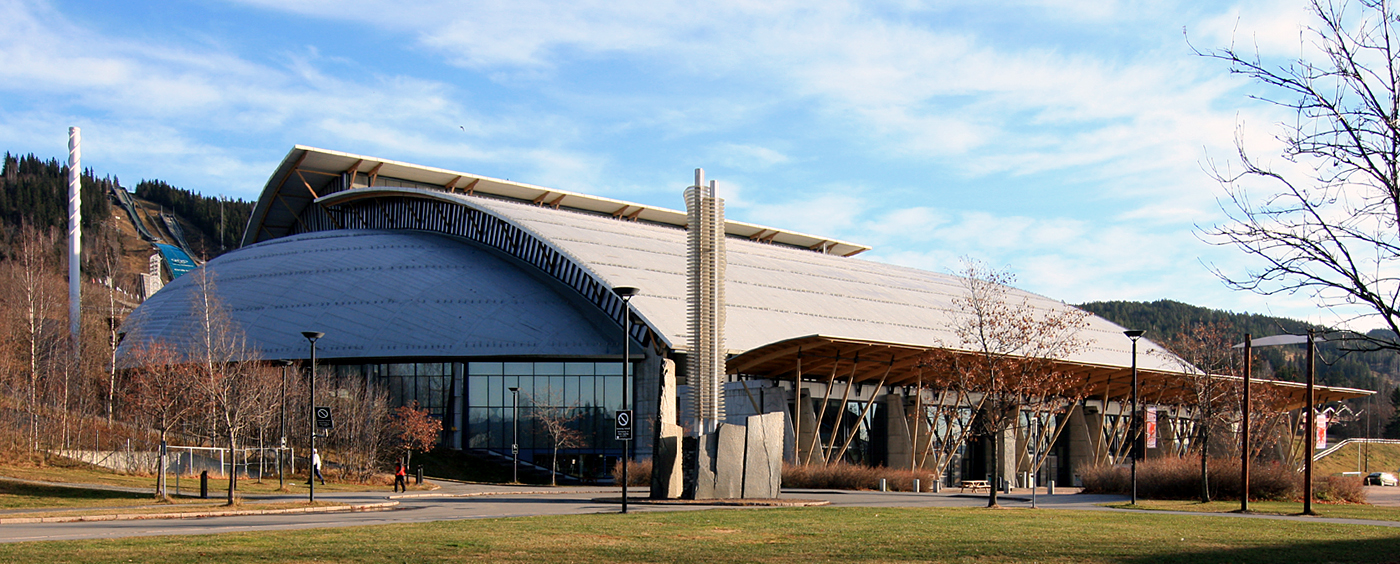
The complex sprawls across the hillside above Lillehammer, a town of roughly 28,000 in Innlandet county. Lysgardsbakken, the twin ski jumping hill, is the most visible element -- its large hill has a K-point of 123 and a hill size of 138, and transport to the top is by chairlift. The view from the tower platform stretches across Lillehammer and Lake Mjosa below. Nearby, Kanthaugen Freestyle Arena offers three purpose-built hills for aerials, moguls, and ski ballet, with a one-kilometer tobogganing run above the Olympic hills. The Lillehammer Olympic Bobsleigh and Luge Track -- 1,710 meters long with 16 turns and a vertical drop of 112 meters -- allows speeds up to 130 kilometers per hour, and tourists can experience it via bobrafting or skeleton rafting with an authorized pilot. Birkebeineren Ski Stadium covers 200 hectares with 27 kilometers of cross-country tracks and 9 kilometers of biathlon tracks, while Hakons Hall seats 11,500 and remains the country's largest handball and ice hockey venue.
The Cost of Keeping the Flame Alive
Before the 1994 Games were even held, planners knew the venues would lose money. By 1990, projected annual deficits across the five Lillehammer venues were estimated at 15 million Norwegian kroner. The government created a post-Olympic use fund, initially offering 55 million kroner, though the local committee estimated 215 million was needed. After years of negotiation -- including political conflicts between Lillehammer, Hamar, and Gjøvik over how the money should be divided -- the fund reached 401.3 million kroner by June 1994. By 1995, government minister Gunnar Berge was already warning that the money was being spent too fast. Lillehammer Olympiapark burned through 32 of its 146 million in the first year alone, putting the fund on track to run out in ten years rather than twenty. By 2012, only 25 million remained.
From Games to Legacy
Despite the financial difficulties, the venues found uses that many Olympic host cities never achieve. Lysgardsbakken hosts FIS Ski Jumping World Cup events nearly every year since 1993 and co-hosts the Nordic Tournament. Birkebeineren has staged seven Nordic Combined World Cups and four Biathlon World Cups. Hakons Hall hosted the 1999 IIHF World Championship finals, the Junior Eurovision Song Contest in 2004, and multiple European and World Handball Championships. The bobsled track -- the only one in Northern Europe -- hosted the 1995 FIBT World Championships in skeleton and the 1995 FIL World Luge Championships. A 2007 study by Lillehammer University College found that all 260 permanent jobs created in the area as a result of the Olympics depended directly on subsidies from the post-Olympic fund, an honest assessment of both the success and the fragility of the enterprise.
An Olympic Town in Winter
What the venues give Lillehammer cannot be measured entirely in financial returns. The Birkebeineren stadium connects to 450 kilometers of skiing tracks, including a public five-kilometer lighted trail maintained until 10 p.m. every winter night. In summer, the same trails serve joggers, runners, and roller skiers. Lysgardsbakken's tower offers panoramic views and a bobsled simulator. The freestyle arena rents out its lift for public tobogganing. Snowmobile and ATV tracks operate beside the bobsled run. The Olympic Park is owned entirely by Lillehammer Municipality and employs between 51 and 55 people. Its revenue reached 56 million kroner in 2010, drawn from events, tourism, and commercial activities. The Olympic flame ceremony remains available for corporate groups -- a small theatrical gesture that keeps alive the memory of February 1994, when this small Norwegian town briefly held the world's attention.
From the Air
Located at 61.12N, 10.47E on the hillside above Lillehammer, Innlandet county. The Lysgardsbakken ski jump tower is a prominent landmark visible from the air, as is the bobsled track's winding course through the terrain. Lake Mjosa is visible to the west. Nearest airport is Oslo Gardermoen (ENGM), approximately 140 km south. Lillehammer is also served by Dagali Airport (ENDI) for smaller aircraft. Best viewed from 3,000-5,000 feet AGL to see the relationship between the venues and the town.