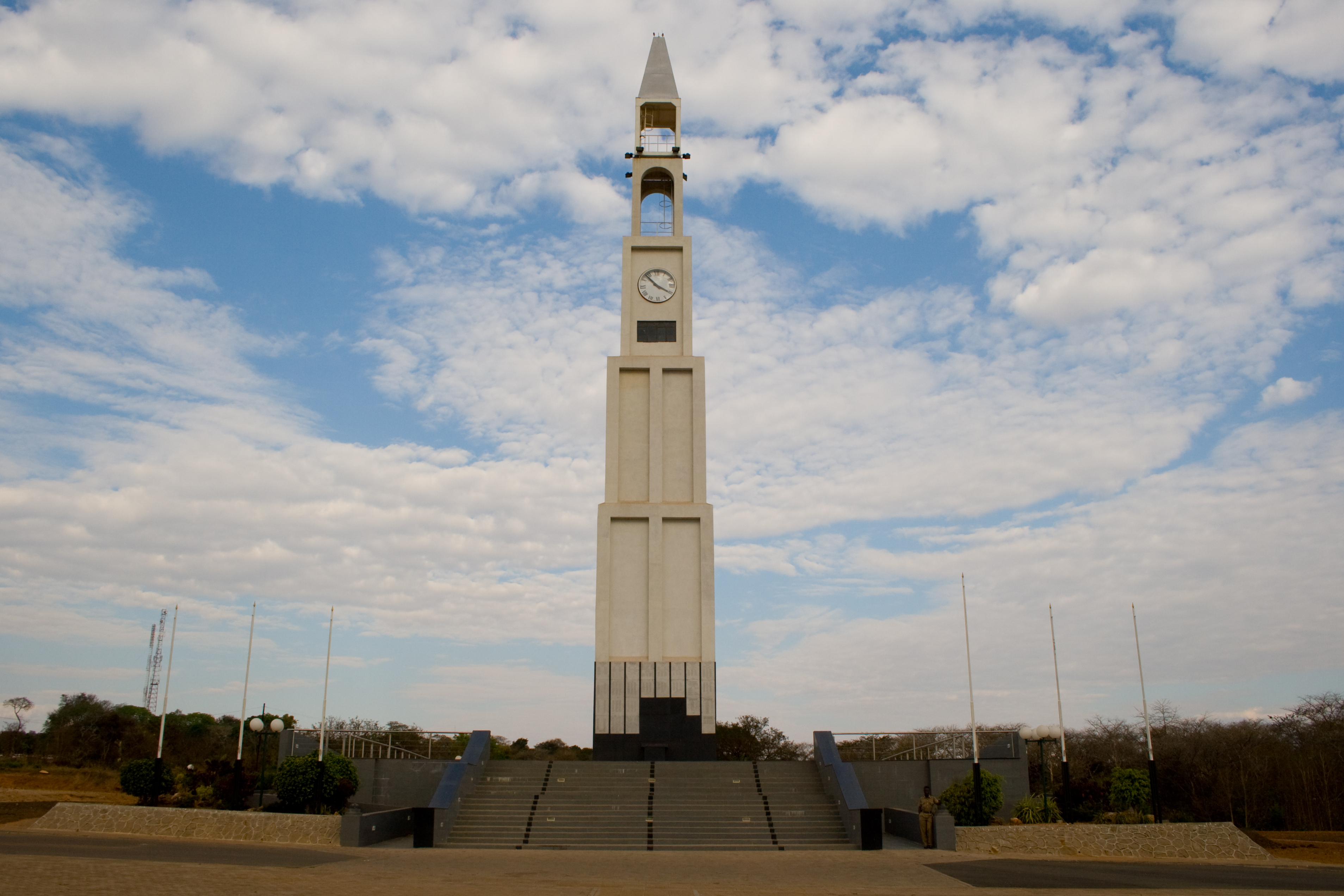
Lilongwe
The first thing that strikes you about Lilongwe is what you cannot see. Malawi's capital is so thoroughly woven into its landscape that buildings vanish behind grassy patches and mature trees, and the idea of a city center feels almost theoretical. This is not the dense, honking sprawl of Nairobi or Johannesburg. At 1,050 meters above sea level, Lilongwe sits in a mild pocket of the tropics where warm summers and gentle winters make the greenery permanent and the pace of life decidedly unhurried.
A Capital by Presidential Decree
Lilongwe was not always the capital. That distinction belonged to Zomba, a colonial-era choice tucked in the southern highlands. When Malawi's first president, Dr. Hastings Banda, decided to move the seat of government north, he did not merely relocate offices -- he willed an entirely new city into existence. The New Town, also called Capital City, sprouted north of the original village with wide roads, government buildings, and the kind of planned spaciousness that only happens when a strongman draws lines on a map. The Old Town remained to the south, built around the original village of Lilongwe, with its markets, bus stations, and the organic chaos of a settlement that grew without a blueprint. Between the two halves sits the Lilongwe Nature Sanctuary, a ribbon of green that is less urban park than territorial buffer between two very different ideas of what a city should be.
Navigating by Numbers
Lilongwe is divided into numbered areas -- not neighborhoods with evocative names, but practical designations: Area 2, Area 6, Area 43. Telling a taxi driver you want to go to "the market" will get you a blank stare. Telling him Area 2 will get you moving. The system sounds bureaucratic, but it works in a city this spread out, where distances between landmarks can be surprisingly large. Minibuses are cheap and packed, threading routes from the blue bank building in the New Town down to the Shoprite in the Old Town's heart. Moto-taxis fill the gaps. The roads themselves are surprisingly good -- better, locals note, than those in Kenya -- and traffic rarely approaches anything resembling a jam. The sprawl is the challenge, not the congestion.
Where Carlsberg Is Local
Malawi brews Carlsberg. Not imports it -- brews it, in Blantyre, under license, making the Danish lager one of the most authentically Malawian things you can drink. Locals know the standard bottle as a "Green," and from there the lineup branches into Special Brew, Classic, Stout, Elephant, and Light. For tourists, there is Kuche Kuche, a lighter beer in a bigger bottle that serves as a gentle introduction to Malawian drinking culture. The real adventure, though, is in the spirits. Malawi Gin is surprisingly excellent, Malawi Vodka and Rum are cheap enough to be democratic, and the cane spirit Powers sells in 30ml sachets for those who prefer their evening in measured doses. Mix any of them with the impossibly sweet local Fanta, as Malawians do, and the evening stretches comfortably into the tropical night. At the Diplomats Pub in Old Town, pool tables cost 100 kwacha a token, and the rule is winner stays on.
The Food That Maps a Continent
Lilongwe's restaurant scene reads like a map of southern African commerce. South African chains dominate the malls -- Shoprite, Spar, Game, Steers, Pizza Inn, Galito's -- their presence a reminder that Malawi sits within Johannesburg's economic orbit. But between the franchises, something more interesting is happening. In Area 2, local cafes serve nsima with chicken or beef for prices that barely register. Noble China offers communal dining on a rotating table. Blue Ginger, tucked into the Pacific Parade shopping complex, serves what many consider the best Indian food in the city. Mamma Mia in the Old Town Mall draws the expat crowd for Italian. The 7-Eleven, which has no connection whatsoever to the American chain, operates a full butchery and bakery alongside its grocery aisles. Every meal in Lilongwe tells you something about who lives here: Malawians, South Africans, Indians, Chinese, Europeans, all navigating the same numbered areas.
Gateway to the Lake
Lilongwe serves as the staging point for much of Malawi's tourism. Cape Maclear, the laid-back fishing village on Lake Malawi's southern shore, is a day's journey by minibus and pickup truck. Salima offers the easiest entry to the lake, one to two hours east, with resort beaches and the nearby Kuti Wildlife Park where sable, nyala, zebra, and giraffe roam. To the west, Chipata in Zambia lies just 110 kilometers away, making Lilongwe the gateway not only to the lake but to South Luangwa National Park, one of Africa's premier wildlife reserves. The international airport sits 30 to 40 minutes north of town. From the air, the city reveals its defining quality: that extraordinary greenness, the trees and grass so abundant that the capital of a nation of nearly 20 million people looks, from altitude, like a particularly well-tended garden.
From the Air
Located at 13.97S, 33.79E at 1,050 meters elevation. Lilongwe International Airport (FWLI, also known as Kamuzu International Airport) lies approximately 35 km north of the city center. The city is distinguished from the air by its unusually green and spread-out appearance. Lake Malawi is visible to the east. The Lilongwe Nature Sanctuary divides the city into visually distinct northern (New Town) and southern (Old Town) halves.