Lincoln Beach Amusement Park
Fats Domino is on stage, pounding out "Blueberry Hill" while families crowd the midway and children line up for the Ferris wheel. The summer heat hangs thick over Lake Pontchartrain, and the laughter carries across the water. This is Lincoln Beach in its prime -- a place that existed because Jim Crow Louisiana demanded separate everything, including joy. From 1939 to 1965, this amusement park on the lake's southern shore served as the recreational heart of Black New Orleans, a smaller but no less vital counterpart to the whites-only Pontchartrain Beach just a few miles away. Today, almost nothing remains.
Built on Borrowed Land
Lincoln Beach rose on ground that was never meant to be an amusement park. The land along the Lake Pontchartrain shore near Little Woods, in the Ninth Ward's far eastern reaches, was deeded to the city of New Orleans by Sam Zemurray -- the banana magnate who controlled United Fruit Company -- in 1938. Within a year, the Orleans Levee Board purchased the parcel and designated it as a swimming area for "colored" New Orleanians. The Levee Board then extended the shoreline, building additional land out into the lake itself, and on this manufactured ground the amusement park took shape. It opened in 1939 with rides, games, restaurants, a swimming pool, and lake swimming access -- everything Pontchartrain Beach offered, but on a smaller, more modest scale.
Music on the Midway
What Lincoln Beach lacked in size, it made up for in soul. The park became a performance venue for some of the era's greatest musicians. Fats Domino, the New Orleans-born rhythm and blues pioneer, played the park regularly. Nat King Cole brought his velvet voice to the lakefront stage. The Neville Brothers -- Aaron, Art, Charles, and Cyril -- performed there as well, adding to a musical lineup that reflected the extraordinary depth of Black musical talent in mid-century New Orleans. For many families, a summer evening at Lincoln Beach meant rides for the children and live music for the adults, all against the backdrop of Lake Pontchartrain's wide, flat horizon. It was recreation carved out of restriction, pleasure made in defiance of a system designed to diminish.
The End That Integration Brought
In 1964, Pontchartrain Beach was desegregated. Black New Orleanians could now swim, ride, and picnic at the larger, better-funded park that had always been off-limits to them. The city saw no reason to maintain two lakefront amusement parks and stopped caring for Lincoln Beach almost immediately. Without municipal support, the park deteriorated rapidly and closed in 1965, just one year after the barrier that had created the need for it fell. The irony cuts deep: the very victory of desegregation killed the institution that segregation had built. Lincoln Beach's rides were dismantled or left to rust. Its swimming pool cracked and filled with rainwater. The Art Deco entrance sign on Hayne Boulevard slowly weathered, becoming one of the last physical traces of a place where thousands had made summer memories.
Ruins and Revival
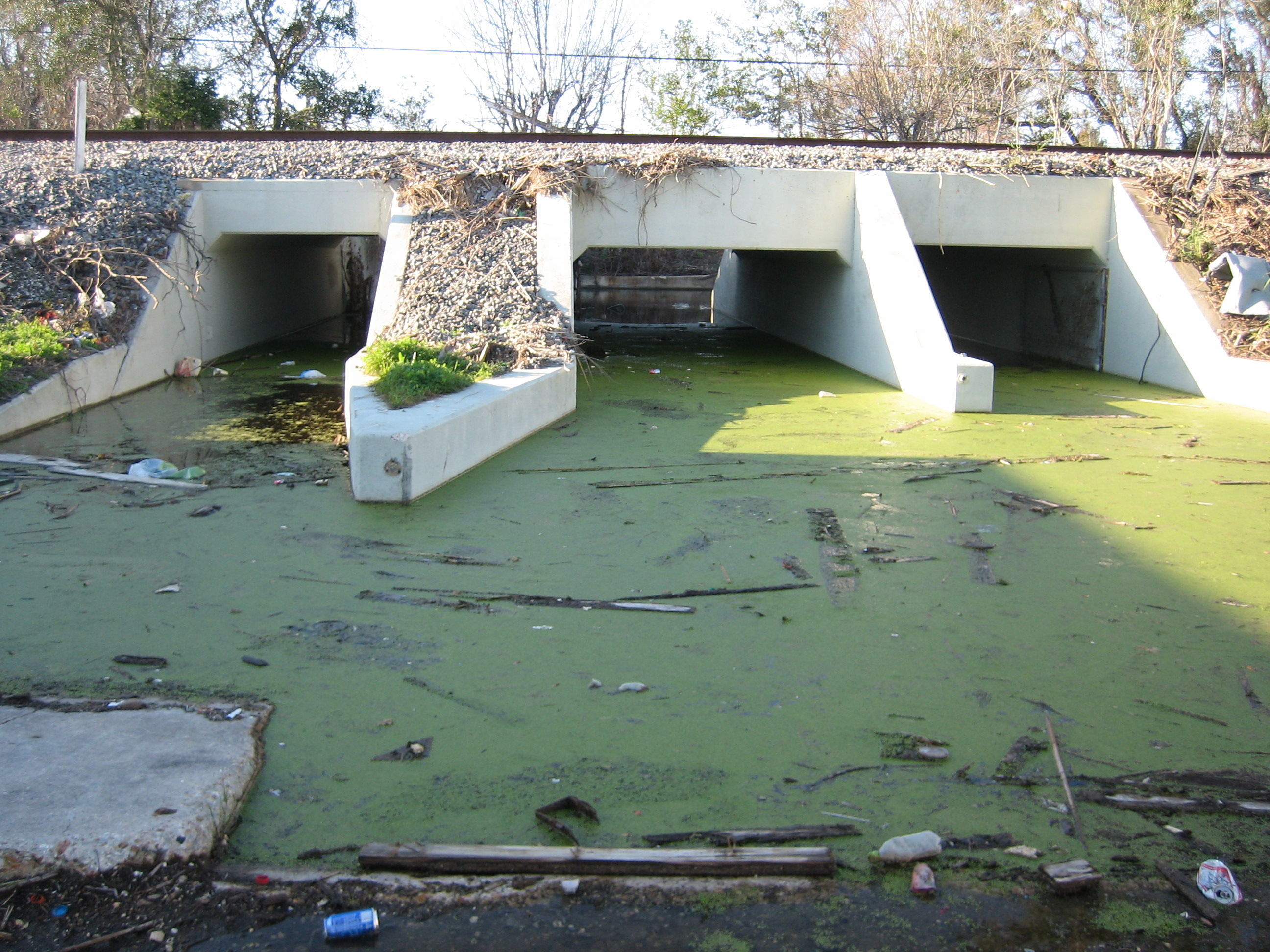
For decades, the Lincoln Beach site sat vacant, its decaying infrastructure a ghost of its former purpose. Various redevelopment proposals came and went, but the ruins persisted. The history of the park was documented in Andrew W. Kahrl's 2012 book, "The Land Was Ours: African American Beaches from Jim Crow to the Sunbelt South," published by Harvard University Press. Then in 2020, New Orleans artist Reggie Ford began cleaning the beach himself, clearing debris and reclaiming the shoreline for community use. Others joined the effort, and the beach began drawing several hundred visitors on average weekends. The path forward remains uncertain -- city officials have raised safety concerns about the site's condition -- but the community's determination to reclaim Lincoln Beach suggests the story is far from over.
From the Air
Lincoln Beach is located at approximately 30.07N, 89.95W along the southern shore of Lake Pontchartrain in the Eastern New Orleans section of the Ninth Ward. From the air, look for the stretch of lakefront east of the Industrial Canal and west of the Rigolets. The site sits along Hayne Boulevard. The massive expanse of Lake Pontchartrain dominates the view to the north. Nearest airports: Louis Armstrong New Orleans International (KMSY) approximately 18nm west, Lakefront Airport (KNEW) approximately 6nm west along the lakeshore, Naval Air Station Joint Reserve Base New Orleans (KNBG) approximately 12nm southwest. Best viewed at 1,000-2,000 feet AGL for shoreline detail.