Lindores Abbey
In June 1494, an entry in the Scottish Exchequer Rolls recorded a delivery of eight bolls of malt to one Friar John Cor 'wherewith to make aqua vitae.' The malt came from or was processed at Lindores Abbey, a Tironensian monastery on the southern banks of the River Tay in Fife. It is the earliest known written reference to the distillation of whisky in Scotland. Five centuries later, in 2018, archaeologists excavating the abbey ruins unearthed a distillation vat, physical evidence that the monks had been doing exactly what the exchequer roll described. The cradle of Scotch whisky turned out to be a half-ruined medieval monastery near the village of Newburgh.
Brother of a King
The abbey was founded in 1191 as a daughter house of Kelso Abbey, established by David, Earl of Huntingdon, on land granted to him by his brother William the Lion, King of Scots. The first abbot was Guido, Prior of Kelso, under whom the buildings were substantially completed. The church, dedicated to the Blessed Virgin and St Andrew, stretched 195 feet long with transepts spanning 110 feet -- a substantial structure for a monastic house in rural Fife. It attracted royal visitors across centuries: Edward I of England during the Wars of Independence, John Balliol, David II, and James III all came to Lindores at different times. David Stewart, Duke of Rothesay, the heir to the Scottish throne who died under suspicious circumstances while imprisoned at Falkland Palace in 1402, was buried within its walls.
Rosewater and Aqua Vitae
The monks of Lindores were practical men. They distilled rosewater at the abbey, and in May 1540 a shipment of rosewater and apples from Lindores was sent to James V -- a king who evidently appreciated the monastery's products. But it was the earlier record of aqua vitae production that would define Lindores Abbey's place in Scottish cultural history. The eight bolls of malt delivered to Friar John Cor in 1494 would have produced a significant quantity of spirit. Whether the monks were distilling for medicinal purposes, for the king's table, or for their own consumption, the entry establishes that the skills of distillation were practiced at Lindores decades before whisky became a widespread Scottish industry.
Knox and the Mob
The abbey survived three and a half centuries before the Reformation brought it down. A mob from Dundee sacked it in 1543, and John Knox's supporters returned in 1559 to finish the job. According to Knox himself, the Protestants overthrew the altars, broke up statues, burned the books and vestments, and made the monks cast aside their habits. After the Reformation, the abbey passed to a commendator -- a layman rewarded with ecclesiastical income -- and the buildings began to be dismantled around 1584. Over the following decades, the abbey was quarried for building stone, its dressed masonry, slate, timber, and carved fragments absorbed into the houses of Newburgh. Architectural fragments from Lindores are still visible embedded in later structures throughout the town.
Ruins and Revival
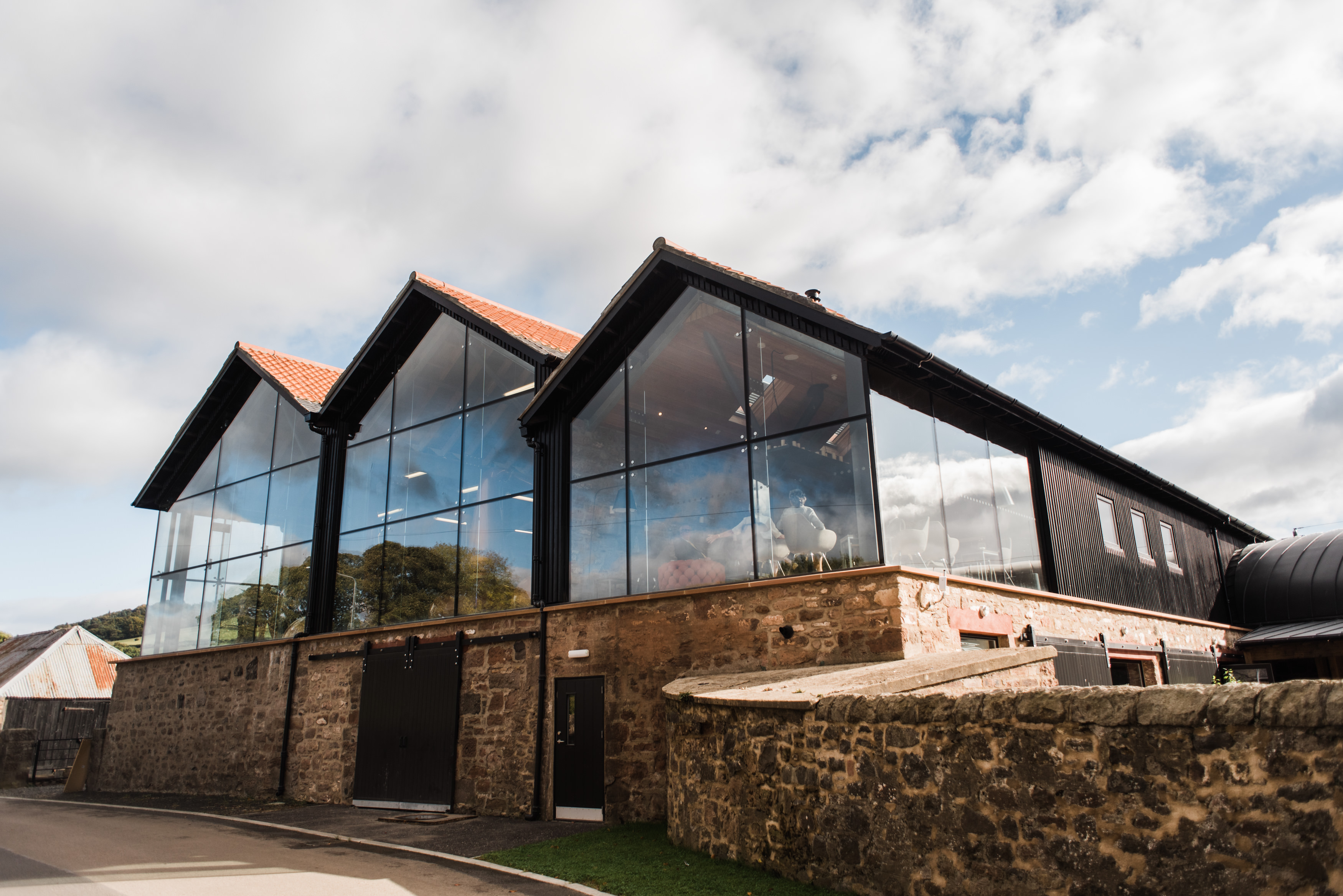
What remains of Lindores Abbey today is modest but evocative: one of the gateways into the monastic enclosure, the groin-vaulted slype that once connected the cloister to the abbey's exterior, and fragments of the chancel walls and western tower. The ground plan of the whole structure can still be traced, and sections of the imposing precinct wall survive in the fields to the south. Carved wooden panels from the early sixteenth century are preserved in the Laing Museum in Newburgh and in St Paul's Episcopal Cathedral in Dundee. Since 2024, the University of St Andrews and Brandeis University have operated a summer archaeological field school at the site, investigating patterns of monastic water use. And directly opposite the ruins, a commercial whisky distillery opened in 2017, operated by the McKenzie Smith family, producing Scotch whisky on the same ground where Friar John Cor first turned malt into spirit. The abbey is a scheduled monument, its stones protected by law. What those stones represent -- the intersection of monastic scholarship, royal patronage, and the birth of Scotland's national drink -- is protected by something more durable: the story itself.
From the Air
Lindores Abbey ruins are at approximately 56.35N, 3.23W, on the southern banks of the River Tay near Newburgh in Fife. The modern Lindores Abbey Distillery is visible adjacent to the ruins. Perth/Scone airfield (EGPT) is approximately 12 nm west. Best viewed at 1,500-2,500 ft AGL. The River Tay provides clear navigational context, with the ruins on the south bank.