Lingyan Temple (Jinan)
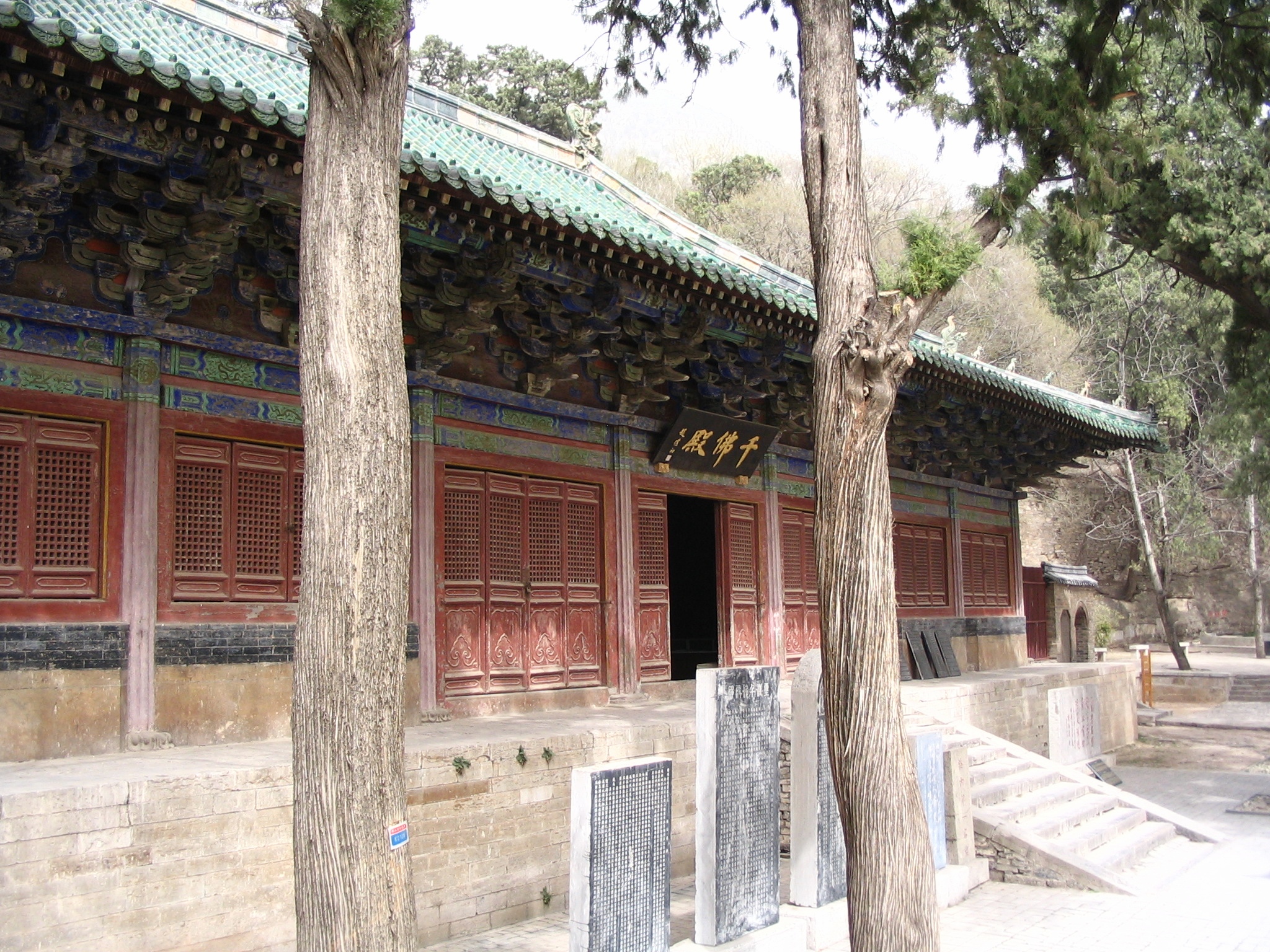
Forty pairs of eyes follow you through the Thousand Buddha Hall. The life-size luohan statues -- painted clay figures from the Song dynasty, each with a distinct expression and posture -- are so convincingly human that visitors have reportedly tried to speak to them. They sit, stand, and lean in the dim interior of a hall whose stone pedestals date to the Tang dynasty, inside a temple complex that was already old when those pedestals were laid. Lingyan Temple was founded in 357 AD, during the brief Yongxing reign of the Former Qin state, and for the next sixteen centuries it accumulated layers of Buddhist art and architecture the way the nearby Taishan range accumulated legend.
Sixteen Centuries of Devotion
The temple's recorded history stretches back to the reign of Fu Jian of the Former Qin, when the first structures appeared in a valley on the western edge of the Taishan range, about 20 kilometers north of the city of Tai'an. By the time of the Northern Wei dynasty in the 5th century, the temple had grown into one of northern China's most important Buddhist centers. Its golden age came during the Tang and Song dynasties, when over 40 wooden halls contained more than 500 monastic rooms, and over 500 monks lived within its grounds. The wooden halls standing today are Ming and Qing dynasty reconstructions, but the bones of the place -- those Tang-era stone pedestals, the spatial arrangement, the sense of accumulated time -- remain.
A Forest of Stone Memories
Outside the main halls, 167 stupas mark the resting places of monks who served here across the centuries. Some date to the Tang dynasty, their weathered stone surfaces recording more than a thousand years of rain and wind. Others are as recent as the Qing dynasty. One squared stupa from 742-755 AD marks the burial of Hui Chong, who led the monastery during his lifetime. At its corners, dour guardian figures symbolically support the weight of the entire structure -- their grimaces frozen in stone for thirteen centuries. The stupa forest at Lingyan is not a cemetery in the Western sense. It is a landscape of accumulated reverence, each monument marking a life spent in meditation and service, the whole collection testifying to the unbroken thread of Buddhist practice at this site.
The Pizhi Pagoda's Crown
Rising 54 meters above the temple grounds, the Pizhi Pagoda dominates Lingyan's skyline. Originally built in 753 during the reign of Emperor Xuanzong of Tang, the current structure is a Song dynasty reconstruction completed in 1063. Nine stories tall on an octagonal base, its lower three floors feature balconies supported by elaborate dougong brackets -- the interlocking wooden arms that are one of Chinese architecture's signature elements. The upper stories present only pent roofs, creating a tapering silhouette crowned by an iron steeple of inverted bowl, discs, sun, crescent, and bead. Iron chains anchored by small statues of celestial guards keep the steeple in place. A brick pillar and stairway lead to the fifth floor, but only an exterior winding staircase reaches the top -- a rare arrangement in brick pagodas.
Where Art Meets Faith
The Thousand Buddha Hall, or Qianfo-dian, is the temple's greatest treasure. A Ming dynasty bronze Buddha sits at the center, flanked by statues of Vairocana, Amitabha, and Bhaisajyaguru. But it is the 40 painted clay luohan that command attention. Created during the Song dynasty, each figure is individualized with astonishing naturalism -- some contemplative, others alert, a few almost wry in expression. Art historians consider them among the finest examples of Chinese Buddhist sculpture. The hall's exterior showcases the elaborate dougong brackets that support its shingled roof, each tier of interlocking wooden arms distributing the weight with mathematical precision. Standing in this hall, surrounded by figures that have watched over this valley for nearly a thousand years, the accumulation of centuries becomes tangible.
From the Air
Lingyan Temple sits at 36.36°N, 116.98°E in a valley on the western edge of the Taishan range, about 20 km north of Tai'an, in Changqing District, Jinan, Shandong Province. The Pizhi Pagoda at 54 meters is visible from the air in clear conditions. Look for the pagoda rising from forested hills southwest of Jinan's urban sprawl. Nearest major airport: Jinan Yaoqiang International (ZSJN), approximately 50 km northeast. Mount Tai (1,545 m) provides a prominent landmark to the southeast.