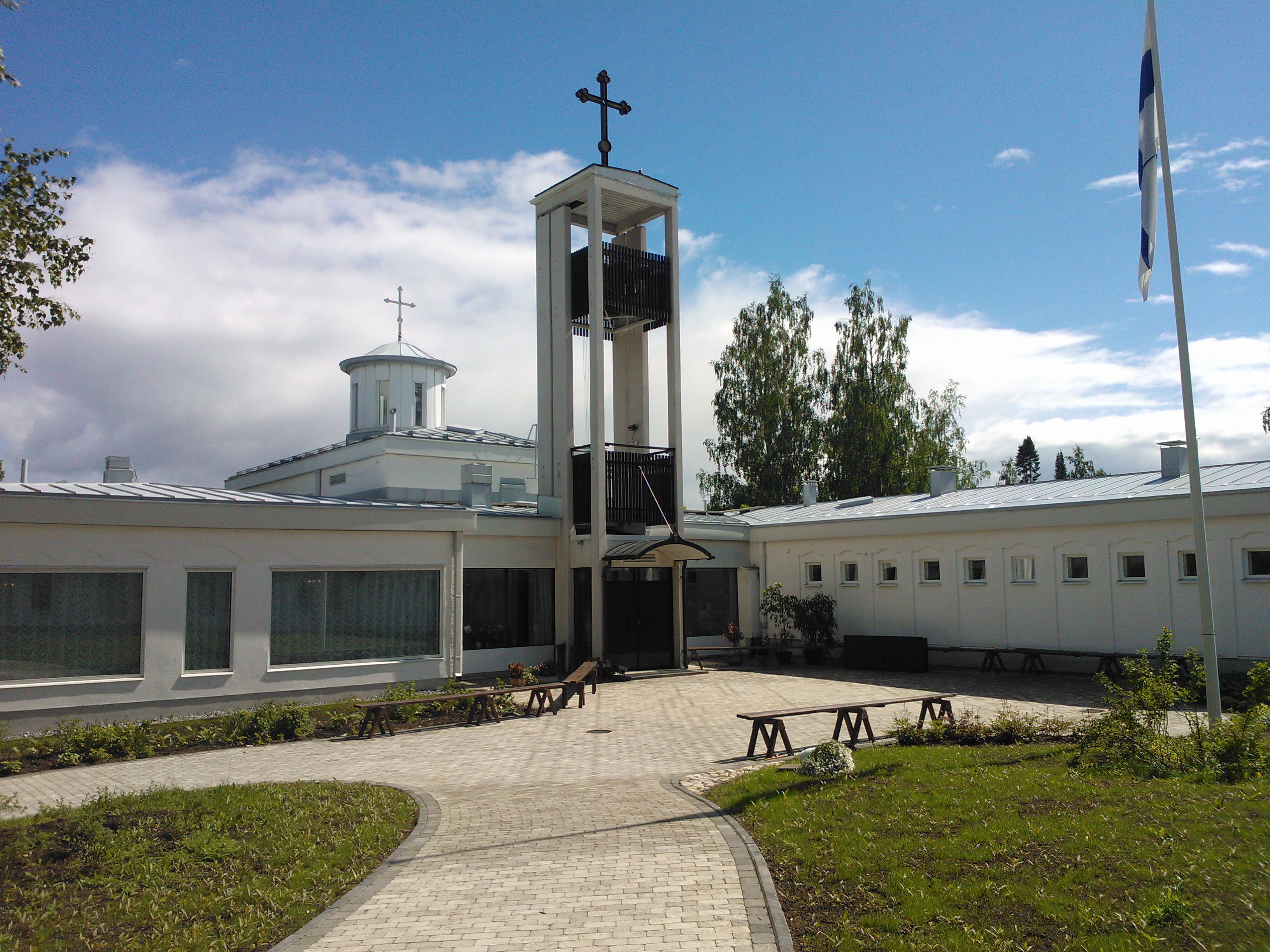
Lintula Holy Trinity Convent
On October 11, 1939, as the Winter War bore down on Finland, a nun named Nina grabbed an icon of the Jerusalem Mother of God and fled. It was the last object rescued from the Lintula convent in Kivennava, Karelia, before Soviet forces destroyed most of the monastery's buildings. That icon is today considered one of the miracle-working icons of the Finnish Orthodox Church. The convent itself survived -- not in its original home, but in a village called Palokki in Heinävesi, eastern Finland, where the sisters rebuilt their lives after losing everything. Lintula Holy Trinity Convent remains the only Orthodox nunnery in the Nordic countries, a distinction it has held through two wars, three national upheavals, and more than a century of quiet persistence.
Born Against the Odds
The convent's origins were improbable. In 1894, a privy councilor named F. P. Neronov donated a farm in the village of Lintula in Kivennava, near the Russian border, to establish a women's religious community. Finland at the time still operated under legislation from the era of Swedish rule, which protected the Lutheran Church's status as the only state religion. The surrounding area was predominantly Lutheran. Founding an Orthodox monastery here required both the decision of the Holy Synod and the personal consent of the Czar, which came in the summer of 1895. The first residents arrived from monasteries across Russia, including from the city of Mokshan in Penza Governorate. Life was modest from the beginning, marked by internal conflicts and chronic financial difficulty -- a pattern that would persist for decades.
Revolutions and Survival
The 20th century tested Lintula relentlessly. Finland's independence severed ties with the Russian Orthodox Church, and the Finnish state nationalized the Orthodox institution. Russian schools attached to the monastery were closed. The First World War, the Russian Revolution, and the Finnish Civil War of 1918 disrupted operations and at times brought famine. The convent ran an orphanage alongside the sisterhood, but that too was shuttered, its building repurposed as a tourist lodge. Nearly all the nuns held Russian citizenship, requiring special permission from the Ministry of Education just to remain. Through it all, the community held on, sustaining itself through sheer stubbornness until November 1939, when the Winter War finally forced evacuation.
Flight and Resettlement
Forty-seven people left the monastery before the Soviet advance. Most walked from Kivennava to Terijoki, then traveled by train to Maavesi in Joroinen municipality. They expected to return within weeks. They never did. The Winter War destroyed much of the monastery complex, and after the Continuation War ended in 1944, the ceded territory made return impossible. In 1945 the sisters acquired a farm owned by Hackman & Co in Heinävesi, and in January 1946 they moved into their new home in Palokki. The 34 sisters who arrived were mostly Russian, with Ukrainians, Karelians, and one Estonian among them. Nearby New Valamo monastery, itself a community of evacuated monks, became their spiritual support.
Candles, Quiet, and Continuity
The decades since resettlement have been a story of gradual transformation. Through the 1960s the community slowly became Finnish-speaking, as new Finnish-born sisters joined and the original Russian members aged. A new church designed by architect Vilho Suonmaa was dedicated in 1973, its altar icon -- the Mother of God of the Sign, painted by Petros Sasaki -- the largest orant icon in Finland. In 1967, the Orthodox synod offered Lintula a candle factory to supply church candles for the entire denomination, and candle-making now accounts for roughly half the monastery's operating budget. Agriculture, which had sustained the community for decades, was fully decommissioned in 2003-2004. The last nun who came from the original Lintula in Karelia, Mother Abbess Antonina, died in 1998. Today all the sisters are of Finnish origin, living by the same rhythms of prayer and work that have defined this community since 1895.
From the Air
Located at 62.57N, 28.59E in Palokki, Heinävesi, eastern Finland. The convent is a small cluster of buildings in a forested lakeland setting, approximately 18 km from New Valamo monastery. Nearest airport is Joensuu (EFJO), about 120 km northeast. Savonlinna Airport (EFSA) is approximately 80 km south. The Finnish Lakeland surrounding the site is characterized by dense forest interspersed with countless lakes, creating a distinctive patchwork visible from altitude.