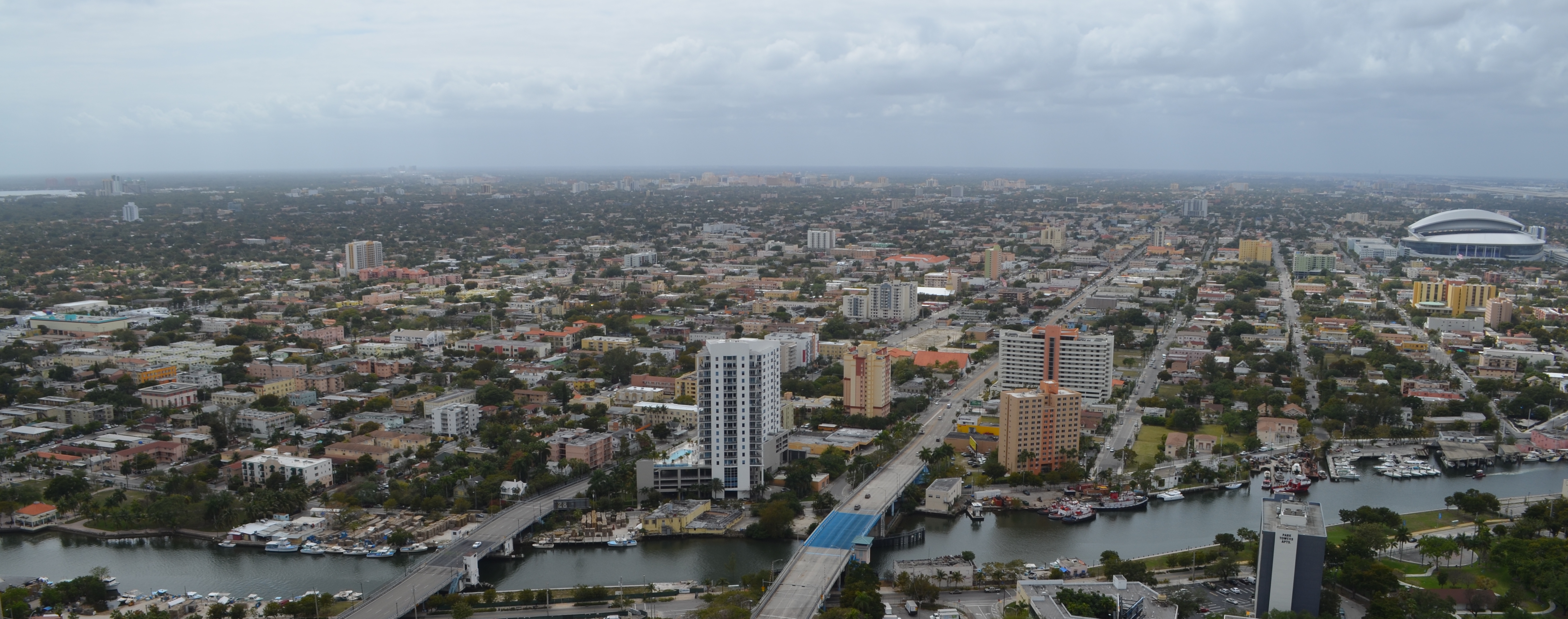
Little Havana
On March 13, 1988, exactly 119,986 people locked hands and hips along Southwest 8th Street and danced their way into the Guinness Book of World Records for the world's longest conga line. That single, exuberant moment captures everything about Little Havana -- a Miami neighborhood where culture is not something you visit in a museum but something that spills onto the sidewalks, rattles through open windows, and pulls strangers into the rhythm. Named after Cuba's capital, this stretch of land just west of the Miami River became the emotional and political heart of the Cuban exile community in the 1960s, and it has been beating to its own rhythm ever since.
From Shenandoah to La Pequena Habana
In the 1930s, the blocks stretching west of downtown Miami were a quiet, lower-middle-class neighborhood with a thriving Jewish community. That changed sharply in the 1960s when waves of Cuban refugees, fleeing Fidel Castro's revolution, began arriving in south Florida. They settled in the Shenandoah and Riverside areas, quickly transforming the character of the streets. By 1970, the neighborhood was more than 85 percent Cuban. The exiles called it Little Havana, expecting their stay to be temporary -- a brief pause before Castro fell and they could return home. That return never came. Instead, they put down roots, opened businesses, and built a community that became the cultural and political capital of Cuban Americans. Little Havana remained the primary landing point for new immigrants and a stronghold of Cuban-owned enterprise, from corner bakeries selling pastelitos to cigar factories rolling leaves by hand.
The Clatter of Dominos on Calle Ocho
Maximo Gomez Park -- everyone calls it Domino Park -- sits on Calle Ocho, the pulsing main artery of Little Havana. Every day, older men gather under the shade structures, set out their tiles, and play with the intensity of chess grandmasters and the volume of stadium announcers. The clatter of dominoes slamming on tabletops mixes with rapid-fire Spanish, the hiss of espresso machines from nearby ventanitas, and the sweet smoke of hand-rolled cigars. It is theater and tradition rolled into one, and it has drawn tourists from around the world hoping to sit across from an exile who once walked the streets of old Havana. Nearby, the Calle Ocho Walk of Fame honors Latin legends -- Celia Cruz, Gloria Estefan, Julio Iglesias, Desi Arnaz -- with star-shaped markers embedded in the sidewalk, a testament to the cultural power that flows through these few blocks.
A Festival Born from Tension
In 1977, ethnic tensions across Miami were running dangerously high. Eight Cuban-Americans from the Kiwanis Club of Little Havana met to brainstorm a solution. A bicycle race down Calle Ocho was considered and rejected -- organizers feared it would pit communities against each other rather than unite them. Then Willy Bermello proposed something different: a street festival modeled on the block parties of Philadelphia, where food, music, and dancing could dissolve boundaries instead of reinforcing them. The Calle Ocho Festival was born. It grew into one of the largest street festivals in the world, attracting over a million visitors annually. More than 30 stages line Southwest 8th Street between 27th Avenue and 4th Avenue, alive with salsa, bachata, merengue, and reggaeton. Flags from Colombia, Nicaragua, Puerto Rico, Costa Rica, and even Ireland flood the crowd. In 2010, the Florida legislature designated it the official state festival.
Layers of History Along the River
Little Havana is not only Cuban -- it is layered. The South River Drive Historic District, added to the National Register of Historic Places in 1987, preserves Miami's oldest surviving cluster of vernacular frame buildings along the river, dating to the early twentieth century. The Riverview Historic District, designated in 2015, showcases bungalow, mission, Mediterranean Revival, and Miami Modern architecture. The Tower Theater, an Art Deco gem on Calle Ocho, once served as the first theater in Miami to show Spanish-language films for newly arrived exiles and now hosts cultural programming and film screenings. On Cuban Memorial Boulevard, monuments honor those who fought at the Bay of Pigs, while the Bay of Pigs Museum preserves the artifacts and personal stories of that failed 1961 invasion. In 2015, the National Trust for Historic Preservation placed Little Havana on its list of America's 11 Most Endangered Historic Places, and in 2017 it declared the neighborhood a national treasure.
A Living, Shifting Community
Little Havana continues to evolve. While Cuban-owned businesses still dominate, the neighborhood's demographics have shifted considerably since the 1970s. The Cuban share of the Hispanic population dropped from 84 percent in 1979 to 58 percent by 1989, as immigrants from Nicaragua, Honduras, and other Central American nations arrived in growing numbers. As of 2011, the neighborhood's roughly 49,000 residents were 98 percent Hispanic -- the highest concentration in all of Miami. Every last Friday of the month, Viernes Culturales transforms Calle Ocho into an open-air arts festival with live music, gallery openings, food tastings, and free walking tours led by local historians. The energy is unmistakable: this is a neighborhood that does not simply preserve its culture behind glass but lives it out loud, on every corner, with every cafecito served through a ventanita window.
From the Air
Located at 25.77N, 80.21W, Little Havana lies immediately west of downtown Miami and the Miami River. From the air, look for the grid pattern of SW 8th Street (Calle Ocho) running east-west, roughly two and a half miles long. LoanDepot Park (former Orange Bowl site) is a major visual landmark on the eastern edge. Nearest airports: Miami International Airport (KMIA) approximately 4 miles west, Opa-locka Executive Airport (KOPF) 10 miles north. Best viewed at 2,000-3,000 feet AGL for neighborhood detail. The neighborhood sits between the Dolphin Expressway (SR 836) to the north and the Tamiami Trail corridor.