Little Rock Central High School
Four stone figures stand above the front entrance of Little Rock Central High School. They represent ambition, personality, opportunity, and preparation. When the building opened in 1927, it was hailed as the most expensive, most beautiful, and largest high school in the nation, with nearly 20,000 people attending the dedication ceremony. Thirty years later, those allegorical figures looked down on something the architects never imagined: nine Black teenagers walking through a screaming mob, protected by soldiers of the 101st Airborne Division, in what became the first major test of the Supreme Court's Brown v. Board of Education decision. The school that had been built to represent the best of American aspiration became the place where America was forced to reckon with its worst.
The Nine Who Changed Everything
In September 1957, nine African American students attempted to enroll at the all-white Central High School, following the Supreme Court's 1954 ruling that racial segregation in public schools was unconstitutional. Governor Orval Faubus ordered the Arkansas National Guard to block their entry. The crisis escalated until President Dwight Eisenhower federalized the Arkansas National Guard and sent the 101st Airborne Division to escort the students -- known forever after as the Little Rock Nine -- into the building. The nation and the world watched. The event became the first major test of federal power to enforce desegregation, and the images of soldiers protecting children from their own neighbors became some of the most powerful photographs of the civil rights movement. In 1958, a federal judge suspended the integration order, citing public pressure. The school board said it could not afford security guards to keep the peace.
From Courtroom to Classroom to Courtroom Again
Central High made legal history a second time in 1968. Biology teacher Susan Epperson agreed to challenge an Arkansas law that forbade teaching the theory of evolution in public schools. The case reached the United States Supreme Court, which ruled in Epperson v. Arkansas that states could not tailor teaching to the principles or prohibitions of any religious sect or dogma. The teaching of evolution in schools could not be forbidden on religious grounds. Two landmark Supreme Court cases -- one about race, one about science and religion -- both trace back to this single Gothic Revival building in Little Rock. The school was listed on the National Register of Historic Places in 1977 and designated a National Historic Landmark in 1982.
A Living National Historic Site
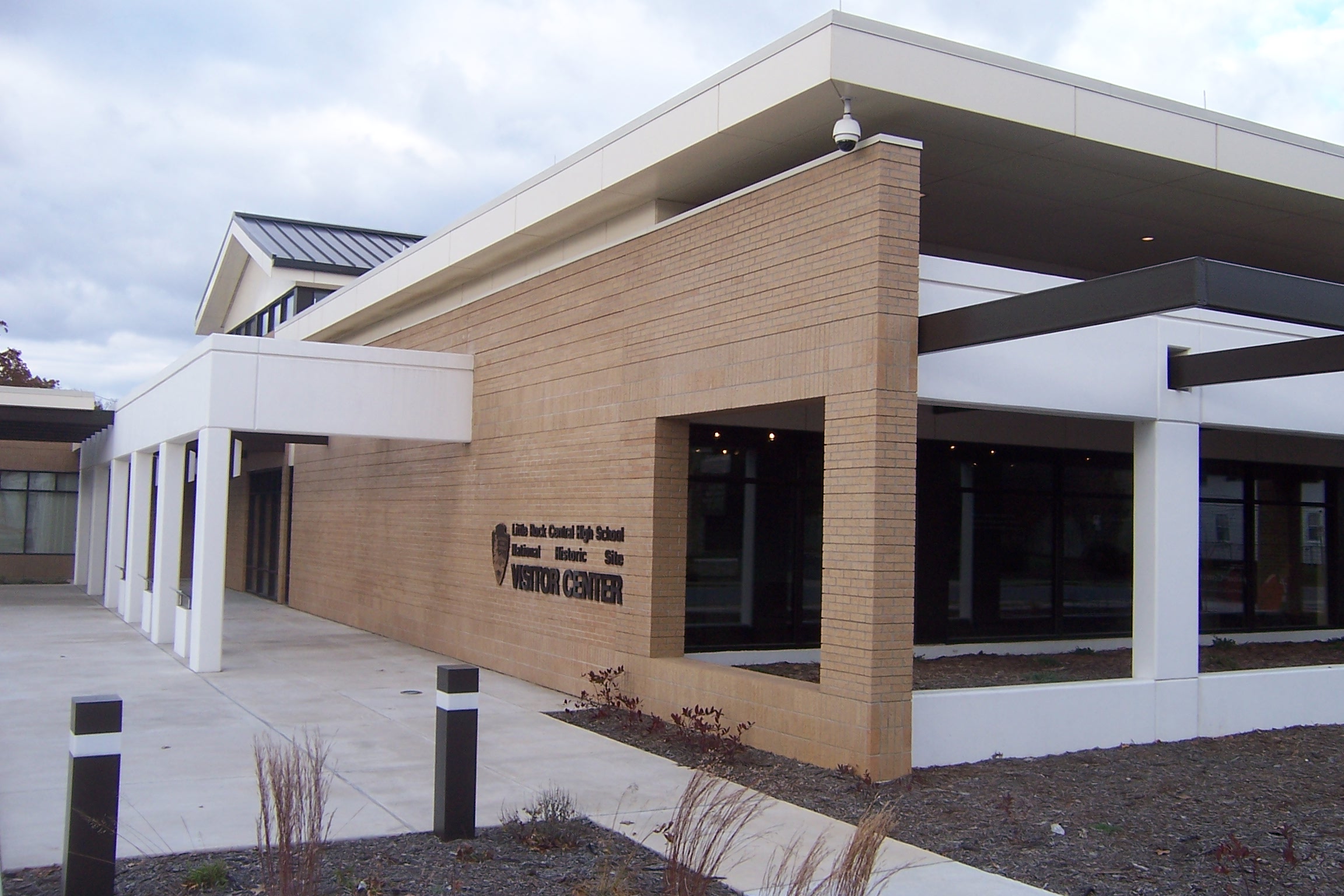
On November 6, 1998, Congress established the Little Rock Central High School National Historic Site. A visitor center opened in 2006 diagonally across the street from the school, containing an interpretive film and multimedia exhibits on the integration crisis and the broader civil rights movement. The Central High Commemorative Garden features nine trees and benches honoring the students. A historic Mobil gas station across from the visitor center has been preserved in its 1957 appearance -- it served as the press staging area during the crisis. The school continues to operate as an educational facility. Today it is minority-majority, with a 2021 enrollment that was 52.7 percent Black, 32.3 percent White, 8.1 percent Asian, and 5.5 percent Hispanic.
Tigers on Every Field
Central High's athletic legacy is staggering. The football program has won 32 state championship banners since 1907, including the state's all-time win record and national championships in 1946 and 1957. The track and field program holds a national-record 50 state championships, with an 18-year consecutive title streak from 1926 through 1945. The boys' basketball team has claimed 20 state titles. The school band was selected to march in President Obama's 2013 inaugural parade. Alumni include aviation pioneer James Smith McDonnell, founder of McDonnell Aircraft Corporation, and Sarah Huckabee Sanders, who served as White House Press Secretary and became Governor of Arkansas. But it is the Little Rock Nine -- Melba Pattillo Beals and her eight classmates -- whose names define this place.
From the Air
Located at 34.737N, 92.299W in Little Rock, Arkansas. The school's large Gothic Revival building is recognizable from the air as a substantial structure in the residential neighborhood south of downtown. Bill and Hillary Clinton National Airport (KLIT) is approximately 6 nm to the southeast. The Arkansas River lies about 1 nm to the north. The building sits at approximately 350 feet MSL in generally flat terrain. Best viewed at 1,500-3,000 feet AGL in clear conditions.
Sources
- Wikipedia - Little Rock Central High School
- National Archives - Executive Order 10730 Desegregation of Central High
- Wikipedia - Epperson v. Arkansas
- NPS - Little Rock Central High School National Historic Site
- Encyclopedia of Arkansas - James Smith McDonnell Jr.
- Encyclopedia of Arkansas - Sarah Huckabee Sanders