Little Rock: The Arkansas Capital Where Nine Students Changed America
Little Rock is where desegregation was tested. In 1957, nine Black students attempted to integrate Central High School; Governor Orval Faubus called out the National Guard to block them; the mobs screamed and threatened; and President Eisenhower sent the 101st Airborne Division to escort the students inside. The images - soldiers in combat gear escorting teenagers through howling crowds - showed America what enforcing Brown v. Board of Education would require. The city of 205,000 still reckons with that history, Central High School still operating, still teaching students, the visitor center across the street telling the story. Little Rock is also the Arkansas capital, Bill Clinton's launching pad, a city with identity beyond 1957 - but 1957 is what the world remembers.
The Nine
The Little Rock Nine - Ernest Green, Elizabeth Eckford, Jefferson Thomas, Terrence Roberts, Carlotta Walls, Minnijean Brown, Gloria Ray, Thelma Mothershed, and Melba Pattillo - were teenagers chosen to integrate Central High School after Brown v. Board of Education. They faced mobs, death threats, and daily harassment inside the school. Ernest Green became the first Black graduate of Central High in 1958. The nine were awarded the Congressional Gold Medal in 1999; their courage is taught now as American history. The photographs of Elizabeth Eckford walking alone through the screaming crowd became iconic - the visual evidence of what integration required and what segregation meant.
The Troops
Eisenhower's decision to send the 101st Airborne to Little Rock was unprecedented - federal troops enforcing a court order against a state government, the first time since Reconstruction. Governor Faubus had called out the Arkansas National Guard to prevent integration; Eisenhower federalized the Guard and added paratroopers. The confrontation established that federal authority would enforce civil rights, that states couldn't nullify Supreme Court decisions, that the President would use military force to protect citizens' constitutional rights. The 101st escorted the Nine for the school year; the precedent lasted longer.
The Clinton
Bill Clinton was Attorney General and then Governor of Arkansas before becoming President, his career launching from Little Rock. The Clinton Presidential Center now occupies the riverfront, the glass-and-steel building housing the library and archives, the former industrial site transformed into park. Clinton's complicated legacy - the economic prosperity, the scandals, the '90s nostalgia - is presented here as his team wanted. The center is Little Rock's major tourist attraction, drawing visitors who might not otherwise come to Arkansas. Clinton made Little Rock nationally relevant in a way different from 1957.
The River
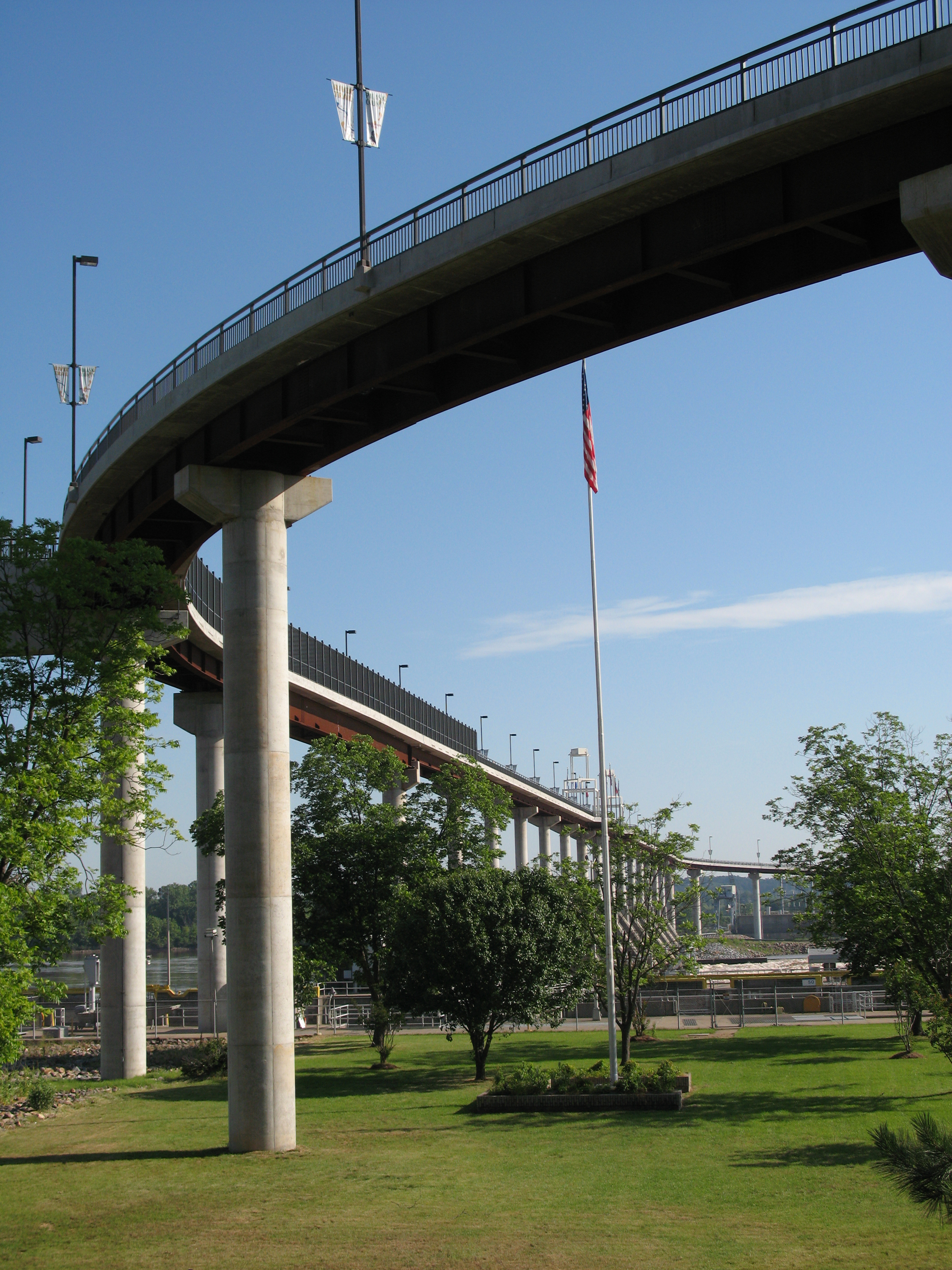
The Arkansas River flows through Little Rock, the North Little Rock bank providing skyline views, the riverfront parks and trails providing recreation. The River Market district offers restaurants and shopping in renovated warehouses. The Big Dam Bridge, spanning the river where it's dammed, provides pedestrian and cycling connection. The riverfont has been Little Rock's economic development priority, the effort to create urban amenity where industry once operated. The results are visible: the Clinton Center, the River Market, the development that follows waterfront investment.
Visiting Little Rock
Little Rock is served by Bill and Hillary Clinton National Airport (LIT). Central High School National Historic Site includes the school (still operating) and the visitor center across the street - essential and powerful. The Clinton Presidential Center offers the library and museum. The River Market district provides dining and entertainment. The Old State House Museum covers Arkansas history in the original state capitol. The Esse Purse Museum is oddly delightful. For food, Southern cuisine dominates; the barbecue is respectable. The weather is Southern: hot summers, mild winters. Little Rock rewards visitors who engage with the civil rights history.
From the Air
Located at 34.75°N, 92.29°W on the Arkansas River in central Arkansas. From altitude, Little Rock appears as urban development along the river - the Clinton Center visible on the riverfront, the Capitol visible on a hill, the bridges connecting to North Little Rock. Central High School is visible as a large school building. What appears from altitude as Arkansas's capital is where nine students changed America - where Eisenhower sent the 101st Airborne, where Clinton launched his career, and where the 1957 confrontation showed what integration would require.