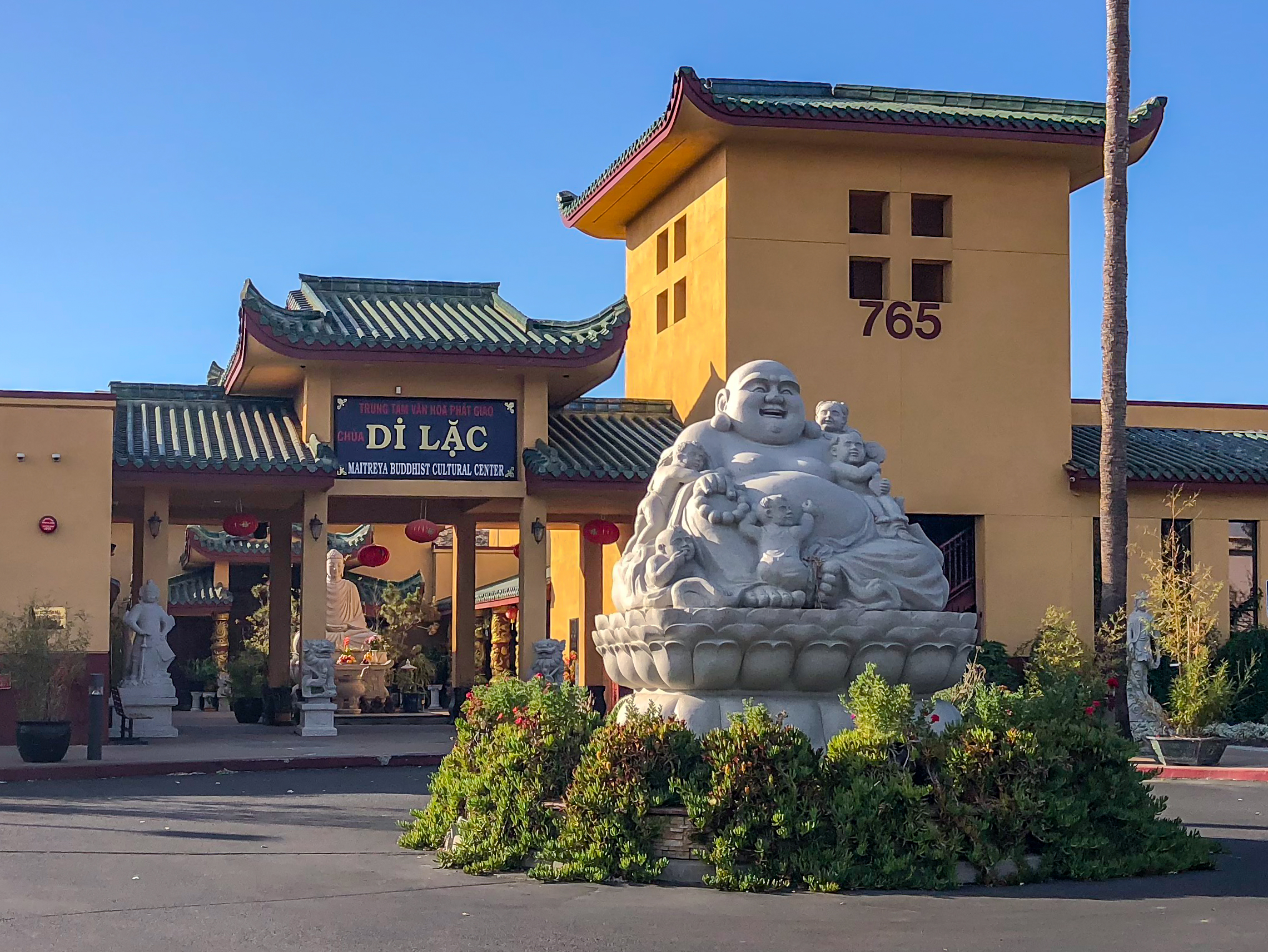
Little Saigon, San Jose
The fight lasted months. In November 2007, the San Jose City Council voted 8-3 to name the Vietnamese commercial district on Story Road the "Saigon Business District" -- a compromise proposed by council member Madison Nguyen. The community did not want a compromise. More than a thousand people packed a public meeting the following March, and activist Ly Tong staged a hunger strike at City Hall. By the time the council voted 11-1 to rescind the name, the neighborhood had already proven the point: this was Little Saigon, and the people who built it would decide what to call it.
The Capital Outside Vietnam
San Jose has more Vietnamese residents than any single city outside of Vietnam -- over 180,000 people as of the 2010 U.S. Census, roughly 10.6 percent of the city's population. That concentration is not accidental. After the fall of Saigon in 1975, waves of refugees settled in the South Bay, drawn by the mild climate, available jobs, and the pull of family networks that grew stronger with each arriving generation. Little Saigon's epicenter is Story Road in East San Jose, where Grand Century Mall and Vietnam Town anchor a corridor of restaurants, grocery stores, Buddhist temples, and businesses that stretches between Interstate 280 to the north and Highway 101 to the east. Senter Road forms the western boundary; Owsley Avenue roughly marks the southern edge. It is one of the largest Little Saigons in the world, rivaled only by the one in Orange County.
Where the Chains Were Born
Two of the most recognizable Vietnamese restaurant chains in America started here. Lee's Sandwiches, the banh mi chain that now operates dozens of locations, opened its first shop in San Jose. So did Pho Hoa, the pho restaurant franchise that spread to cities across North America and beyond. These are not footnotes in a business directory -- they reflect a community large enough and confident enough to support culinary institutions that eventually went national. Walk Story Road today and the choices multiply in every direction: pho houses where the broth simmers overnight, bakeries selling che and moon cakes, herbal medicine shops, and jewelers catering to families preparing for weddings and Tet celebrations. The annual Tet festival -- Vietnamese New Year -- fills Little Saigon with dragon dances, firecrackers, and crowds that spill across multiple blocks.
A Name Worth Fighting For
The naming controversy of 2007-2008 revealed something deeper than a dispute over signage. For many Vietnamese Americans, "Saigon" is not just a geographic reference but an emotional one -- the name of the city they or their parents left behind, a word that carries the weight of exile and resilience. The council's initial refusal to use "Little Saigon" struck a nerve that extended well beyond San Jose. Not everyone agreed, however. The San Jose Hispanic Chamber of Commerce and some non-Vietnamese businesses and residents opposed the name, concerned it did not reflect the neighborhood's broader diversity. The recall effort against Madison Nguyen drew national media attention, including coverage in the New York Times. When the council finally rescinded "Saigon Business District" in March 2008, it stopped short of officially adopting "Little Saigon" -- but the community had already claimed it. The signs, the maps, and the conversation had all moved on.
Resilience on Story Road
Little Saigon's challenges did not end with the naming dispute. During the COVID-19 pandemic, a rise in hate crimes against Asian Americans prompted the San Jose Police Department to increase foot patrols through the neighborhood in 2021, part of the broader Stop Asian Hate response. The Chua Di Lac Buddhist Temple still stands on its corner. The Vietnam Town roundabout still marks the heart of the district. An intercity bus service called Xe Do Hoang still runs between San Jose's Little Saigon and the one in Orange County, connecting the two largest Vietnamese American communities in the country across four hundred miles of California highway. The route itself tells a story -- of a diaspora large enough to sustain its own transit network, of families and commerce flowing between two poles of a community that rebuilt itself from nothing on the far side of the Pacific.
From the Air
Located at 37.33N, 121.86W in East San Jose. From the air, Little Saigon occupies a commercial corridor along Story Road, bounded by I-280 to the north and US-101 to the east. The Grand Century Mall and Vietnam Town complex are identifiable as a cluster of commercial buildings along Story Road. Nearest airports: Reid-Hillview (KRHV, 3nm E), San Jose International (KSJC, 5nm NW), Moffett Federal Airfield (KNUQ, 10nm NW). Best viewed at 2,000-3,000 feet AGL to see the neighborhood's relationship to the freeway corridors that frame it.