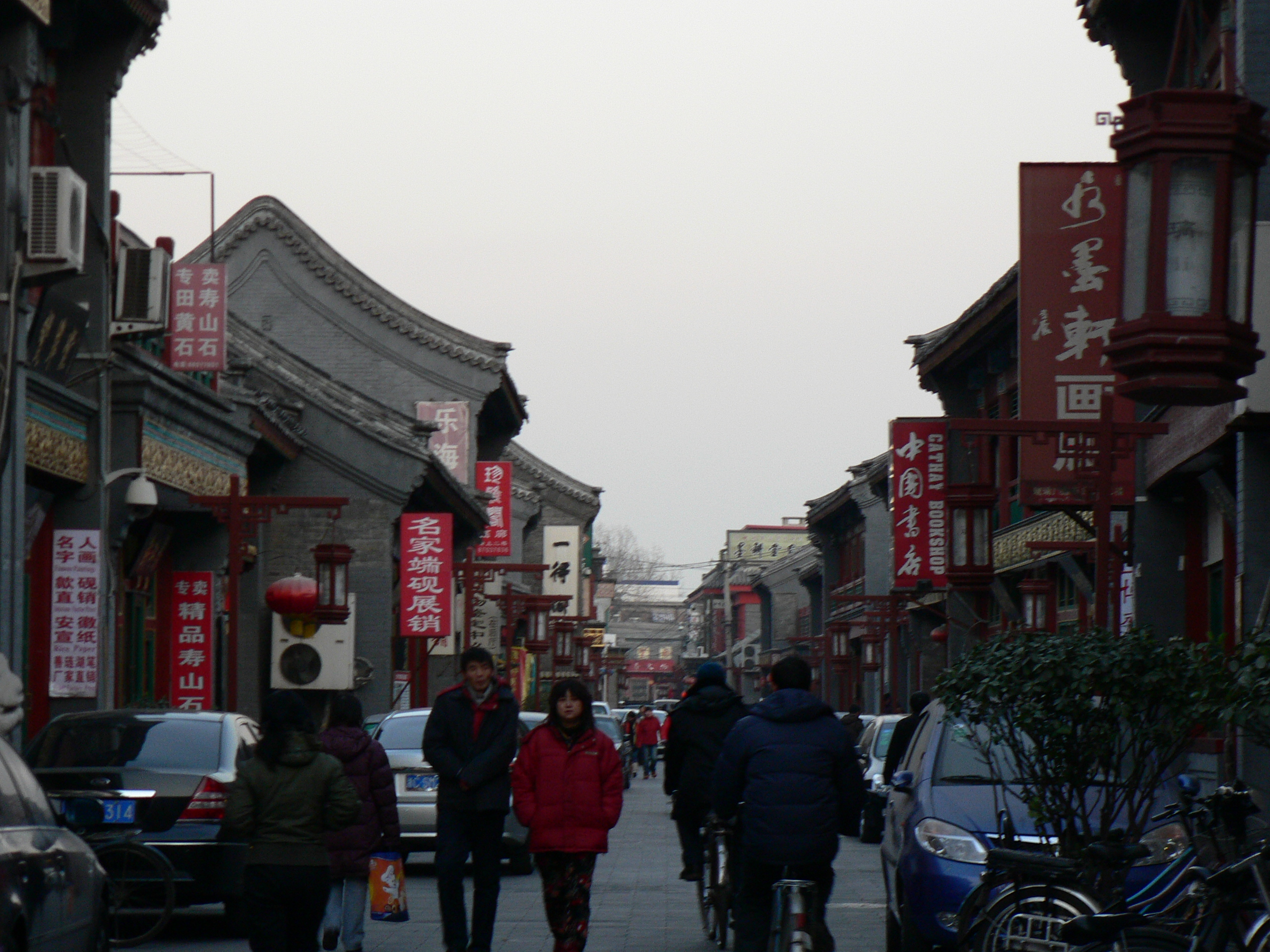
Liulichang
The name means "Glazed Tile Factory." During the Ming dynasty, a factory on this street produced the brilliantly colored tiles that adorned the roofs of palaces, temples, and officials' residences across Beijing. The factory is long gone, but the name stuck, and something unexpected replaced the kilns: books. By the Kangxi era of the Qing dynasty, roughly 1661 to 1722, Liulichang had transformed from an industrial site into one of the most vibrant cultural districts in the capital, drawing scholars, painters, and calligraphers who came to write, buy books, compose poetry, and argue about all of the above.
From Kilns to Calligraphy
The transformation of Liulichang from factory street to cultural quarter happened organically, driven by the concentration of scholars in Beijing during the Ming and Qing dynasties. The imperial examination system drew educated men from across China to the capital, and they needed supplies: brushes, ink, paper, ink stones -- the Four Treasures of the Study. They also needed books, both printed and handwritten, and places to discuss ideas. Liulichang became the answer. Bookshops multiplied. Stalls selling calligraphy supplies clustered together. Painters displayed their work. The street became a marketplace of the mind, a place where intellectual commerce was conducted alongside material exchange. By the height of the Qing dynasty, it was impossible to be a serious scholar in Beijing without frequenting Liulichang.
The Village That Is Not a Village
Modern renovations have given Liulichang a deliberate aesthetic: traditional Chinese stone dwellings lining a pedestrian-friendly street, resembling a Chinese village transplanted into the center of a megacity. The effect is both charming and calculated. Shops sell paintings, calligraphy, pottery, carpets, vases, scrolls, and chops -- the carved stone seals that serve as personal signatures in Chinese culture. Some shops are state-run; others are privately owned. Bargaining is not just accepted but expected, and the negotiation itself is part of the cultural experience. Traditional teahouses and wineshops sit between the antique dealers, offering rest stops between purchases. The street remains one of the few places in Beijing where the commercial and artistic traditions of imperial China survive in recognizable form, insulated from the high-rise development that dominates the rest of the city.
Browsing Without the Traffic
Part of Liulichang's appeal is what it lacks. In a city where traffic is legendary and urban spaces can feel overwhelming, this street offers a human-scaled experience. Visitors walk rather than drive. The buildings are low, the sightlines are short, and the focus is on looking closely rather than taking in panoramas. For tourists who want to engage with Chinese folk art -- to hold a scroll, examine the grain of an ink stone, or watch a chop carver work -- Liulichang provides that tactile connection. For residents of Beijing, the street is a reminder that the city's identity extends far beyond the political monuments and commercial towers that dominate its skyline. It is a place where the culture that built Beijing is still, in some diminished but persistent form, for sale.
From the Air
Located at 39.894N, 116.378E in Xicheng District, southwest of Tiananmen Square. The street is part of Beijing's traditional old quarter, running through the historic fabric of low-rise buildings south of the Forbidden City. Nearest airports: ZBAA (Beijing Capital International, 27 km NE) and ZBAD (Beijing Daxing International, 45 km S). Not individually distinguishable from altitude but located within the visible cluster of traditional architecture. Best context at 2,000-4,000 ft AGL.