Liuwa Plain National Park
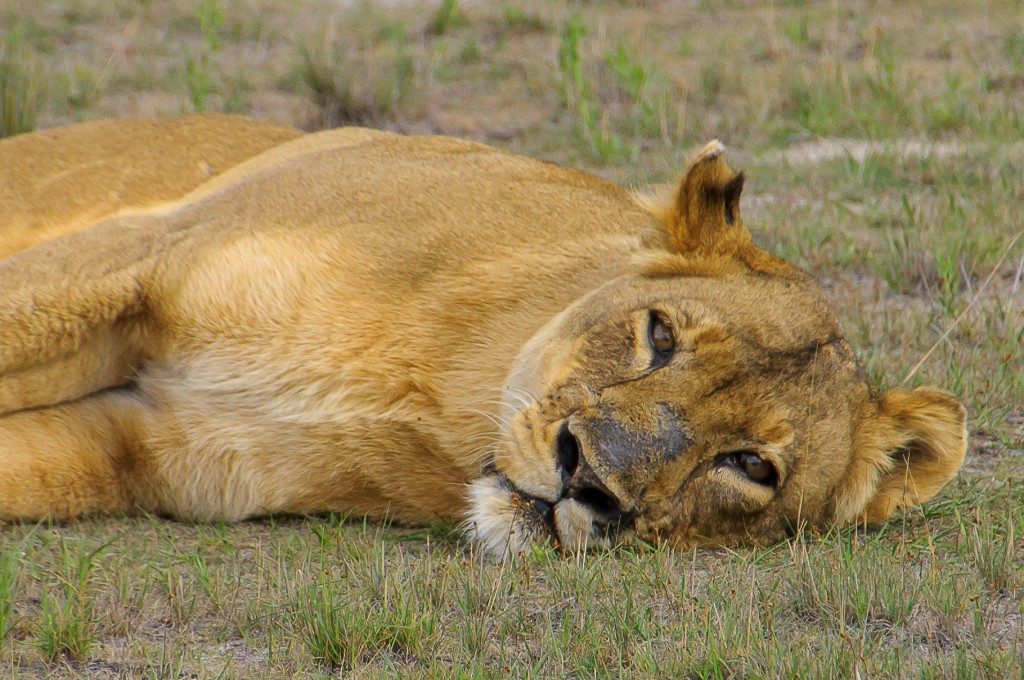
For years, she was the only one. Lady Liuwa -- a lone lioness on 3,369 square kilometres of open grassland in western Zambia -- patrolled a kingdom without a pride. Poaching and excess hunting had eliminated every other lion from Liuwa Plain by the time the conservation group African Parks took over management in 2003. National Geographic filmed her story for a 2010 documentary called The Last Lioness, and the footage is haunting: a single predator moving through plains that once supported a full complement of large carnivores. Lady Liuwa died of natural causes in 2017. But by then, she was no longer alone.
A King's Hunting Ground
The name tells you what this place is. "Liuwa" means "plain" in the local Liuwa dialect of the Lozi language, and the landscape delivers on the label: a grassland roughly 45 kilometres across, scattered with raffia palms and patches of woodland, stretching flat and open under enormous skies. Before it was a national park, it belonged to Lubosi Lewanika, the Litunga -- king or paramount chief -- of the Lozi people, who ruled the Barotseland region from 1878 to 1916. Lewanika designated Liuwa as a protected area in the early 1880s, making it one of Africa's oldest conservation sites by intention if not by formal law. The Zambian government established it as a national park in 1972, but without resources for enforcement, poaching pressure steadily increased through the following decades.
Collapse and Recovery
By the late 1990s, Liuwa was in crisis. Surveys suggested that buffalo, eland, Lichtenstein's hartebeest, and roan antelope had been locally eradicated. When African Parks entered a management partnership with the Department of National Parks and Wildlife and the Barotse Royal Establishment in 2003, the park's wildlife populations had plummeted. What followed was a methodical rebuilding. Anti-poaching patrols were established, community partnerships developed, and species reintroductions began. Eland and buffalo were brought back. The zebra population climbed to over 4,000 individuals. In late 2021, eleven African wild dogs -- eight males from South Africa and three females from Kafue National Park -- were translocated to Liuwa, kept in a boma to bond, and released in April 2022. They immediately began moving as a pack. By 2022, the lion population had grown to 16 through a careful programme of introductions following Lady Liuwa's solitary vigil.
The Second-Largest Migration
Tens of thousands of blue wildebeest still gather on Liuwa Plain for their annual migration -- the second-largest in Africa, after the Serengeti-Mara crossing. It is a spectacle that few outsiders have witnessed, because Liuwa has experienced limited tourism for most of its existence. The park sits in Zambia's remote Western Province, accessible only by challenging roads or charter flights. That remoteness has been both curse and protection: it left the park vulnerable to poaching when enforcement was weak, but it also spared it from the overdevelopment that threatens more famous reserves. The grasslands support cheetah, spotted hyena, leopard, banded mongoose, and side-striped jackal alongside the wildebeest herds. More than 300 bird species have been recorded, including the slaty egret, Denham's bustard, secretary bird, and rosy-throated longclaw. BirdLife International has designated it an Important Bird Area.
What a Lioness Left Behind
Lady Liuwa's story became a conservation parable -- the lone survivor whose endurance symbolized both the depths of a crisis and the possibility of recovery. She was the last of her kind in the park, a solitary figure on a plain that should have been shared with a pride. African Parks introduced new lions to encourage breeding, and cubs were eventually born. The pride that exists today in Liuwa is a direct consequence of interventions that began when one lioness refused to disappear. Since 2005, the park has been designated a Lion Conservation Unit. The grasslands she roamed remain open and wild, still carrying the annual pulse of wildebeest and zebra, still patrolled by cheetah and hyena, still remote enough that a visitor might spend days without seeing another human being. Lady Liuwa died in 2017, but the park that bears no monument to her is itself her monument.
From the Air
Located at 14.67S, 22.50E in Zambia's Western Province. From altitude, Liuwa appears as a vast, remarkably flat grassland dotted with scattered palm clusters, distinctly different from the surrounding woodland. During migration season, wildebeest herds may be visible as dark concentrations on the pale grass. The nearest significant airstrip is at Kalabo, approximately 80 km to the south. The park is near the Angolan border to the west. Mongu (FLMG), the provincial capital, lies roughly 200 km to the east and has a more established airstrip.