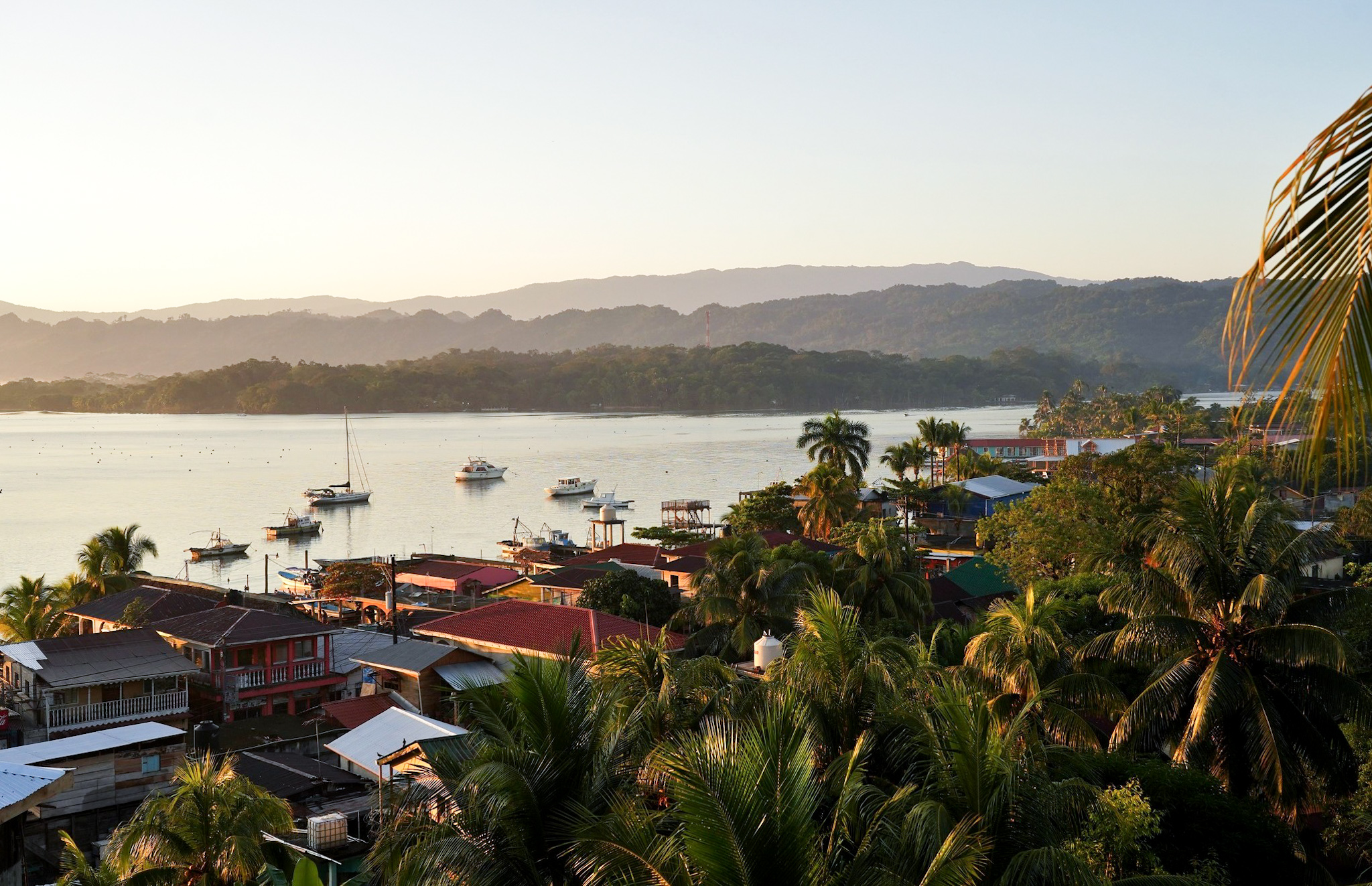
Livingston, Guatemala
There is no road to Livingston. You arrive by boat or you do not arrive at all -- by lancha up the Rio Dulce, by ferry across Amatique Bay from Puerto Barrios, or by weekly crossing from Punta Gorda in Belize. This isolation has shaped everything about the town. While Guatemala's highland cities absorbed waves of modernization, Livingston kept its own rhythm: Garifuna drums in the evening bars, coconut milk simmering in the seafood pots, and three languages tangling in the streets. Perched on the Caribbean coast at the mouth of the Rio Dulce, it is Guatemala's most culturally distinct town -- a place where Central America, the Caribbean, and the Maya world overlap in a single village with one main street.
Three Cultures, One Calle Principal
Livingston's population is a blend found nowhere else in Guatemala. The Garifuna -- descendants of West African and Carib and Arawak peoples who were exiled from the island of St. Vincent by the British in 1797 -- form the cultural bedrock of the town. Spanish-speaking Guatemalans and Q'eqchi' Maya from the highlands round out the mix. Walk down Calle Principal, the single road where virtually every shop, restaurant, and bar is located, and you will hear Spanish, Garifuna, and English spoken within a few steps of each other. Handicraft stalls sell jewelry made from shells and coconut, and small bottles of Guifiti -- a Garifuna rum infused with medicinal herbs -- line the shelves. The town is small enough that a taxi ride anywhere costs Q20, though most visitors never need one.
Drums After Dark
Evenings in Livingston belong to the musicians. A troupe of Garifuna performers makes the rounds of the restaurants, carrying large drums, a turtle shell percussion instrument, conch shells, and maracas. The chanting that accompanies the drumming is hypnotic and distinctly Caribbean, a sound that could belong to Belize or Honduras but certainly not to Guatemala City. The drink of choice is Coco Loco -- a fresh coconut with its top sliced off and a generous pour of rum added. Bars along Calle Principal stay open late, and the music drifts between them. Tapado, the town's signature dish, is a rich soup of fish, shrimp, and shellfish simmered in coconut milk and served with crusty bread and fresh coriander. Cheap grilled shrimp is available everywhere, a reminder that Livingston was a fishing village long before it became a stop on the backpacker trail.
Seven Altars and White Sand
Five kilometers north of town, a series of seven freshwater pools and waterfalls called Los Siete Altares cascades down to the Caribbean. The falls are best visited during the rainy months of July and August, when the water runs full and the pools are deep enough for swimming. During the dry season from April through June, they shrink to a trickle. You can reach them by a ten-minute lancha ride at Q25 each way, or by walking north along the beach for roughly two hours. Further along the coast, Playa Blanca sits 12 kilometers out, a stretch of white sand accessible by boat. The central beach in town is more modest -- grass grows into the water at spots -- but it is where local children fly kites in the evenings and families come to swim, a scene that captures Livingston's unhurried pace better than any tourist attraction.
Gateway on the Water
Livingston's lack of roads makes its dock the center of daily life. Lanchas depart twice daily for Rio Dulce town at 9:30 and 14:30, a journey up the canyon-like gorge of the Rio Dulce that ranks among Guatemala's most scenic boat rides. Ferries cross to Puerto Barrios in about 40 minutes. International boats connect to Punta Gorda, Belize, and from there onward to the Bay Islands of Honduras. The dock hums with captains offering charter trips, tour guides pitching excursions, and travelers negotiating passage. Because every arrival and departure happens by water, the town has the feel of an island even though it sits on the mainland, connected to the rest of Guatemala by river and sea but separated from it by jungle and the absence of pavement.
From the Air
Located at 15.83N, 88.75W on Guatemala's Caribbean coast at the mouth of the Rio Dulce. From the air, Livingston appears as a small cluster of buildings on a peninsula where the river meets Amatique Bay. The town has no road connections -- only water access. The Rio Dulce gorge extends to the southwest, connecting to Lake Izabal. Puerto Barrios is visible across the bay to the south. Nearest significant airport is Mundo Maya International (MGMM) near Flores, approximately 250 km to the northwest. Puerto Barrios has a small airstrip. The Belize coastline and barrier reef are visible to the northeast.